

Topics in Current Chemistry (2020) 378:8
1 3
antimicrobial activities and skin penetration capabilities depending upon their active
metallic facets.
2.4 Influence of the Capping‑Ligand, Including Surface‑Chemistry and ‑Charge
Other important parameters that greatly affects the skin penetration rate of NPs are
the surface charge and chemistry, which are associated directly with the stabilizing
ligand composition and the type of metal–ligand bonding interaction. Figure 3 summarizes the most frequently found capping ligands, including the type of interaction
with the metallic core. Citrate is the main ligand for the synthesis of plasmonic NPs
[52, 53], and is the most widely reported. Although the resulting water-soluble NPs
present good long-term stability, with a negatively charged surface due to their carboxylate groups, the NPs tended to aggregate easily in contact with the skin (especially for the smallest sizes) due to their relatively weak metal–ligand interactions
[7]. Labouta and co-workers [54] showed that water-soluble spherical-shape 15 nm
citrate-capped AuNPs tended to aggregate on the superficial stratum corneum. In
this study, the penetration rate of hydrophilic 15 nm citrate-capped AuNPs versus hydrophobic 6 nm dodecanethiol-capped AuNPs was also compared, showing
that non-water-soluble particles penetrated through the stratum corneum and into
viable epidermal layers of human skin. This enhanced skin penetration using dodecanethiol as capping ligand could be attributed to: (1) stronger Au–S binding interaction, which avoided aggregation of NPs in contact with the stratum corneum; and
(2) the solubility in organic solvent (i.e., toluene), which could facilitate interaction
with cell membranes. A related study from the same research group compared the
different penetration rates through human skin of two water-soluble AuNPs (15 nm
citrate- and 6 nm lecithin-capped) against two toluene-solved AuNPs (6 nm dodecanethiol- and cetrimide-capped) [55]. They concluded that the vehicle (toluene-versus-water) had a minimal effect on skin penetration of AuNPs.
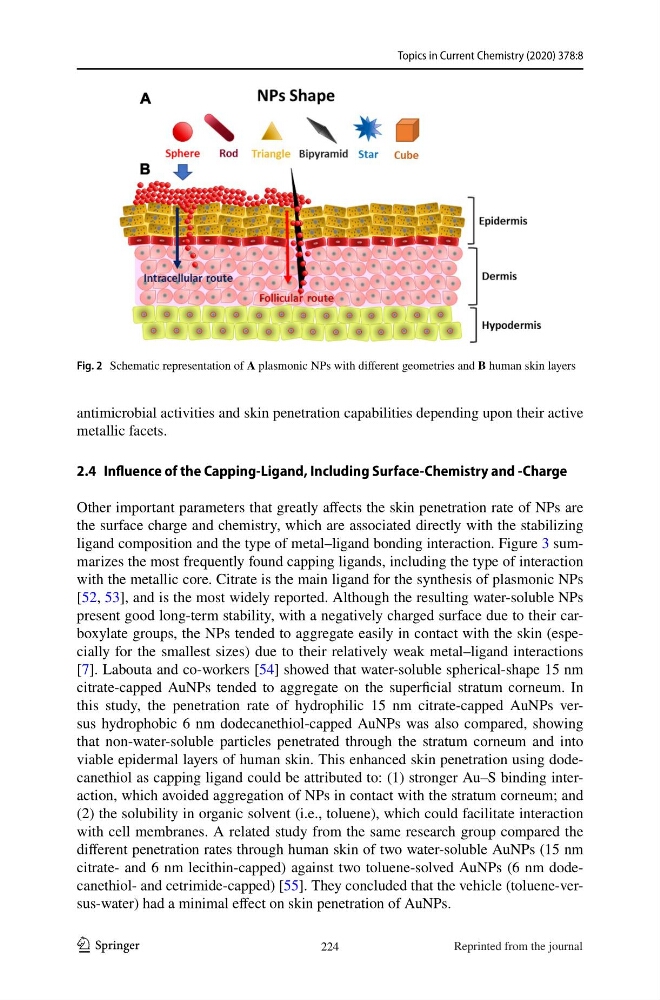
Fig. 2 Schematic representation of A plasmonic NPs with different geometries and B human skin layers
224
Reprinted from the journal
1 3
antimicrobial activities and skin penetration capabilities depending upon their active
metallic facets.
2.4 Influence of the Capping‑Ligand, Including Surface‑Chemistry and ‑Charge
Other important parameters that greatly affects the skin penetration rate of NPs are
the surface charge and chemistry, which are associated directly with the stabilizing
ligand composition and the type of metal–ligand bonding interaction. Figure 3 summarizes the most frequently found capping ligands, including the type of interaction
with the metallic core. Citrate is the main ligand for the synthesis of plasmonic NPs
[52, 53], and is the most widely reported. Although the resulting water-soluble NPs
present good long-term stability, with a negatively charged surface due to their carboxylate groups, the NPs tended to aggregate easily in contact with the skin (especially for the smallest sizes) due to their relatively weak metal–ligand interactions
[7]. Labouta and co-workers [54] showed that water-soluble spherical-shape 15 nm
citrate-capped AuNPs tended to aggregate on the superficial stratum corneum. In
this study, the penetration rate of hydrophilic 15 nm citrate-capped AuNPs versus hydrophobic 6 nm dodecanethiol-capped AuNPs was also compared, showing
that non-water-soluble particles penetrated through the stratum corneum and into
viable epidermal layers of human skin. This enhanced skin penetration using dodecanethiol as capping ligand could be attributed to: (1) stronger Au–S binding interaction, which avoided aggregation of NPs in contact with the stratum corneum; and
(2) the solubility in organic solvent (i.e., toluene), which could facilitate interaction
with cell membranes. A related study from the same research group compared the
different penetration rates through human skin of two water-soluble AuNPs (15 nm
citrate- and 6 nm lecithin-capped) against two toluene-solved AuNPs (6 nm dodecanethiol- and cetrimide-capped) [55]. They concluded that the vehicle (toluene-versus-water) had a minimal effect on skin penetration of AuNPs.
Fig. 2 Schematic representation of A plasmonic NPs with different geometries and B human skin layers
224
Reprinted from the journal