

1 3
Topics in Current Chemistry (2020) 378:28
dissolved O 2 by ChO to generate H 2 O 2 , which was then measured quantitatively
based on the ECL signal from the luminol/H 2 O 2 reaction. In this system, Fe 3 O 4
nanospheres catalyzed the electrooxidation of H 2 O 2 . At the same time, the presence of TiO 2 increased electron transfer and the ECL signal from luminol. Tang
et al. [44] presented a system comprising Au NPs/ionic liquid/hollowed TiO 2
nanoshells for the sensitive ECL biosensing of cholesterol. The synthesized nanocomposite exhibited more intense luminol/H 2 O 2 ECL emission than AuNPs or
TiO 2 alone. Cholesterol oxidase (ChOx) was immobilized on the nanofunctionalized electrode surface by glutaraldehyde (GD) and bovine serum albumin (BSA).
This strategy permitted the sensitive quantification of cholesterol. A disposable
biosensor [45] for glucose detection was prepared using a Au/TiO 2 nanocomposite to intensify the ECL of luminol. After crosslinking glucose oxidase via
GD and BSA, the ECL biosensor showed excellent stability, sensitivity, and simplicity when used for glucose detection. Moreover, Li et al. [46] reported a ECL
immunosensor that used AuPdPt–MoS 2 @TiO 2 to increase the ECL intensity of
luminol by catalyzing the electrochemical reaction of H 2 O 2 . The nanocomposite
was covalently linked directly to the amino group of luminol and the resulting
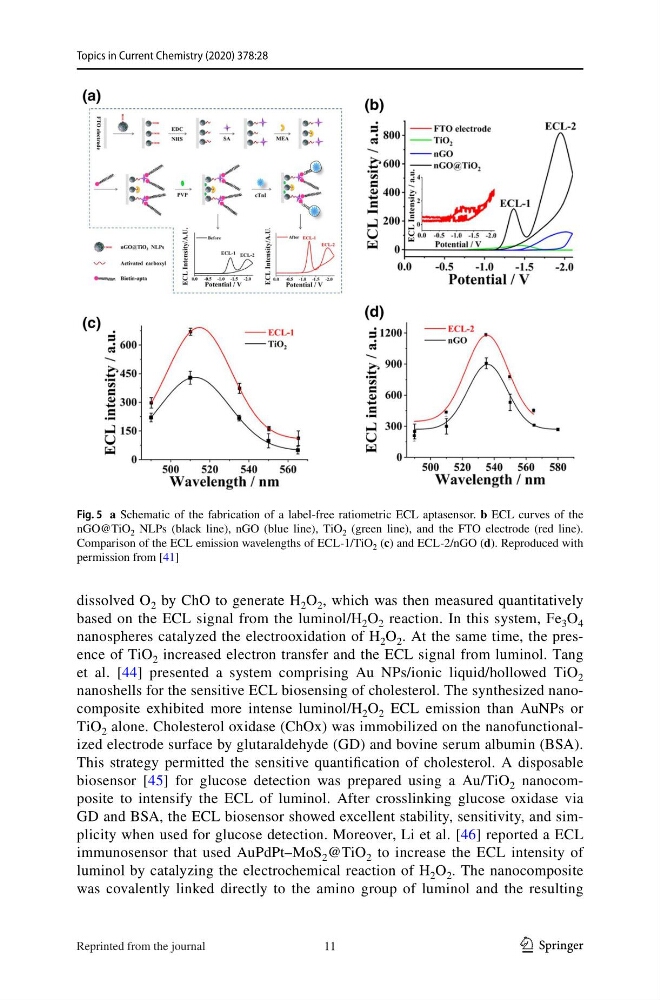
Fig. 5 a Schematic of the fabrication of a label-free ratiometric ECL aptasensor. b ECL curves of the
nGO@TiO 2 NLPs (black line), nGO (blue line), TiO 2 (green line), and the FTO electrode (red line).
Comparison of the ECL emission wavelengths of ECL-1/TiO 2 (c) and ECL-2/nGO (d). Reproduced with
permission from [41]
11
Reprinted from the journal
Topics in Current Chemistry (2020) 378:28
dissolved O 2 by ChO to generate H 2 O 2 , which was then measured quantitatively
based on the ECL signal from the luminol/H 2 O 2 reaction. In this system, Fe 3 O 4
nanospheres catalyzed the electrooxidation of H 2 O 2 . At the same time, the presence of TiO 2 increased electron transfer and the ECL signal from luminol. Tang
et al. [44] presented a system comprising Au NPs/ionic liquid/hollowed TiO 2
nanoshells for the sensitive ECL biosensing of cholesterol. The synthesized nanocomposite exhibited more intense luminol/H 2 O 2 ECL emission than AuNPs or
TiO 2 alone. Cholesterol oxidase (ChOx) was immobilized on the nanofunctionalized electrode surface by glutaraldehyde (GD) and bovine serum albumin (BSA).
This strategy permitted the sensitive quantification of cholesterol. A disposable
biosensor [45] for glucose detection was prepared using a Au/TiO 2 nanocomposite to intensify the ECL of luminol. After crosslinking glucose oxidase via
GD and BSA, the ECL biosensor showed excellent stability, sensitivity, and simplicity when used for glucose detection. Moreover, Li et al. [46] reported a ECL
immunosensor that used AuPdPt–MoS 2 @TiO 2 to increase the ECL intensity of
luminol by catalyzing the electrochemical reaction of H 2 O 2 . The nanocomposite
was covalently linked directly to the amino group of luminol and the resulting
Fig. 5 a Schematic of the fabrication of a label-free ratiometric ECL aptasensor. b ECL curves of the
nGO@TiO 2 NLPs (black line), nGO (blue line), TiO 2 (green line), and the FTO electrode (red line).
Comparison of the ECL emission wavelengths of ECL-1/TiO 2 (c) and ECL-2/nGO (d). Reproduced with
permission from [41]
11
Reprinted from the journal