

Topics in Current Chemistry (2020) 378:15
1 3
In CNTs, each carbon atom is bonded with sp
2
hybridization, stronger than the sp
3
bonds in diamond, which provide these compounds with exceptional mechanical [18–20],
electrical [21–24], optical [25], and thermal properties [26]. Other unique features owing
to their large surface, needle shape, and residual metal impurities content placed them
among the most promising nanomaterials for potential applications that range from nanomedicine to nanoelectronics, including the production of quantum dots by introducing
fullerenes [27] and nanowires by filling CNT with pure elements for molecular electronics [28].
Regarding the use of carbon nanotubes in biomedicine and preclinical research,
and due to their ability to cross the cell membrane, these materials has been tested as
transporters for different drugs [29], biomolecules as enzymes, deoxyribonucleic acid
(DNA) and ribonucleic acid (RNA) [30], as well as to form ion transport channels [31].
CNTs have also been used as nanoreactors, taking advantage of their reduced inner size
and the special electronic characteristics due to the CNT wall curvature [32]. Nevertheless, despite their wide range of biomedical applications, carbon nanotubes have two
deficiencies to solve: their inherent toxicity, due to the metal catalyst residue remaining
from the synthesis process, and their low solubility in water.
On these grounds, we have focused this review on the presentation of the main functionalization processes, characterization methodologies, and biomedical applications of
CNTs, identifying also the most relevant strategies to overcome the inherent problems
that currently hinder their preclinical use.
2 Functionalization of Carbon Nanotubes
Carbon nanotubes are produced using several synthetic methods [33], but most
of them left metallic impurities in the sample and render a mixture of CNTs with
different diameters, lengths, and chirality properties. Additional problems are the
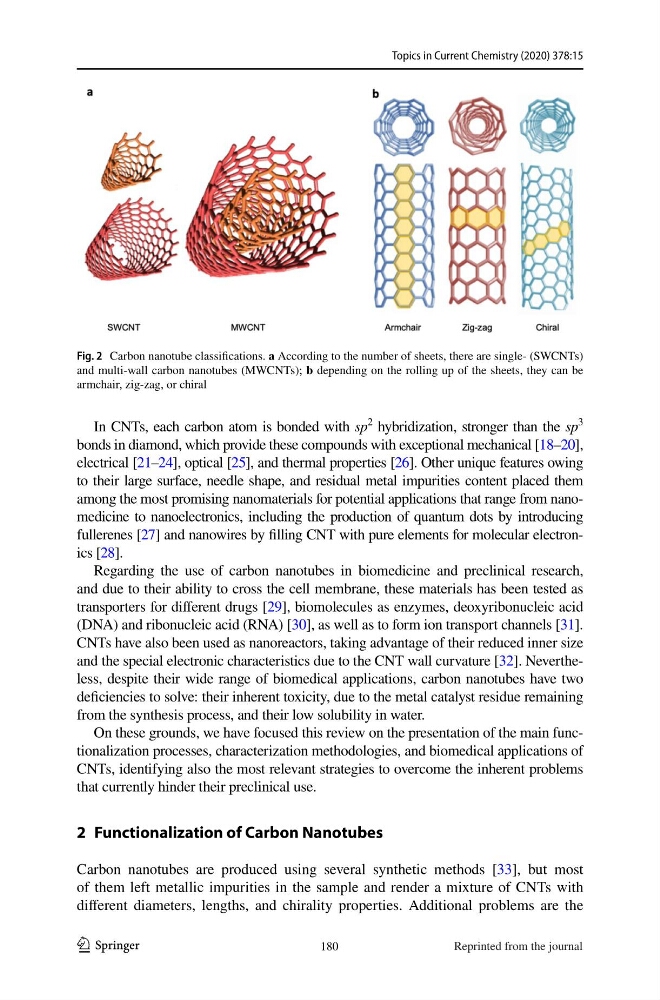
Fig. 2 Carbon nanotube classifications. a According to the number of sheets, there are single- (SWCNTs)
and multi-wall carbon nanotubes (MWCNTs); b depending on the rolling up of the sheets, they can be
armchair, zig-zag, or chiral
180
Reprinted from the journal
1 3
In CNTs, each carbon atom is bonded with sp
2
hybridization, stronger than the sp
3
bonds in diamond, which provide these compounds with exceptional mechanical [18–20],
electrical [21–24], optical [25], and thermal properties [26]. Other unique features owing
to their large surface, needle shape, and residual metal impurities content placed them
among the most promising nanomaterials for potential applications that range from nanomedicine to nanoelectronics, including the production of quantum dots by introducing
fullerenes [27] and nanowires by filling CNT with pure elements for molecular electronics [28].
Regarding the use of carbon nanotubes in biomedicine and preclinical research,
and due to their ability to cross the cell membrane, these materials has been tested as
transporters for different drugs [29], biomolecules as enzymes, deoxyribonucleic acid
(DNA) and ribonucleic acid (RNA) [30], as well as to form ion transport channels [31].
CNTs have also been used as nanoreactors, taking advantage of their reduced inner size
and the special electronic characteristics due to the CNT wall curvature [32]. Nevertheless, despite their wide range of biomedical applications, carbon nanotubes have two
deficiencies to solve: their inherent toxicity, due to the metal catalyst residue remaining
from the synthesis process, and their low solubility in water.
On these grounds, we have focused this review on the presentation of the main functionalization processes, characterization methodologies, and biomedical applications of
CNTs, identifying also the most relevant strategies to overcome the inherent problems
that currently hinder their preclinical use.
2 Functionalization of Carbon Nanotubes
Carbon nanotubes are produced using several synthetic methods [33], but most
of them left metallic impurities in the sample and render a mixture of CNTs with
different diameters, lengths, and chirality properties. Additional problems are the
Fig. 2 Carbon nanotube classifications. a According to the number of sheets, there are single- (SWCNTs)
and multi-wall carbon nanotubes (MWCNTs); b depending on the rolling up of the sheets, they can be
armchair, zig-zag, or chiral
180
Reprinted from the journal