

12.3 Information in DNA
549
Table 12.1 Protein coding on RNA
Amino acid
Symbols
RNA codon
Alanine
Ala
A
GCU GCC GCA GCG
Arginine
Arg
R
CGU CGC CGA CGG AGA
AGG
Asparagine
Asn
N
AAU AAC
Aspartic acid
Asp
D
GAU GAC
Cystein
Cys
C
UGU UGC
Glutamine
Gln
Q
CAA CAG
Glutamic acid
Glu
E
GAA GAG
Glycine
Gly
G
GGU GGC GGA GGG
Histidine
His
H
CAU CAC
Isoleucine
Ile
I
AUU AUC AUA
Leucine
Leu
L
UUA UUG CUU CUC CUA
CUG
Lysine
Lys
K
AAA AAG
Methionine
Met
M
AUG
Phenylalanine
Phe
F
UUU UUC
Proline
Pro
P
CCU CCC CCA CCG
Serine
Ser
S
UCU UCC UCA UCG AGU
AGC
Threonine
Thr
T
ACU ACC ACA ACG
Tryptophan
Trp
W
UGG
Tyrosine
Tyr
Y
UAU UAC
Valine
Val
V
GUU GUC GUA GUG
START
AUG
STOP
UAA UGA UAG
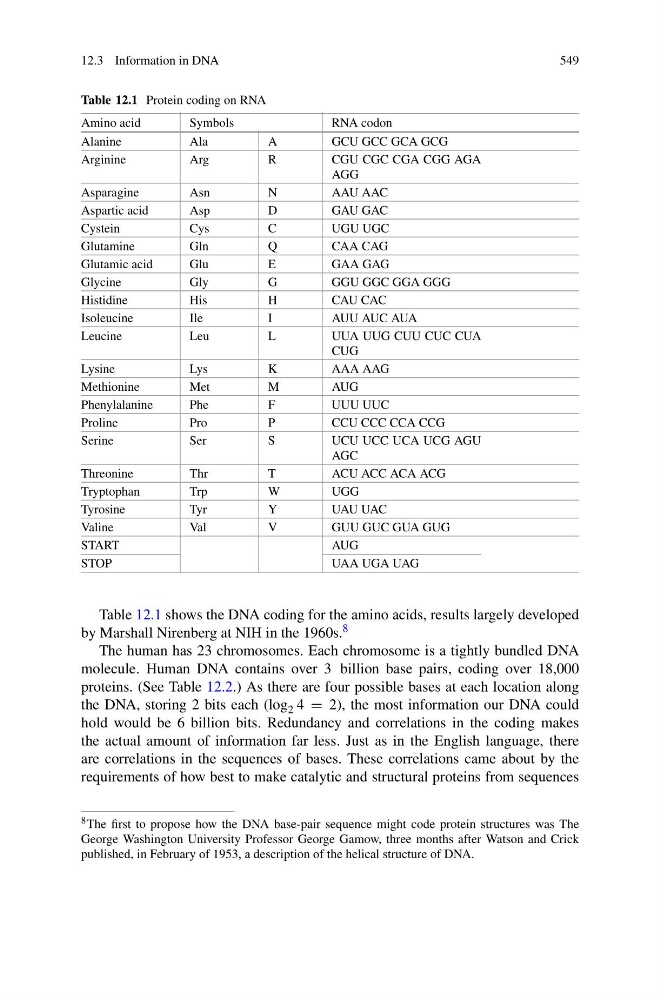
Table 12.1 shows the DNA coding for the amino acids, results largely developed
by Marshall Nirenberg at NIH in the 1960s. 8
The human has 23 chromosomes. Each chromosome is a tightly bundled DNA
molecule. Human DNA contains over 3 billion base pairs, coding over 18,000
proteins. (See Table 12.2.) As there are four possible bases at each location along
the DNA, storing 2 bits each (log 2 4 = 2), the most information our DNA could
hold would be 6 billion bits. Redundancy and correlations in the coding makes
the actual amount of information far less. Just as in the English language, there
are correlations in the sequences of bases. These correlations came about by the
requirements of how best to make catalytic and structural proteins from sequences
8 The first to propose how the DNA base-pair sequence might code protein structures was The
George Washington University Professor George Gamow, three months after Watson and Crick
published, in February of 1953, a description of the helical structure of DNA.