

258
7 Light in Biology and Medicine
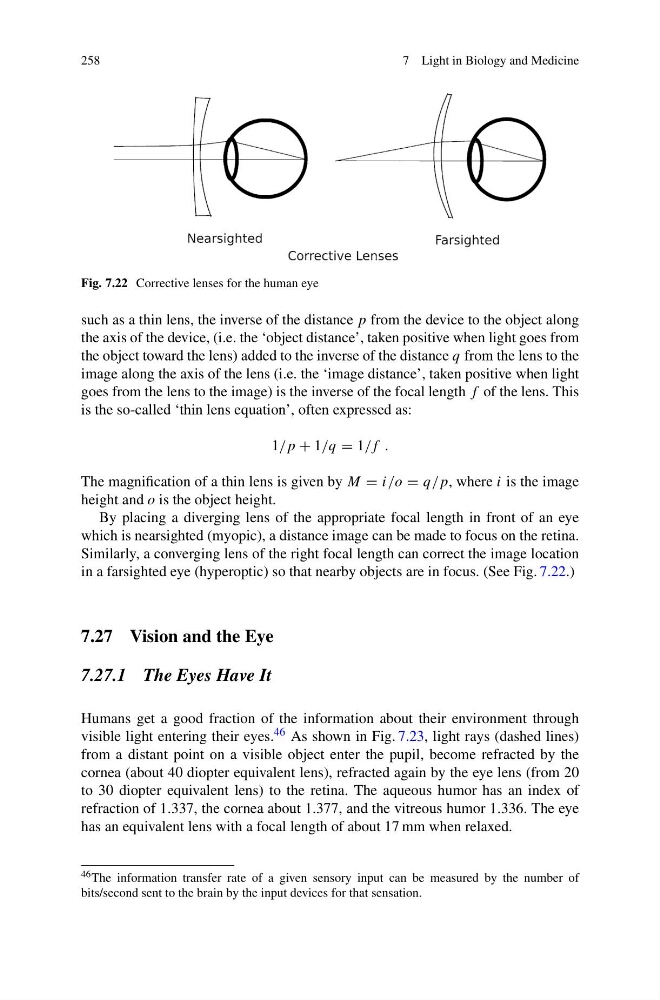
Fig. 7.22 Corrective lenses for the human eye
such as a thin lens, the inverse of the distance p from the device to the object along
the axis of the device, (i.e. the ‘object distance’, taken positive when light goes from
the object toward the lens) added to the inverse of the distance q from the lens to the
image along the axis of the lens (i.e. the ‘image distance’, taken positive when light
goes from the lens to the image) is the inverse of the focal length f of the lens. This
is the so-called ‘thin lens equation’, often expressed as:
1/p + 1/q = 1/f .
The magnification of a thin lens is given by M = i/o = q/p, where i is the image
height and o is the object height.
By placing a diverging lens of the appropriate focal length in front of an eye
which is nearsighted (myopic), a distance image can be made to focus on the retina.
Similarly, a converging lens of the right focal length can correct the image location
in a farsighted eye (hyperoptic) so that nearby objects are in focus. (See Fig. 7.22.)
7.27 Vision and the Eye
7.27.1 The Eyes Have It
Humans get a good fraction of the information about their environment through
visible light entering their eyes. 46 As shown in Fig. 7.23, light rays (dashed lines)
from a distant point on a visible object enter the pupil, become refracted by the
cornea (about 40 diopter equivalent lens), refracted again by the eye lens (from 20
to 30 diopter equivalent lens) to the retina. The aqueous humor has an index of
refraction of 1.337, the cornea about 1.377, and the vitreous humor 1.336. The eye
has an equivalent lens with a focal length of about 17 mm when relaxed.
46 The information transfer rate of a given sensory input can be measured by the number of
bits/second sent to the brain by the input devices for that sensation.
7 Light in Biology and Medicine
Fig. 7.22 Corrective lenses for the human eye
such as a thin lens, the inverse of the distance p from the device to the object along
the axis of the device, (i.e. the ‘object distance’, taken positive when light goes from
the object toward the lens) added to the inverse of the distance q from the lens to the
image along the axis of the lens (i.e. the ‘image distance’, taken positive when light
goes from the lens to the image) is the inverse of the focal length f of the lens. This
is the so-called ‘thin lens equation’, often expressed as:
1/p + 1/q = 1/f .
The magnification of a thin lens is given by M = i/o = q/p, where i is the image
height and o is the object height.
By placing a diverging lens of the appropriate focal length in front of an eye
which is nearsighted (myopic), a distance image can be made to focus on the retina.
Similarly, a converging lens of the right focal length can correct the image location
in a farsighted eye (hyperoptic) so that nearby objects are in focus. (See Fig. 7.22.)
7.27 Vision and the Eye
7.27.1 The Eyes Have It
Humans get a good fraction of the information about their environment through
visible light entering their eyes. 46 As shown in Fig. 7.23, light rays (dashed lines)
from a distant point on a visible object enter the pupil, become refracted by the
cornea (about 40 diopter equivalent lens), refracted again by the eye lens (from 20
to 30 diopter equivalent lens) to the retina. The aqueous humor has an index of
refraction of 1.337, the cornea about 1.377, and the vitreous humor 1.336. The eye
has an equivalent lens with a focal length of about 17 mm when relaxed.
46 The information transfer rate of a given sensory input can be measured by the number of
bits/second sent to the brain by the input devices for that sensation.