

Mechanistic Understanding of Methane …
81
2.2 Mechanism of CH 3 OH Formation
There has been a number of mechanisms proposed for elucidating the formation of
methanol after the methane activation. One of the most well-accepted mechanisms
is the direct rebound/recombination between the
· CH 3 radical and the OH moiety
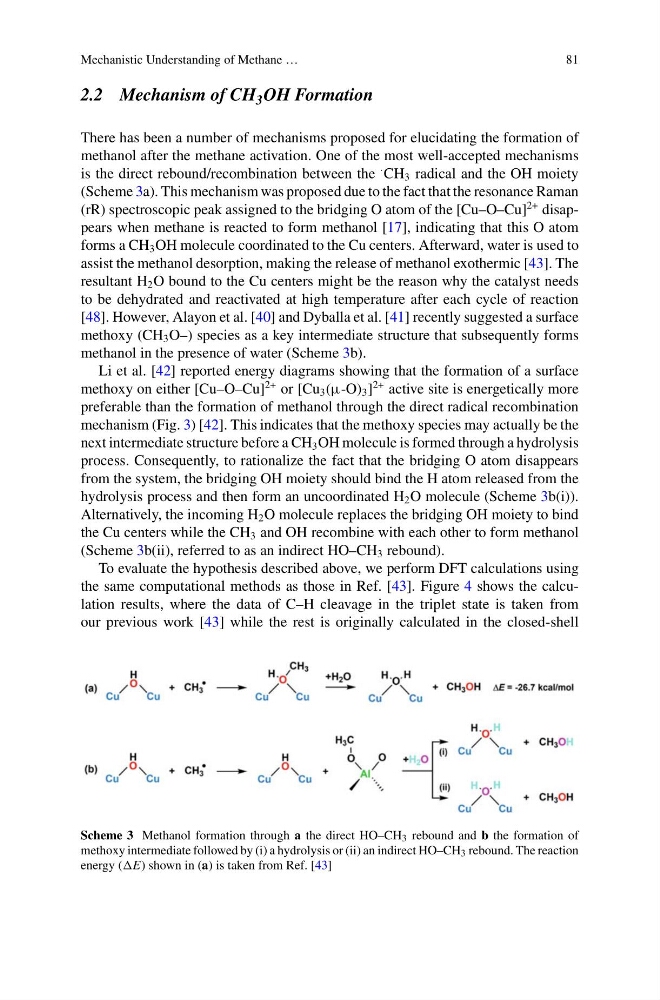
(Scheme 3a). This mechanism was proposed due to the fact that the resonance Raman
(rR) spectroscopic peak assigned to the bridging O atom of the [Cu–O–Cu]
2+ disappears when methane is reacted to form methanol [17], indicating that this O atom
forms a CH 3 OH molecule coordinated to the Cu centers. Afterward, water is used to
assist the methanol desorption, making the release of methanol exothermic [43]. The
resultant H 2 O bound to the Cu centers might be the reason why the catalyst needs
to be dehydrated and reactivated at high temperature after each cycle of reaction
[48]. However, Alayon et al. [40] and Dyballa et al. [41] recently suggested a surface
methoxy (CH 3 O–) species as a key intermediate structure that subsequently forms
methanol in the presence of water (Scheme 3b).
Li et al. [42] reported energy diagrams showing that the formation of a surface
methoxy on either [Cu–O–Cu]
2+ or [Cu 3 (μ-O) 3 ]
2+ active site is energetically more
preferable than the formation of methanol through the direct radical recombination
mechanism (Fig. 3) [42]. This indicates that the methoxy species may actually be the
next intermediate structure before a CH 3 OH molecule is formed through a hydrolysis
process. Consequently, to rationalize the fact that the bridging O atom disappears
from the system, the bridging OH moiety should bind the H atom released from the
hydrolysis process and then form an uncoordinated H 2 O molecule (Scheme 3b(i)).
Alternatively, the incoming H 2 O molecule replaces the bridging OH moiety to bind
the Cu centers while the CH 3 and OH recombine with each other to form methanol
(Scheme 3b(ii), referred to as an indirect HO–CH 3 rebound).
To evaluate the hypothesis described above, we perform DFT calculations using
the same computational methods as those in Ref. [43]. Figure 4 shows the calculation results, where the data of C–H cleavage in the triplet state is taken from
our previous work [43] while the rest is originally calculated in the closed-shell
Scheme 3 Methanol formation through a the direct HO–CH 3 rebound and b the formation of
methoxy intermediate followed by (i) a hydrolysis or (ii) an indirect HO–CH 3 rebound. The reaction
energy (E) shown in (a) is taken from Ref. [43]
81
2.2 Mechanism of CH 3 OH Formation
There has been a number of mechanisms proposed for elucidating the formation of
methanol after the methane activation. One of the most well-accepted mechanisms
is the direct rebound/recombination between the
· CH 3 radical and the OH moiety
(Scheme 3a). This mechanism was proposed due to the fact that the resonance Raman
(rR) spectroscopic peak assigned to the bridging O atom of the [Cu–O–Cu]
2+ disappears when methane is reacted to form methanol [17], indicating that this O atom
forms a CH 3 OH molecule coordinated to the Cu centers. Afterward, water is used to
assist the methanol desorption, making the release of methanol exothermic [43]. The
resultant H 2 O bound to the Cu centers might be the reason why the catalyst needs
to be dehydrated and reactivated at high temperature after each cycle of reaction
[48]. However, Alayon et al. [40] and Dyballa et al. [41] recently suggested a surface
methoxy (CH 3 O–) species as a key intermediate structure that subsequently forms
methanol in the presence of water (Scheme 3b).
Li et al. [42] reported energy diagrams showing that the formation of a surface
methoxy on either [Cu–O–Cu]
2+ or [Cu 3 (μ-O) 3 ]
2+ active site is energetically more
preferable than the formation of methanol through the direct radical recombination
mechanism (Fig. 3) [42]. This indicates that the methoxy species may actually be the
next intermediate structure before a CH 3 OH molecule is formed through a hydrolysis
process. Consequently, to rationalize the fact that the bridging O atom disappears
from the system, the bridging OH moiety should bind the H atom released from the
hydrolysis process and then form an uncoordinated H 2 O molecule (Scheme 3b(i)).
Alternatively, the incoming H 2 O molecule replaces the bridging OH moiety to bind
the Cu centers while the CH 3 and OH recombine with each other to form methanol
(Scheme 3b(ii), referred to as an indirect HO–CH 3 rebound).
To evaluate the hypothesis described above, we perform DFT calculations using
the same computational methods as those in Ref. [43]. Figure 4 shows the calculation results, where the data of C–H cleavage in the triplet state is taken from
our previous work [43] while the rest is originally calculated in the closed-shell
Scheme 3 Methanol formation through a the direct HO–CH 3 rebound and b the formation of
methoxy intermediate followed by (i) a hydrolysis or (ii) an indirect HO–CH 3 rebound. The reaction
energy (E) shown in (a) is taken from Ref. [43]