

120
Y. Tsuji et al.
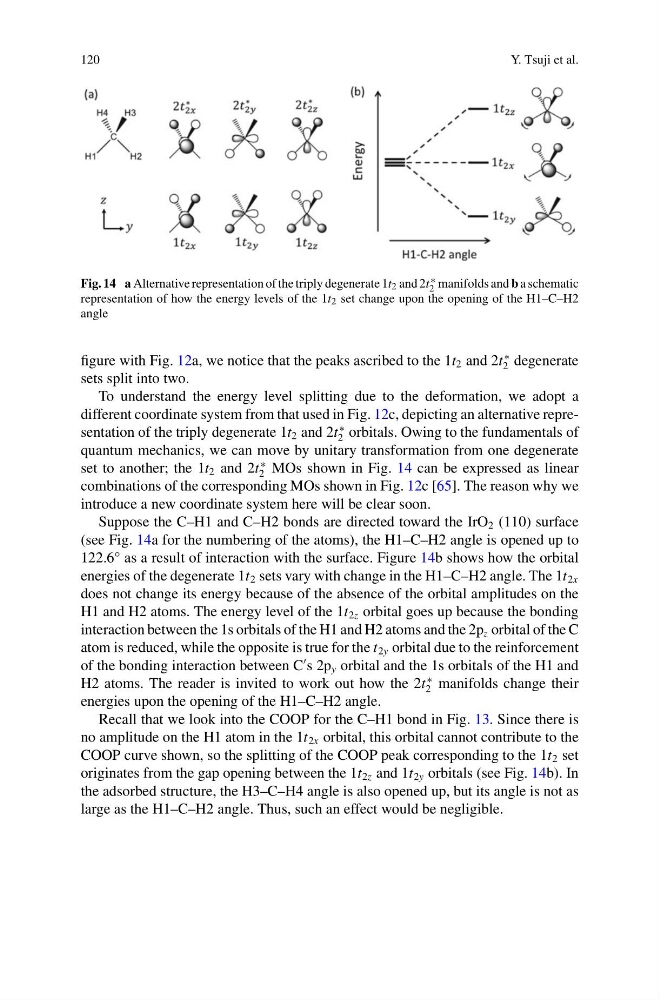
Fig. 14 a Alternative representation of the triply degenerate 1t 2 and 2t ∗
2 manifolds and b a schematic
representation of how the energy levels of the 1t 2 set change upon the opening of the H1–C–H2
angle
figure with Fig. 12a, we notice that the peaks ascribed to the 1t 2 and 2t
∗
2 degenerate
sets split into two.
To understand the energy level splitting due to the deformation, we adopt a
different coordinate system from that used in Fig. 12c, depicting an alternative representation of the triply degenerate 1t 2 and 2t
∗
2 orbitals. Owing to the fundamentals of
quantum mechanics, we can move by unitary transformation from one degenerate
set to another; the 1t 2 and 2t
∗
2 MOs shown in Fig. 14 can be expressed as linear
combinations of the corresponding MOs shown in Fig. 12c [65]. The reason why we
introduce a new coordinate system here will be clear soon.
Suppose the C–H1 and C–H2 bonds are directed toward the IrO 2 (110) surface
(see Fig. 14a for the numbering of the atoms), the H1–C–H2 angle is opened up to
122.6° as a result of interaction with the surface. Figure 14b shows how the orbital
energies of the degenerate 1t 2 sets vary with change in the H1–C–H2 angle. The 1t 2x
does not change its energy because of the absence of the orbital amplitudes on the
H1 and H2 atoms. The energy level of the 1t 2z orbital goes up because the bonding
interaction between the 1s orbitals of the H1 and H2 atoms and the 2p z orbital of the C
atom is reduced, while the opposite is true for the t 2y orbital due to the reinforcement
of the bonding interaction between C
s 2p y orbital and the 1s orbitals of the H1 and
H2 atoms. The reader is invited to work out how the 2t
∗
2 manifolds change their
energies upon the opening of the H1–C–H2 angle.
Recall that we look into the COOP for the C–H1 bond in Fig. 13. Since there is
no amplitude on the H1 atom in the 1t 2x orbital, this orbital cannot contribute to the
COOP curve shown, so the splitting of the COOP peak corresponding to the 1t 2 set
originates from the gap opening between the 1t 2z and 1t 2y orbitals (see Fig. 14b). In
the adsorbed structure, the H3–C–H4 angle is also opened up, but its angle is not as
large as the H1–C–H2 angle. Thus, such an effect would be negligible.
Y. Tsuji et al.
Fig. 14 a Alternative representation of the triply degenerate 1t 2 and 2t ∗
2 manifolds and b a schematic
representation of how the energy levels of the 1t 2 set change upon the opening of the H1–C–H2
angle
figure with Fig. 12a, we notice that the peaks ascribed to the 1t 2 and 2t
∗
2 degenerate
sets split into two.
To understand the energy level splitting due to the deformation, we adopt a
different coordinate system from that used in Fig. 12c, depicting an alternative representation of the triply degenerate 1t 2 and 2t
∗
2 orbitals. Owing to the fundamentals of
quantum mechanics, we can move by unitary transformation from one degenerate
set to another; the 1t 2 and 2t
∗
2 MOs shown in Fig. 14 can be expressed as linear
combinations of the corresponding MOs shown in Fig. 12c [65]. The reason why we
introduce a new coordinate system here will be clear soon.
Suppose the C–H1 and C–H2 bonds are directed toward the IrO 2 (110) surface
(see Fig. 14a for the numbering of the atoms), the H1–C–H2 angle is opened up to
122.6° as a result of interaction with the surface. Figure 14b shows how the orbital
energies of the degenerate 1t 2 sets vary with change in the H1–C–H2 angle. The 1t 2x
does not change its energy because of the absence of the orbital amplitudes on the
H1 and H2 atoms. The energy level of the 1t 2z orbital goes up because the bonding
interaction between the 1s orbitals of the H1 and H2 atoms and the 2p z orbital of the C
atom is reduced, while the opposite is true for the t 2y orbital due to the reinforcement
of the bonding interaction between C
s 2p y orbital and the 1s orbitals of the H1 and
H2 atoms. The reader is invited to work out how the 2t
∗
2 manifolds change their
energies upon the opening of the H1–C–H2 angle.
Recall that we look into the COOP for the C–H1 bond in Fig. 13. Since there is
no amplitude on the H1 atom in the 1t 2x orbital, this orbital cannot contribute to the
COOP curve shown, so the splitting of the COOP peak corresponding to the 1t 2 set
originates from the gap opening between the 1t 2z and 1t 2y orbitals (see Fig. 14b). In
the adsorbed structure, the H3–C–H4 angle is also opened up, but its angle is not as
large as the H1–C–H2 angle. Thus, such an effect would be negligible.