

Dynamics and Energetics of Methane …
109
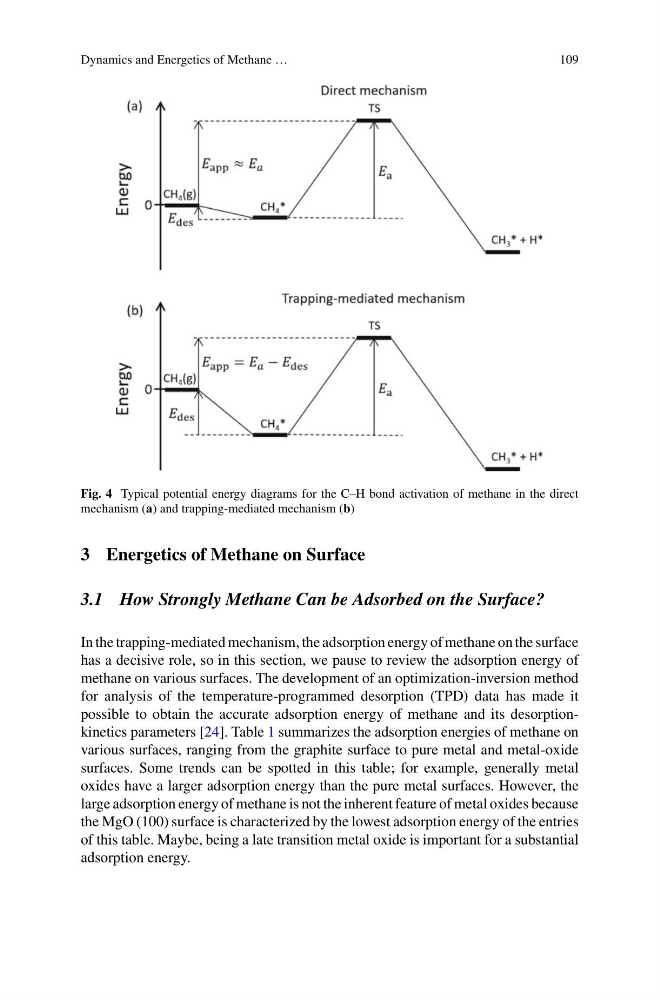
Fig. 4 Typical potential energy diagrams for the C–H bond activation of methane in the direct
mechanism (a) and trapping-mediated mechanism (b)
3 Energetics of Methane on Surface
3.1 How Strongly Methane Can be Adsorbed on the Surface?
In the trapping-mediated mechanism, the adsorption energy of methane on the surface
has a decisive role, so in this section, we pause to review the adsorption energy of
methane on various surfaces. The development of an optimization-inversion method
for analysis of the temperature-programmed desorption (TPD) data has made it
possible to obtain the accurate adsorption energy of methane and its desorptionkinetics parameters [24]. Table 1 summarizes the adsorption energies of methane on
various surfaces, ranging from the graphite surface to pure metal and metal-oxide
surfaces. Some trends can be spotted in this table; for example, generally metal
oxides have a larger adsorption energy than the pure metal surfaces. However, the
large adsorption energy of methane is not the inherent feature of metal oxides because
the MgO (100) surface is characterized by the lowest adsorption energy of the entries
of this table. Maybe, being a late transition metal oxide is important for a substantial
adsorption energy.
109
Fig. 4 Typical potential energy diagrams for the C–H bond activation of methane in the direct
mechanism (a) and trapping-mediated mechanism (b)
3 Energetics of Methane on Surface
3.1 How Strongly Methane Can be Adsorbed on the Surface?
In the trapping-mediated mechanism, the adsorption energy of methane on the surface
has a decisive role, so in this section, we pause to review the adsorption energy of
methane on various surfaces. The development of an optimization-inversion method
for analysis of the temperature-programmed desorption (TPD) data has made it
possible to obtain the accurate adsorption energy of methane and its desorptionkinetics parameters [24]. Table 1 summarizes the adsorption energies of methane on
various surfaces, ranging from the graphite surface to pure metal and metal-oxide
surfaces. Some trends can be spotted in this table; for example, generally metal
oxides have a larger adsorption energy than the pure metal surfaces. However, the
large adsorption energy of methane is not the inherent feature of metal oxides because
the MgO (100) surface is characterized by the lowest adsorption energy of the entries
of this table. Maybe, being a late transition metal oxide is important for a substantial
adsorption energy.