

the weight difference was due to the matter of heat. This was further supported by
the fact that the precipitate obtained by adding sodium hydroxide to lead nitrate
weighed more than the lead. As sodium hydroxide contained no aerial acid, only
heat could be transferred to the lead. Another support for this theory came from
another experiment: Bergman added alkali to acid and noted the temperature
increase. If he saturated the same amount of acid with metal, and then added the
alkali, he observed only a small or no temperature increase. Thus, a part of the heat
must have been fixed by the metal. This is interesting, since Bergman had accepted
Scheele’s theory that heat was composed of oxygen and phlogiston. Although
Bergman does not explicitly state it, it implied that a metal calx was composed of
metal and heat, and thus of metal, phlogiston and oxygen. Lavoisier followed up on
Bergman’s research discussing the results based on his antiphlogistic views [42].
In two dissertations published in 1782, Bergman addressed the question of
separating different kinds of earths. From his work on alum (Sect. 9.2), Bergman
was aware that solutions of aluminium salts were acidic or, as Bergman put it,
needed an excess of acid to be soluble. This is true; in neural solution, insoluble
hydroxo salts precipitate. To analyse lithomerge [43], a kaolinite mineral, Bergman
dissolved the powdered sample in hot sulphuric acid to obtain a solution of aluminium, iron, manganese and calcium sulphates, leaving silica undissolved.
The solution was divided into two parts. The first part of the solution was carefully
neutralised with calcium carbonate in order to selectively precipitate the more acidic
trivalent Al
3+ and Fe
3+ ions, leaving Ca
2+ and Mg
2+ in solution. This was an elegant
method requiring a deeper understanding of solution chemistry. As magnesium
sulphate is much more soluble than calcium sulphate, the two salts were easily
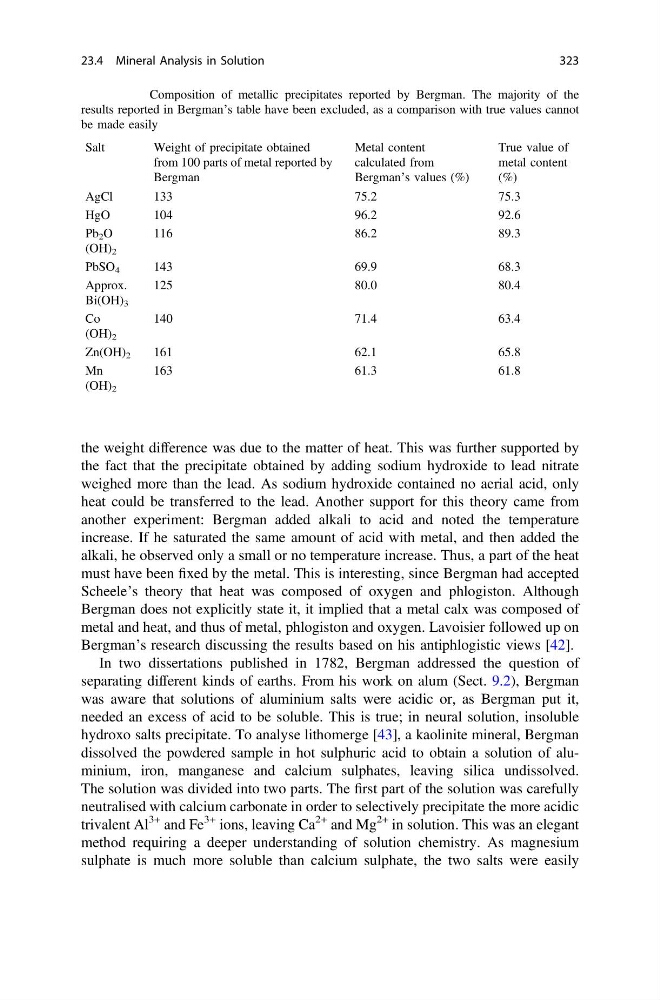
Table 23.2 Composition of metallic precipitates reported by Bergman. The majority of the
results reported in Bergman’s table have been excluded, as a comparison with true values cannot
be made easily
Salt
Weight of precipitate obtained
from 100 parts of metal reported by
Bergman
Metal content
calculated from
Bergman’s values (%)
True value of
metal content
(%)
AgCl
133
75.2
75.3
HgO
104
96.2
92.6
Pb 2 O
(OH) 2
116
86.2
89.3
PbSO 4
143
69.9
68.3
Approx.
Bi(OH) 3
125
80.0
80.4
Co
(OH) 2
140
71.4
63.4
Zn(OH) 2
161
62.1
65.8
Mn
(OH) 2
163
61.3
61.8
23.4 Mineral Analysis in Solution
323
the fact that the precipitate obtained by adding sodium hydroxide to lead nitrate
weighed more than the lead. As sodium hydroxide contained no aerial acid, only
heat could be transferred to the lead. Another support for this theory came from
another experiment: Bergman added alkali to acid and noted the temperature
increase. If he saturated the same amount of acid with metal, and then added the
alkali, he observed only a small or no temperature increase. Thus, a part of the heat
must have been fixed by the metal. This is interesting, since Bergman had accepted
Scheele’s theory that heat was composed of oxygen and phlogiston. Although
Bergman does not explicitly state it, it implied that a metal calx was composed of
metal and heat, and thus of metal, phlogiston and oxygen. Lavoisier followed up on
Bergman’s research discussing the results based on his antiphlogistic views [42].
In two dissertations published in 1782, Bergman addressed the question of
separating different kinds of earths. From his work on alum (Sect. 9.2), Bergman
was aware that solutions of aluminium salts were acidic or, as Bergman put it,
needed an excess of acid to be soluble. This is true; in neural solution, insoluble
hydroxo salts precipitate. To analyse lithomerge [43], a kaolinite mineral, Bergman
dissolved the powdered sample in hot sulphuric acid to obtain a solution of aluminium, iron, manganese and calcium sulphates, leaving silica undissolved.
The solution was divided into two parts. The first part of the solution was carefully
neutralised with calcium carbonate in order to selectively precipitate the more acidic
trivalent Al
3+ and Fe
3+ ions, leaving Ca
2+ and Mg
2+ in solution. This was an elegant
method requiring a deeper understanding of solution chemistry. As magnesium
sulphate is much more soluble than calcium sulphate, the two salts were easily
Table 23.2 Composition of metallic precipitates reported by Bergman. The majority of the
results reported in Bergman’s table have been excluded, as a comparison with true values cannot
be made easily
Salt
Weight of precipitate obtained
from 100 parts of metal reported by
Bergman
Metal content
calculated from
Bergman’s values (%)
True value of
metal content
(%)
AgCl
133
75.2
75.3
HgO
104
96.2
92.6
Pb 2 O
(OH) 2
116
86.2
89.3
PbSO 4
143
69.9
68.3
Approx.
Bi(OH) 3
125
80.0
80.4
Co
(OH) 2
140
71.4
63.4
Zn(OH) 2
161
62.1
65.8
Mn
(OH) 2
163
61.3
61.8
23.4 Mineral Analysis in Solution
323