

nitric acid, the water was evaporated and treated with potassium carbonate. As the
dried residue could not be made to detonate after mixing with phlogiston (not
specified in which form), no nitric acid was present. Carbon dioxide (aër fixus) was
detected with calcium hydroxide solution (lime water). Next, the different earths in
the water were analysed, which was done by evaporation. The residue effervesced
with acids like calcium or magnesium carbonates (lime and white magnesia).
A solution in hydrochloric acid gave a precipitate of calcium sulphate (selenit) on
addition of sulphuric acid. No magnesium sulphate (English salt) was obtained
from the mother liquor. A residue which was insoluble in acids was found to be
silica. These analytic methods were rather crude compared to those Bergman would
develop in the years to come.
Three years later, in 1773, Dubb’s thesis was followed by another dissertation
reporting chemical analysis of the water from Danmark,
3 a small village situated a
few kilometres south east of Uppsala [15]. The sour water in Danmark was first
discovered in 1733, but had been neglected until 1772. In the introduction, Bergman wrote that there are two ways of curing diseases: either using strong medicine
with rapid effect or to give small doses of a mild medicine over longer time.
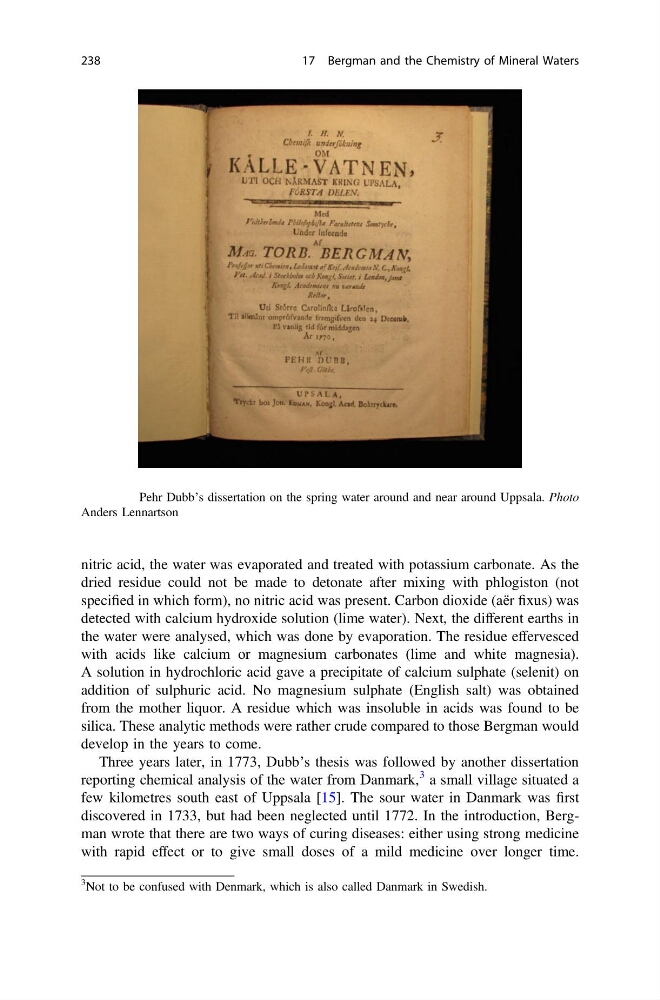
Fig. 17.2 Pehr Dubb’s dissertation on the spring water around and near around Uppsala. Photo
Anders Lennartson
3
Not to be confused with Denmark, which is also called Danmark in Swedish.
238
17 Bergman and the Chemistry of Mineral Waters
dried residue could not be made to detonate after mixing with phlogiston (not
specified in which form), no nitric acid was present. Carbon dioxide (aër fixus) was
detected with calcium hydroxide solution (lime water). Next, the different earths in
the water were analysed, which was done by evaporation. The residue effervesced
with acids like calcium or magnesium carbonates (lime and white magnesia).
A solution in hydrochloric acid gave a precipitate of calcium sulphate (selenit) on
addition of sulphuric acid. No magnesium sulphate (English salt) was obtained
from the mother liquor. A residue which was insoluble in acids was found to be
silica. These analytic methods were rather crude compared to those Bergman would
develop in the years to come.
Three years later, in 1773, Dubb’s thesis was followed by another dissertation
reporting chemical analysis of the water from Danmark,
3 a small village situated a
few kilometres south east of Uppsala [15]. The sour water in Danmark was first
discovered in 1733, but had been neglected until 1772. In the introduction, Bergman wrote that there are two ways of curing diseases: either using strong medicine
with rapid effect or to give small doses of a mild medicine over longer time.
Fig. 17.2 Pehr Dubb’s dissertation on the spring water around and near around Uppsala. Photo
Anders Lennartson
3
Not to be confused with Denmark, which is also called Danmark in Swedish.
238
17 Bergman and the Chemistry of Mineral Waters