

320
16 VLEED Capability and Sensitivity
B
Multi-solution
C : c(2x2)-O
αλ=1
A
Energy (eV)
6.5
7.5
8.5
9.5 10.5 11.5 12.5 13.5 14.5 15.5
z =z
1
0
z 0
(a.u.)
0.95
1.05
0.95
1.05
0.95
1.05
-3.50
-2.75
-2.00
-3.50
-2.75
-2.00
-3.50
-2.00
-2.75
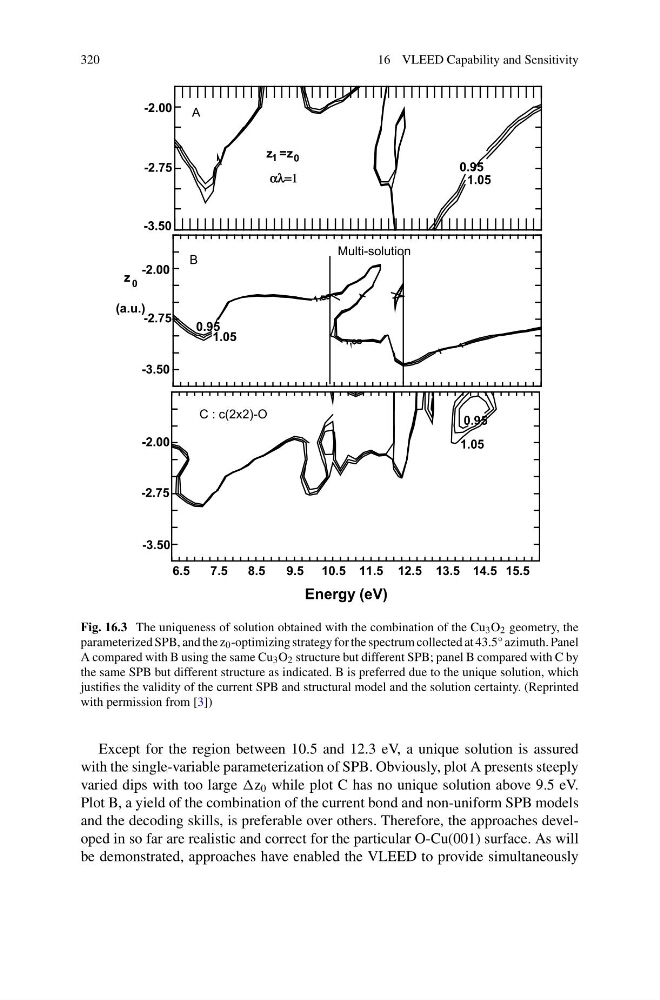
Fig. 16.3 The uniqueness of solution obtained with the combination of the Cu 3 O 2 geometry, the
parameterized SPB, and the z 0 -optimizing strategy for the spectrum collected at 43.5° azimuth. Panel
A compared with B using the same Cu 3 O 2 structure but different SPB; panel B compared with C by
the same SPB but different structure as indicated. B is preferred due to the unique solution, which
justifies the validity of the current SPB and structural model and the solution certainty. (Reprinted
with permission from [3])
Except for the region between 10.5 and 12.3 eV, a unique solution is assured
with the single-variable parameterization of SPB. Obviously, plot A presents steeply
varied dips with too large 0 while plot C has no unique solution above 9.5 eV.
Plot B, a yield of the combination of the current bond and non-uniform SPB models
and the decoding skills, is preferable over others. Therefore, the approaches developed in so far are realistic and correct for the particular O-Cu(001) surface. As will
be demonstrated, approaches have enabled the VLEED to provide simultaneously
16 VLEED Capability and Sensitivity
B
Multi-solution
C : c(2x2)-O
αλ=1
A
Energy (eV)
6.5
7.5
8.5
9.5 10.5 11.5 12.5 13.5 14.5 15.5
z =z
1
0
z 0
(a.u.)
0.95
1.05
0.95
1.05
0.95
1.05
-3.50
-2.75
-2.00
-3.50
-2.75
-2.00
-3.50
-2.00
-2.75
Fig. 16.3 The uniqueness of solution obtained with the combination of the Cu 3 O 2 geometry, the
parameterized SPB, and the z 0 -optimizing strategy for the spectrum collected at 43.5° azimuth. Panel
A compared with B using the same Cu 3 O 2 structure but different SPB; panel B compared with C by
the same SPB but different structure as indicated. B is preferred due to the unique solution, which
justifies the validity of the current SPB and structural model and the solution certainty. (Reprinted
with permission from [3])
Except for the region between 10.5 and 12.3 eV, a unique solution is assured
with the single-variable parameterization of SPB. Obviously, plot A presents steeply
varied dips with too large 0 while plot C has no unique solution above 9.5 eV.
Plot B, a yield of the combination of the current bond and non-uniform SPB models
and the decoding skills, is preferable over others. Therefore, the approaches developed in so far are realistic and correct for the particular O-Cu(001) surface. As will
be demonstrated, approaches have enabled the VLEED to provide simultaneously