

14.2 Oxide Tetrahedron Bond Formation
277
A
(010) plane containing dipole 3 and atom 4
M
4
3
z
D
D 12
DCu x
DCu z
1
<
>
V
V
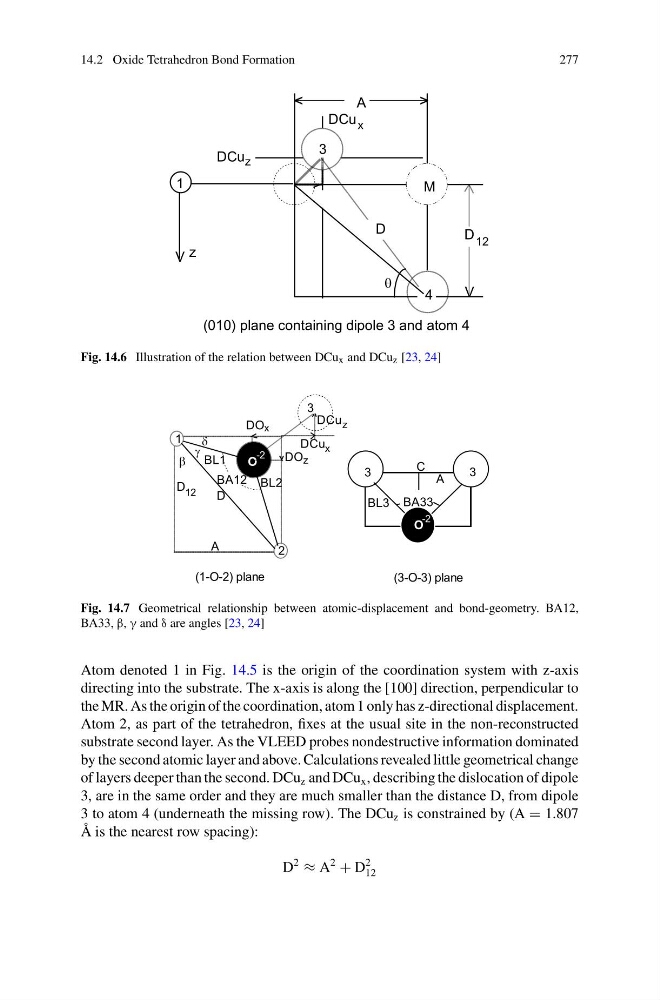
Fig. 14.6 Illustration of the relation between DCu x and DCu z [23, 24]
O
1
2
D
BL1
BL2
BA12
3
D 12
A
DCu
DCu
DO
DO
x
z
z
x
(1-O-2) plane
-2
(3-O-3) plane
3
3
C
A
3
O
-2
BL3 BA33
Fig. 14.7 Geometrical relationship between atomic-displacement and bond-geometry. BA12,
BA33, β, γ and δ are angles [23, 24]
Atom denoted 1 in Fig. 14.5 is the origin of the coordination system with z-axis
directing into the substrate. The x-axis is along the [100] direction, perpendicular to
the MR. As the origin of the coordination, atom 1 only has z-directional displacement.
Atom 2, as part of the tetrahedron, fixes at the usual site in the non-reconstructed
substrate second layer. As the VLEED probes nondestructive information dominated
by the second atomic layer and above. Calculations revealed little geometrical change
of layers deeper than the second. DCu z and DCu x , describing the dislocation of dipole
3, are in the same order and they are much smaller than the distance D, from dipole
3 to atom 4 (underneath the missing row). The DCu z is constrained by (A = 1.807
Å is the nearest row spacing):
D
2
≈ A
2
+ D
2
12
277
A
(010) plane containing dipole 3 and atom 4
M
4
3
z
D
D 12
DCu x
DCu z
1
<
>
V
V
Fig. 14.6 Illustration of the relation between DCu x and DCu z [23, 24]
O
1
2
D
BL1
BL2
BA12
3
D 12
A
DCu
DCu
DO
DO
x
z
z
x
(1-O-2) plane
-2
(3-O-3) plane
3
3
C
A
3
O
-2
BL3 BA33
Fig. 14.7 Geometrical relationship between atomic-displacement and bond-geometry. BA12,
BA33, β, γ and δ are angles [23, 24]
Atom denoted 1 in Fig. 14.5 is the origin of the coordination system with z-axis
directing into the substrate. The x-axis is along the [100] direction, perpendicular to
the MR. As the origin of the coordination, atom 1 only has z-directional displacement.
Atom 2, as part of the tetrahedron, fixes at the usual site in the non-reconstructed
substrate second layer. As the VLEED probes nondestructive information dominated
by the second atomic layer and above. Calculations revealed little geometrical change
of layers deeper than the second. DCu z and DCu x , describing the dislocation of dipole
3, are in the same order and they are much smaller than the distance D, from dipole
3 to atom 4 (underneath the missing row). The DCu z is constrained by (A = 1.807
Å is the nearest row spacing):
D
2
≈ A
2
+ D
2
12