

9.4 DFT Derivatives
193
states. N-induced lone pair states of nitrogen have been widely observed on nitrides
surfaces [26, 41, 70, 71] and CNT nanotubes [72].
9.5 XPS and ZPS: Core Level Entrapment and Polarization
9.5.1 O–Ta(001) and O–Ta(111)
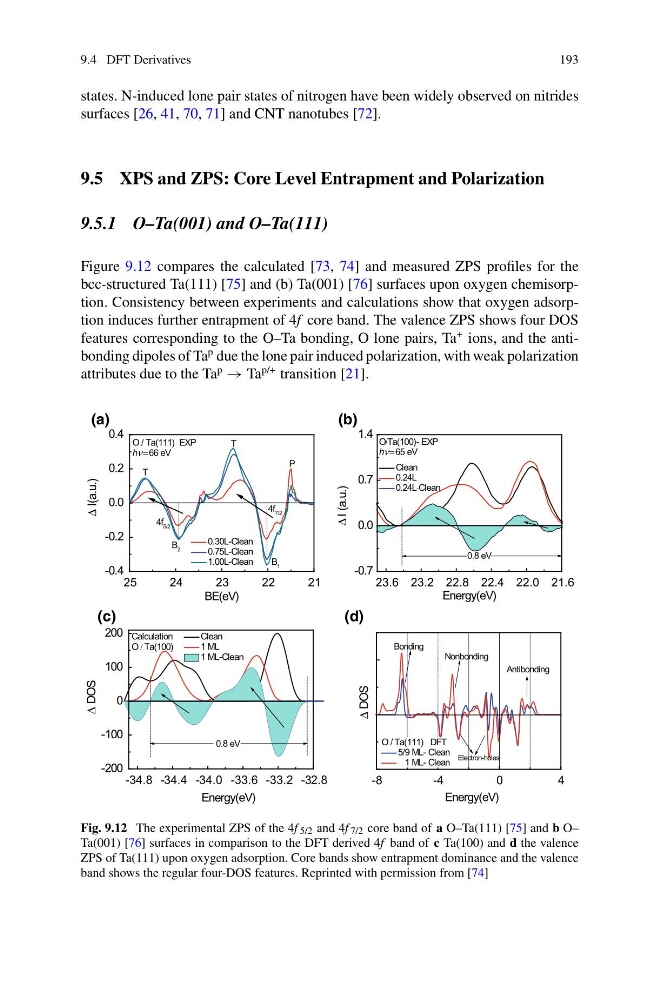
Figure 9.12 compares the calculated [73, 74] and measured ZPS profiles for the
bcc-structured Ta(111) [75] and (b) Ta(001) [76] surfaces upon oxygen chemisorption. Consistency between experiments and calculations show that oxygen adsorption induces further entrapment of 4f core band. The valence ZPS shows four DOS
features corresponding to the O–Ta bonding, O lone pairs, Ta
+ ions, and the antibonding dipoles of Ta
p due the lone pair induced polarization, with weak polarization
attributes due to the Ta
p
→ Ta
p/+ transition [21].
25
24
23
22
21
-0.4
-0.2
0.0
0.2
0.4
T
B 1
4f 5/2
O / Ta(111) EXP
hν = 66 eV
P
B 2
T
Δ I(a.u.)
BE(eV)
0.30L-Clean
0.75L-Clean
1.00L-Clean
4f 7/2
23.6 23.2 22.8 22.4 22.0 21.6
-0.7
0.0
0.7
1.4
Clean
0.24L
0.24L-Clean
O/Ta(100)- EXP
hν = 65 eV
Δ I (a.u.)
Energy(eV)
0.8 eV
-34.8 -34.4 -34.0 -33.6 -33.2 -32.8
-200
-100
0
100
200 Calculation
O / Ta(100)
Clean
1 ML
1 ML-Clean
Δ DOS
Energy(eV)
0.8 eV
-8
-4
0
4
Electron-holes
Bonding
Antibonding
Nonbonding
Δ DOS
Energy(eV)
O / Ta(111) DFT
5/9 ML- Clean
1 ML- Clean
(a)
(b)
(c)
(d)
Fig. 9.12 The experimental ZPS of the 4f 5/2 and 4f 7/2 core band of a O–Ta(111) [75] and b O–
Ta(001) [76] surfaces in comparison to the DFT derived 4f band of c Ta(100) and d the valence
ZPS of Ta(111) upon oxygen adsorption. Core bands show entrapment dominance and the valence
band shows the regular four-DOS features. Reprinted with permission from [74]
193
states. N-induced lone pair states of nitrogen have been widely observed on nitrides
surfaces [26, 41, 70, 71] and CNT nanotubes [72].
9.5 XPS and ZPS: Core Level Entrapment and Polarization
9.5.1 O–Ta(001) and O–Ta(111)
Figure 9.12 compares the calculated [73, 74] and measured ZPS profiles for the
bcc-structured Ta(111) [75] and (b) Ta(001) [76] surfaces upon oxygen chemisorption. Consistency between experiments and calculations show that oxygen adsorption induces further entrapment of 4f core band. The valence ZPS shows four DOS
features corresponding to the O–Ta bonding, O lone pairs, Ta
+ ions, and the antibonding dipoles of Ta
p due the lone pair induced polarization, with weak polarization
attributes due to the Ta
p
→ Ta
p/+ transition [21].
25
24
23
22
21
-0.4
-0.2
0.0
0.2
0.4
T
B 1
4f 5/2
O / Ta(111) EXP
hν = 66 eV
P
B 2
T
Δ I(a.u.)
BE(eV)
0.30L-Clean
0.75L-Clean
1.00L-Clean
4f 7/2
23.6 23.2 22.8 22.4 22.0 21.6
-0.7
0.0
0.7
1.4
Clean
0.24L
0.24L-Clean
O/Ta(100)- EXP
hν = 65 eV
Δ I (a.u.)
Energy(eV)
0.8 eV
-34.8 -34.4 -34.0 -33.6 -33.2 -32.8
-200
-100
0
100
200 Calculation
O / Ta(100)
Clean
1 ML
1 ML-Clean
Δ DOS
Energy(eV)
0.8 eV
-8
-4
0
4
Electron-holes
Bonding
Antibonding
Nonbonding
Δ DOS
Energy(eV)
O / Ta(111) DFT
5/9 ML- Clean
1 ML- Clean
(a)
(b)
(c)
(d)
Fig. 9.12 The experimental ZPS of the 4f 5/2 and 4f 7/2 core band of a O–Ta(111) [75] and b O–
Ta(001) [76] surfaces in comparison to the DFT derived 4f band of c Ta(100) and d the valence
ZPS of Ta(111) upon oxygen adsorption. Core bands show entrapment dominance and the valence
band shows the regular four-DOS features. Reprinted with permission from [74]