

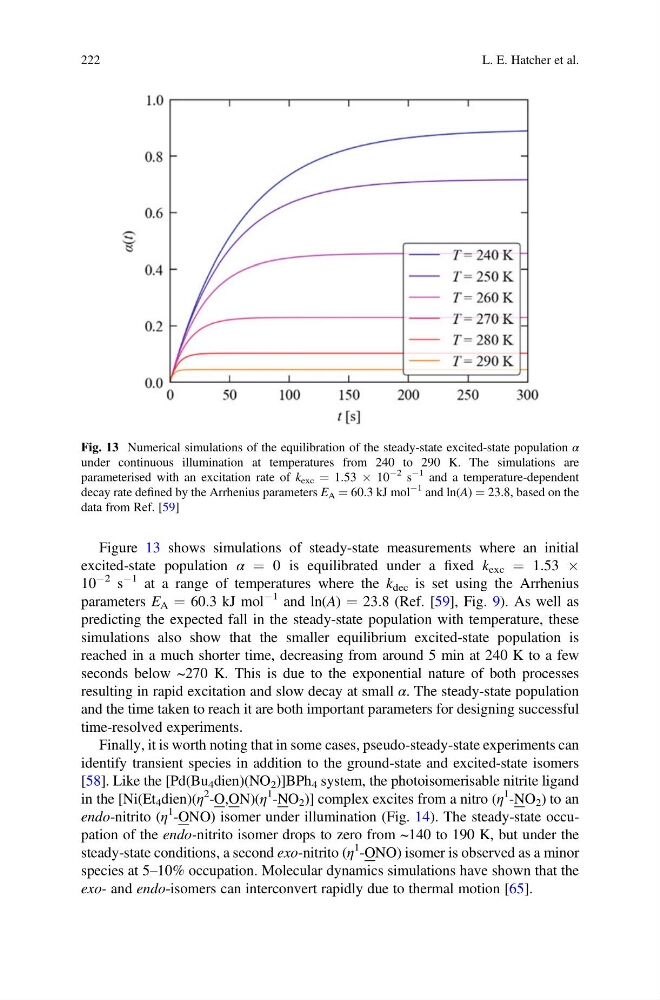
Figure 13 shows simulations of steady-state measurements where an initial
excited-state population α ¼ 0 is equilibrated under a fixed k exc ¼ 1.53 Â
10
À2 s
À1 at a range of temperatures where the k dec is set using the Arrhenius
parameters E A ¼ 60.3 kJ mol
À1 and ln(A) ¼ 23.8 (Ref. [59], Fig. 9). As well as
predicting the expected fall in the steady-state population with temperature, these
simulations also show that the smaller equilibrium excited-state population is
reached in a much shorter time, decreasing from around 5 min at 240 K to a few
seconds below ~270 K. This is due to the exponential nature of both processes
resulting in rapid excitation and slow decay at small α. The steady-state population
and the time taken to reach it are both important parameters for designing successful
time-resolved experiments.
Finally, it is worth noting that in some cases, pseudo-steady-state experiments can
identify transient species in addition to the ground-state and excited-state isomers
[58]. Like the [Pd(Bu 4 dien)(NO 2 )]BPh 4 system, the photoisomerisable nitrite ligand
in the [Ni(Et 4 dien)(η
2 -O,ON)(η
1 -NO 2 )] complex excites from a nitro (η
1 -NO 2 ) to an
endo-nitrito (η
1 -ONO) isomer under illumination (Fig. 14). The steady-state occupation of the endo-nitrito isomer drops to zero from ~140 to 190 K, but under the
steady-state conditions, a second exo-nitrito (η
1 -ONO) isomer is observed as a minor
species at 5–10% occupation. Molecular dynamics simulations have shown that the
exo- and endo-isomers can interconvert rapidly due to thermal motion [65].
Fig. 13 Numerical simulations of the equilibration of the steady-state excited-state population α
under continuous illumination at temperatures from 240 to 290 K. The simulations are
parameterised with an excitation rate of k exc ¼ 1.53 Â 10
À2 s
À1 and a temperature-dependent
decay rate defined by the Arrhenius parameters E A ¼ 60.3 kJ mol
À1 and ln(A) ¼ 23.8, based on the
data from Ref. [59]
222
L. E. Hatcher et al.
excited-state population α ¼ 0 is equilibrated under a fixed k exc ¼ 1.53 Â
10
À2 s
À1 at a range of temperatures where the k dec is set using the Arrhenius
parameters E A ¼ 60.3 kJ mol
À1 and ln(A) ¼ 23.8 (Ref. [59], Fig. 9). As well as
predicting the expected fall in the steady-state population with temperature, these
simulations also show that the smaller equilibrium excited-state population is
reached in a much shorter time, decreasing from around 5 min at 240 K to a few
seconds below ~270 K. This is due to the exponential nature of both processes
resulting in rapid excitation and slow decay at small α. The steady-state population
and the time taken to reach it are both important parameters for designing successful
time-resolved experiments.
Finally, it is worth noting that in some cases, pseudo-steady-state experiments can
identify transient species in addition to the ground-state and excited-state isomers
[58]. Like the [Pd(Bu 4 dien)(NO 2 )]BPh 4 system, the photoisomerisable nitrite ligand
in the [Ni(Et 4 dien)(η
2 -O,ON)(η
1 -NO 2 )] complex excites from a nitro (η
1 -NO 2 ) to an
endo-nitrito (η
1 -ONO) isomer under illumination (Fig. 14). The steady-state occupation of the endo-nitrito isomer drops to zero from ~140 to 190 K, but under the
steady-state conditions, a second exo-nitrito (η
1 -ONO) isomer is observed as a minor
species at 5–10% occupation. Molecular dynamics simulations have shown that the
exo- and endo-isomers can interconvert rapidly due to thermal motion [65].
Fig. 13 Numerical simulations of the equilibration of the steady-state excited-state population α
under continuous illumination at temperatures from 240 to 290 K. The simulations are
parameterised with an excitation rate of k exc ¼ 1.53 Â 10
À2 s
À1 and a temperature-dependent
decay rate defined by the Arrhenius parameters E A ¼ 60.3 kJ mol
À1 and ln(A) ¼ 23.8, based on the
data from Ref. [59]
222
L. E. Hatcher et al.