

weakly temperature dependent [59]. The decay rate, on the other hand, is strongly
temperature dependent, as per the Arrhenius law. At low temperature, the excitation
is much faster than the decay, so the steady-state excited-state population approaches
its maximum. As the temperature is raised, the decay becomes faster and begins to
compete with the excitation, causing the steady-state population to drop. At high
temperatures, the decay is much faster than the excitation, any photo-induced
isomerisation is almost instantaneously reversed, and the steady-state excited-state
population falls to zero.
Unlike t 1/2 , it is not possible to derive a simple closed expression for the steadystate occupation as a function of temperature from JMAK and Arrhenius models.
However, this can be done relatively straightforwardly using numerical simulation.
We first make the assumption that over a short time interval, Δt, the decay and
excitation act independently. Given JMAK parameters for the excitation and decay
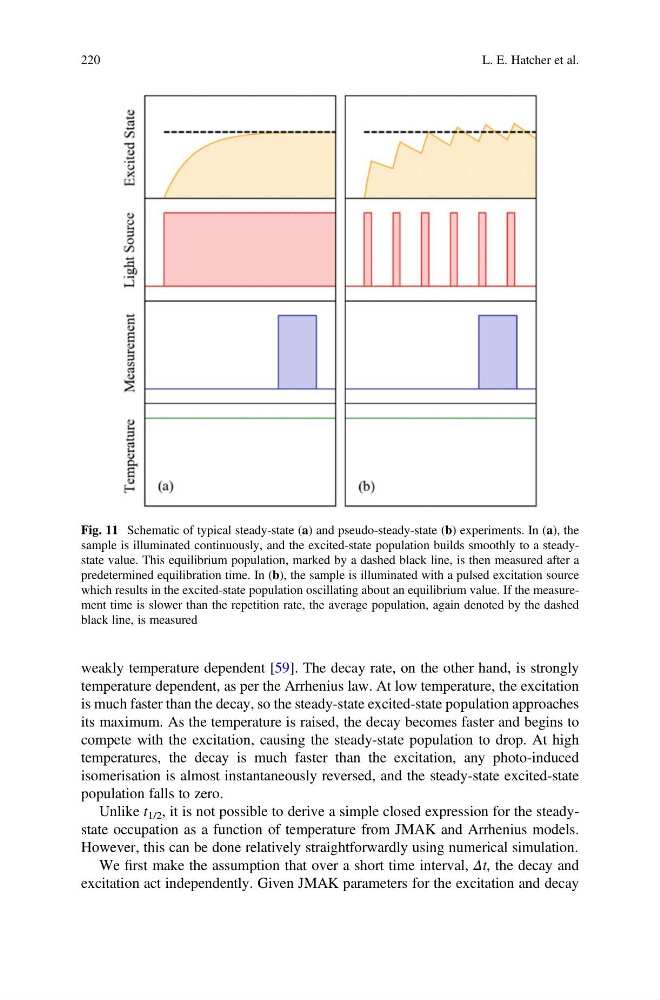
Fig. 11 Schematic of typical steady-state (a) and pseudo-steady-state (b) experiments. In (a), the
sample is illuminated continuously, and the excited-state population builds smoothly to a steadystate value. This equilibrium population, marked by a dashed black line, is then measured after a
predetermined equilibration time. In (b), the sample is illuminated with a pulsed excitation source
which results in the excited-state population oscillating about an equilibrium value. If the measurement time is slower than the repetition rate, the average population, again denoted by the dashed
black line, is measured
220
L. E. Hatcher et al.
temperature dependent, as per the Arrhenius law. At low temperature, the excitation
is much faster than the decay, so the steady-state excited-state population approaches
its maximum. As the temperature is raised, the decay becomes faster and begins to
compete with the excitation, causing the steady-state population to drop. At high
temperatures, the decay is much faster than the excitation, any photo-induced
isomerisation is almost instantaneously reversed, and the steady-state excited-state
population falls to zero.
Unlike t 1/2 , it is not possible to derive a simple closed expression for the steadystate occupation as a function of temperature from JMAK and Arrhenius models.
However, this can be done relatively straightforwardly using numerical simulation.
We first make the assumption that over a short time interval, Δt, the decay and
excitation act independently. Given JMAK parameters for the excitation and decay
Fig. 11 Schematic of typical steady-state (a) and pseudo-steady-state (b) experiments. In (a), the
sample is illuminated continuously, and the excited-state population builds smoothly to a steadystate value. This equilibrium population, marked by a dashed black line, is then measured after a
predetermined equilibration time. In (b), the sample is illuminated with a pulsed excitation source
which results in the excited-state population oscillating about an equilibrium value. If the measurement time is slower than the repetition rate, the average population, again denoted by the dashed
black line, is measured
220
L. E. Hatcher et al.