

1 3
Topics in Current Chemistry (2018) 376:46
attention must be paid to the particle sizes of the heterogeneous catalyst, as the particle size can affect the surface-to-volume ratio, and ultimately conversions and reactivity. It is worth mentioning that too small particles may generate high back-pressure or cause flow blockage. Other important points to consider are the uncontrolled
fluid dynamics and the generation of hot spots. Moreover, there are some advantages in using packed-bed flow reactors with respect to classical batch reactors. The
significantly higher catalyst loading affects the kinetics of the reaction, reducing
reaction times. As the catalyst is supported and confined to the used flow hardware
(i.e., column) no separation or recovery of the catalyst from the reaction mixture
is needed. One of the main drawbacks of immobilized catalysis is the leaching of
the catalytic material or deactivation of the catalyst. This is particularly important
when transition metals are embedded into the catalysts. Monolithic flow reactors
consist of a regular or irregular network of polymeric or inorganic materials with
interconnected micro- or macro-pores where the solution of reagents flows trough.
The porous nature of the material and the absence of interstitial spacing render these
flow reactors sometimes preferred with respect to packed-bed reactors, especially for
the greater tolerance to high flow rates and efficient mass transfer. Drawbacks to be
mentioned are pore clogging, non-uniformity of radial permeability, and reduced
accessibility of the catalytic sites inside the micropores of the heterogenous catalyst
[31]. In wall-coated reactors, the catalyst is immobilized on the inner walls of the
channels of the microfluidic device. Generally, this type of microreactor has very
good mass transfer and ensures continuous flow of the solution of reactants with
minimal pressure drop or clogging of microchannels. However, the catalyst loading is generally lower compared to other approaches, mainly because of the reduced
dimensions of the flow devices and the small amount of catalyst deposited as thin
film on the wall of the reactor.
3 Use of Supported Organocatalysts in Heterogeneous Flow
Catalysis
The use of supported organocatalysts has attracted the interest of several research
groups only recently perhaps because of the late birth of the organocatalysis field
[32]. One of the main advantages of this technique is that no metals are involved,
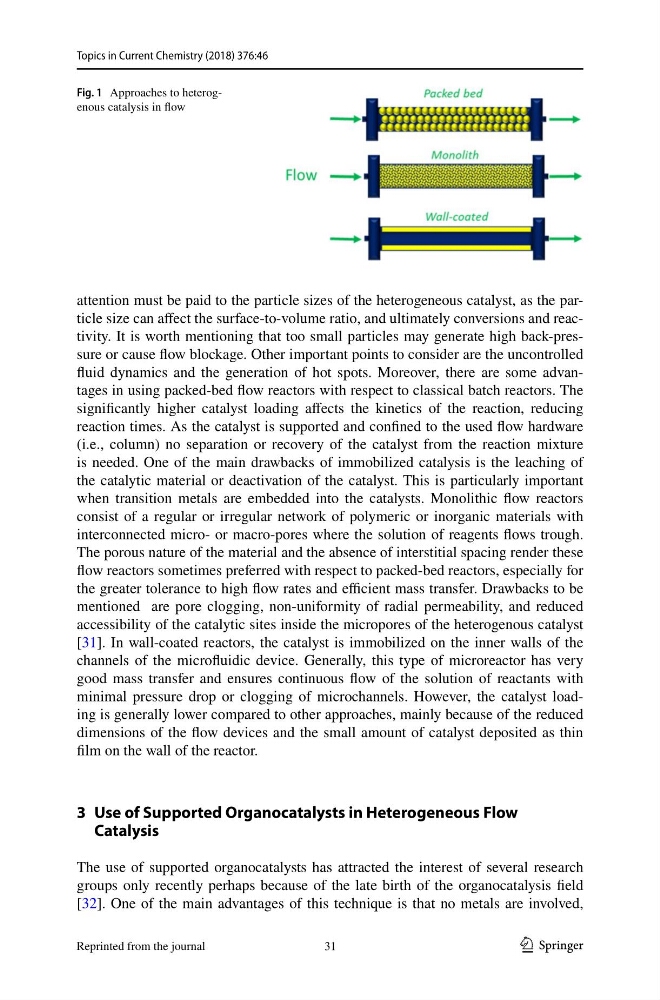
Fig. 1 Approaches to heterogenous catalysis in flow
31
Reprinted from the journal
Topics in Current Chemistry (2018) 376:46
attention must be paid to the particle sizes of the heterogeneous catalyst, as the particle size can affect the surface-to-volume ratio, and ultimately conversions and reactivity. It is worth mentioning that too small particles may generate high back-pressure or cause flow blockage. Other important points to consider are the uncontrolled
fluid dynamics and the generation of hot spots. Moreover, there are some advantages in using packed-bed flow reactors with respect to classical batch reactors. The
significantly higher catalyst loading affects the kinetics of the reaction, reducing
reaction times. As the catalyst is supported and confined to the used flow hardware
(i.e., column) no separation or recovery of the catalyst from the reaction mixture
is needed. One of the main drawbacks of immobilized catalysis is the leaching of
the catalytic material or deactivation of the catalyst. This is particularly important
when transition metals are embedded into the catalysts. Monolithic flow reactors
consist of a regular or irregular network of polymeric or inorganic materials with
interconnected micro- or macro-pores where the solution of reagents flows trough.
The porous nature of the material and the absence of interstitial spacing render these
flow reactors sometimes preferred with respect to packed-bed reactors, especially for
the greater tolerance to high flow rates and efficient mass transfer. Drawbacks to be
mentioned are pore clogging, non-uniformity of radial permeability, and reduced
accessibility of the catalytic sites inside the micropores of the heterogenous catalyst
[31]. In wall-coated reactors, the catalyst is immobilized on the inner walls of the
channels of the microfluidic device. Generally, this type of microreactor has very
good mass transfer and ensures continuous flow of the solution of reactants with
minimal pressure drop or clogging of microchannels. However, the catalyst loading is generally lower compared to other approaches, mainly because of the reduced
dimensions of the flow devices and the small amount of catalyst deposited as thin
film on the wall of the reactor.
3 Use of Supported Organocatalysts in Heterogeneous Flow
Catalysis
The use of supported organocatalysts has attracted the interest of several research
groups only recently perhaps because of the late birth of the organocatalysis field
[32]. One of the main advantages of this technique is that no metals are involved,
Fig. 1 Approaches to heterogenous catalysis in flow
31
Reprinted from the journal