

1 3
Topics in Current Chemistry (2019) 377:37
e/H shuttle enabled by a coupled Ru/Co catalytic system to access an unprecedented
selective C–C bond formation in high diastereo- and enantioselectivity (Scheme 10).
The iminium cation was formed by single-electron oxidation and hydrogen atom
abstraction of a tertiary amine. Then, this key intermediate was attacked stereoselectively by an enamine complex. Again, the coupled Ru/Co catalyst system created
a lower barrier for the electron transfer process and made it possible for substrates
with high barriers for direct oxidation to be oxidized without generating undesired
by-products.
Very recently in 2019, Yu et al. developed a catalysis system for the asymmetric radical hydroacylation of enals with α-ketoacids via the combination
of photoredox and amine catalysts [13]. By utilizing acyl radicals arising from
α-ketoacids and iminium ions generated from enals and chiral amine catalysts,
H
O
R
1
N
H
Ar
Ar
OTMS
Ar = 3,5-(CF 3 ) 2 C 6 H 3
OC-7
OC-7 (10 mol%), PC-5 (2 mol%)
BrCCl 3 (1.5 eq), Na 3 PO 4 (1.5 eq)
DCE (0.1 M), white LED, 35
o
C,16 h;
then, NaBH 4 (10.0 eq), MeOH, 30 min.
up to 89% yield and 99% ee
+
18
1
19
H
Ar
1
Ar
2
Ar
1
Ar
2
R
1
OH
+
N
N
N
N
N
N
Ru
PC-5
(PF 6
-
) 2
H
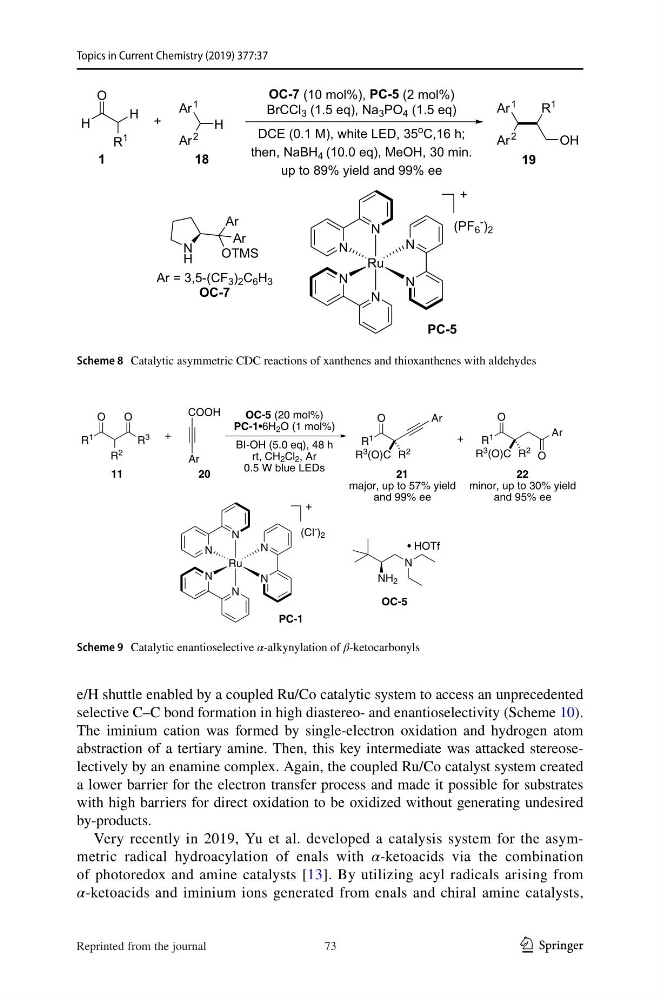
Scheme 8 Catalytic asymmetric CDC reactions of xanthenes and thioxanthenes with aldehydes
+
N
N
N
N
N
N
Ru
PC-1
(Cl
- ) 2
N
NH 2
• HOTf
OC-5
R
1
R
3
O
O
R
2
Ar
COOH
BI-OH (5.0 eq), 48 h
rt, CH 2 Cl 2 , Ar
0.5 W blue LEDs
R
1
O
R
3 (O)C R
2
Ar
+
11
20
21
major, up to 57% yield
and 99% ee
R
1
O
R 3 (O)C R 2
22
minor, up to 30% yield
and 95% ee
Ar
O
OC-5 (20 mol%)
PC-1•6H 2 O (1 mol%)
+
Scheme 9 Catalytic enantioselective α-alkynylation of β-ketocarbonyls
Reprinted from the journal
73
Topics in Current Chemistry (2019) 377:37
e/H shuttle enabled by a coupled Ru/Co catalytic system to access an unprecedented
selective C–C bond formation in high diastereo- and enantioselectivity (Scheme 10).
The iminium cation was formed by single-electron oxidation and hydrogen atom
abstraction of a tertiary amine. Then, this key intermediate was attacked stereoselectively by an enamine complex. Again, the coupled Ru/Co catalyst system created
a lower barrier for the electron transfer process and made it possible for substrates
with high barriers for direct oxidation to be oxidized without generating undesired
by-products.
Very recently in 2019, Yu et al. developed a catalysis system for the asymmetric radical hydroacylation of enals with α-ketoacids via the combination
of photoredox and amine catalysts [13]. By utilizing acyl radicals arising from
α-ketoacids and iminium ions generated from enals and chiral amine catalysts,
H
O
R
1
N
H
Ar
Ar
OTMS
Ar = 3,5-(CF 3 ) 2 C 6 H 3
OC-7
OC-7 (10 mol%), PC-5 (2 mol%)
BrCCl 3 (1.5 eq), Na 3 PO 4 (1.5 eq)
DCE (0.1 M), white LED, 35
o
C,16 h;
then, NaBH 4 (10.0 eq), MeOH, 30 min.
up to 89% yield and 99% ee
+
18
1
19
H
Ar
1
Ar
2
Ar
1
Ar
2
R
1
OH
+
N
N
N
N
N
N
Ru
PC-5
(PF 6
-
) 2
H
Scheme 8 Catalytic asymmetric CDC reactions of xanthenes and thioxanthenes with aldehydes
+
N
N
N
N
N
N
Ru
PC-1
(Cl
- ) 2
N
NH 2
• HOTf
OC-5
R
1
R
3
O
O
R
2
Ar
COOH
BI-OH (5.0 eq), 48 h
rt, CH 2 Cl 2 , Ar
0.5 W blue LEDs
R
1
O
R
3 (O)C R
2
Ar
+
11
20
21
major, up to 57% yield
and 99% ee
R
1
O
R 3 (O)C R 2
22
minor, up to 30% yield
and 95% ee
Ar
O
OC-5 (20 mol%)
PC-1•6H 2 O (1 mol%)
+
Scheme 9 Catalytic enantioselective α-alkynylation of β-ketocarbonyls
Reprinted from the journal
73