

1 3
Topics in Current Chemistry (2019) 377:37
joint use of iridium photoredox catalyst PC-3 and chiral imidazolidinone organocatalyst OC-3 [3]. With this protocol in hand, a wide array of desired benzylation
products were synthesized with good to excellent yields and enantioselectivity
(Scheme 3). This asymmetric α-benzylation reaction was utilized to access a chiral drug target compound for angiogenesis suppression in three steps.
In 2013, the same group found an impressive strategy to accomplish the previously elusive direct β-functionalization of saturated carbonyls including aldehydes
and ketones [4]. The joint use of visible light photocatalysts and amine catalysts provided access to the transient generation of 5π-electron β-enaminyl radicals. These
reactive species can add to cyano-containing aryl rings at the β-position of carbonyls in a facile fashion. With cinchona-derived organocatalyst OC-4, the β-arylation
H
O
Y
OC-1 (20% mol)
PC-1 (0.5% mol)
2,6-lutidine, DMF, 23 °C
fluorescent light
up to 87% yield and 93% ee
H
O
Y
+
Br
FG
FG
R
R
Y = alkyl,
alkenyl,
aryl, etc
R = any
organic
substituent
FG = functional
group
1
3
2
N
H
N
O
Me
t-Bu
Me
+
OC-1
N
N
N
N
N
N
Ru
PC-1
(Cl
- ) 2
• HOTf
N
N
O
Me
t-Bu
Me
Y
FG
R
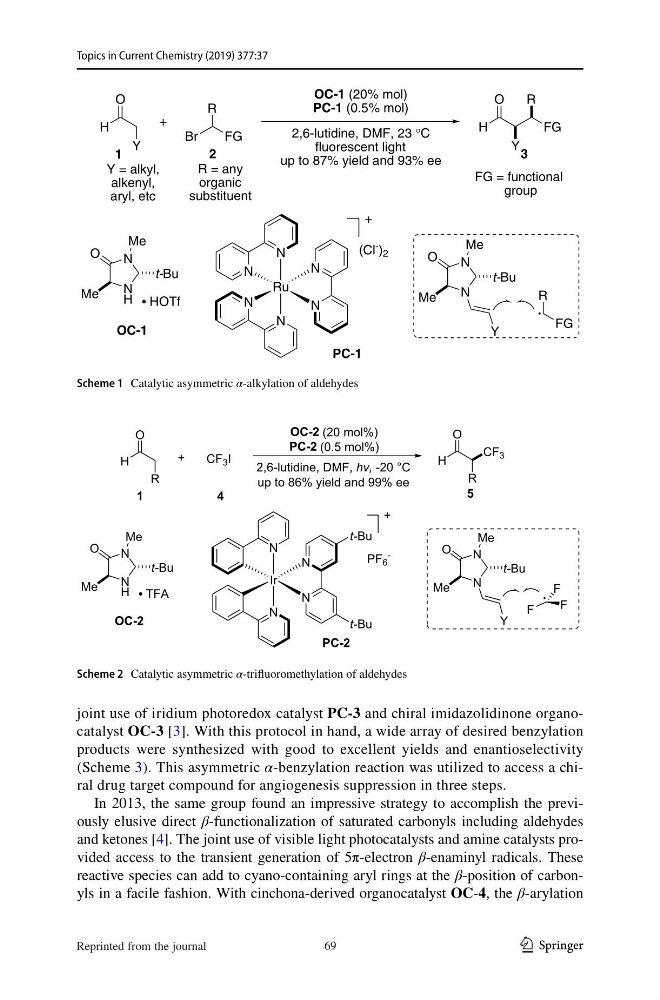
Scheme 1 Catalytic asymmetric α-alkylation of aldehydes
H
O
R
OC-2 (20 mol%)
PC-2 (0.5 mol%)
2,6-lutidine, DMF, hv, -20 °C
up to 86% yield and 99% ee
H
CF 3
O
R
N
H
N
O
Me
t-Bu
Me
+
CF 3 I
+
1
OC-2
5
N
N
N
N
Ir
t-Bu
t-Bu
PC-2
PF 6
-
• TFA
4
N
N
O
Me
t-Bu
Me
Y
F
F
F
Scheme 2 Catalytic asymmetric α-trifluoromethylation of aldehydes
Reprinted from the journal
69
Topics in Current Chemistry (2019) 377:37
joint use of iridium photoredox catalyst PC-3 and chiral imidazolidinone organocatalyst OC-3 [3]. With this protocol in hand, a wide array of desired benzylation
products were synthesized with good to excellent yields and enantioselectivity
(Scheme 3). This asymmetric α-benzylation reaction was utilized to access a chiral drug target compound for angiogenesis suppression in three steps.
In 2013, the same group found an impressive strategy to accomplish the previously elusive direct β-functionalization of saturated carbonyls including aldehydes
and ketones [4]. The joint use of visible light photocatalysts and amine catalysts provided access to the transient generation of 5π-electron β-enaminyl radicals. These
reactive species can add to cyano-containing aryl rings at the β-position of carbonyls in a facile fashion. With cinchona-derived organocatalyst OC-4, the β-arylation
H
O
Y
OC-1 (20% mol)
PC-1 (0.5% mol)
2,6-lutidine, DMF, 23 °C
fluorescent light
up to 87% yield and 93% ee
H
O
Y
+
Br
FG
FG
R
R
Y = alkyl,
alkenyl,
aryl, etc
R = any
organic
substituent
FG = functional
group
1
3
2
N
H
N
O
Me
t-Bu
Me
+
OC-1
N
N
N
N
N
N
Ru
PC-1
(Cl
- ) 2
• HOTf
N
N
O
Me
t-Bu
Me
Y
FG
R
Scheme 1 Catalytic asymmetric α-alkylation of aldehydes
H
O
R
OC-2 (20 mol%)
PC-2 (0.5 mol%)
2,6-lutidine, DMF, hv, -20 °C
up to 86% yield and 99% ee
H
CF 3
O
R
N
H
N
O
Me
t-Bu
Me
+
CF 3 I
+
1
OC-2
5
N
N
N
N
Ir
t-Bu
t-Bu
PC-2
PF 6
-
• TFA
4
N
N
O
Me
t-Bu
Me
Y
F
F
F
Scheme 2 Catalytic asymmetric α-trifluoromethylation of aldehydes
Reprinted from the journal
69