

Earth mass, and hence, there is considerably more material residing in other reservoirs. Furthermore, as first Edgeworth and then Kuiper deduced (Edgeworth 1949;
Kuiper 1951), planetary formation processes did not end at the orbit of Neptune. The
orbital period of a small object around a central star is
P ¼ 2π
ffiffiffiffiffiffiffiffi
a s
3
GM
r
ð1Þ
where a s is the semi-major axis, and GM is the geopotential of the star which takes a
value of 1.32712 Â 10
20 m
3 s
À2 for our Sun. Assuming a circular orbit, the mean
orbital speed is then
v ¼
ffiffiffiffiffiffiffiffi
GM
a s
r
ð2Þ
where the proportionality to √(1/a s ) shows that relative speeds in the outer Solar
System decrease with heliocentric distance, r h . This led to a reduction in the number
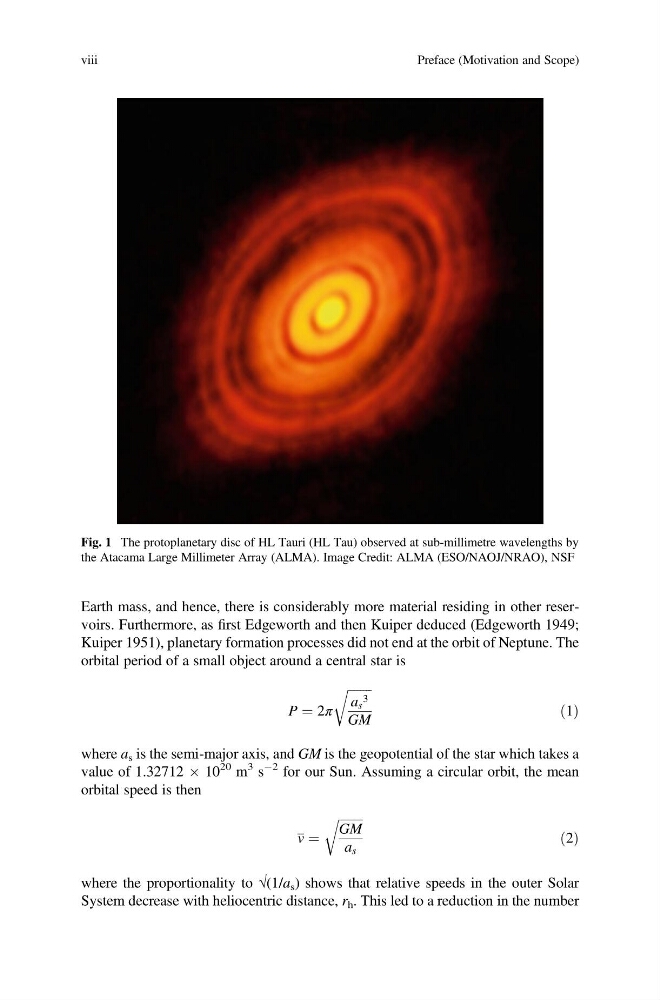
Fig. 1 The protoplanetary disc of HL Tauri (HL Tau) observed at sub-millimetre wavelengths by
the Atacama Large Millimeter Array (ALMA). Image Credit: ALMA (ESO/NAOJ/NRAO), NSF
viii
Preface (Motivation and Scope)
Kuiper 1951), planetary formation processes did not end at the orbit of Neptune. The
orbital period of a small object around a central star is
P ¼ 2π
ffiffiffiffiffiffiffiffi
a s
3
GM
r
ð1Þ
where a s is the semi-major axis, and GM is the geopotential of the star which takes a
value of 1.32712 Â 10
20 m
3 s
À2 for our Sun. Assuming a circular orbit, the mean
orbital speed is then
v ¼
ffiffiffiffiffiffiffiffi
GM
a s
r
ð2Þ
where the proportionality to √(1/a s ) shows that relative speeds in the outer Solar
System decrease with heliocentric distance, r h . This led to a reduction in the number
Fig. 1 The protoplanetary disc of HL Tauri (HL Tau) observed at sub-millimetre wavelengths by
the Atacama Large Millimeter Array (ALMA). Image Credit: ALMA (ESO/NAOJ/NRAO), NSF
viii
Preface (Motivation and Scope)