

Table 2.2 The sizes and shapes of cometary nuclei observed directly by spacecraft
Comet
Rough
description
Size
1P/Halley
Prolate
ellipsoid
15.3 Â 7.8 Â 7.4 km Æ 0.5 km
Keller et al. (1987)
9P/Tempel 1
Almost
pyramidal
Mean radius: 2.81 km Æ 0.1 km
Volume: 95.2 km
3
Principal moment ratios:
a/c: 0.688; a/c: 0.930
Thomas et al.
(2013a)
19P/Borrelly
Elongated
ellipsoidal
Axes: 4.0 Æ 0.1 Â 1.60 Æ 0.02
 1.60 Æ 0.02 km
Buratti et al. (2004)
67P/
ChuryumovGerasimenko
Axially asymmetric bi-lobate
Axes: 4.34 (Æ0.02) Â 2.60 (Æ0.02)
 2.12 (Æ0.06) km
Volume: 18.7 Æ 0.2 km
3
Jorda et al. (2016),
Pätzold et al. (2016)
81P/Wild 2
Roughly
spheroid
Axes: 1.65 Â 2.00
 2.75 km Æ 0.05 km
Duxbury et al.
(2004)
103P/Hartley 2
Axially symmetric bi-lobate
Mean radius: 0.58 (Æ0.018) km
Volume: 0.809 (Æ0.077) km
3
Principal moment ratios: a/c:
0.166 Æ 0.004, b/c: 0.979 Æ 0.002
Thomas et al.
(2013b)
The descriptions are crude but are intended to give an impression of the shape
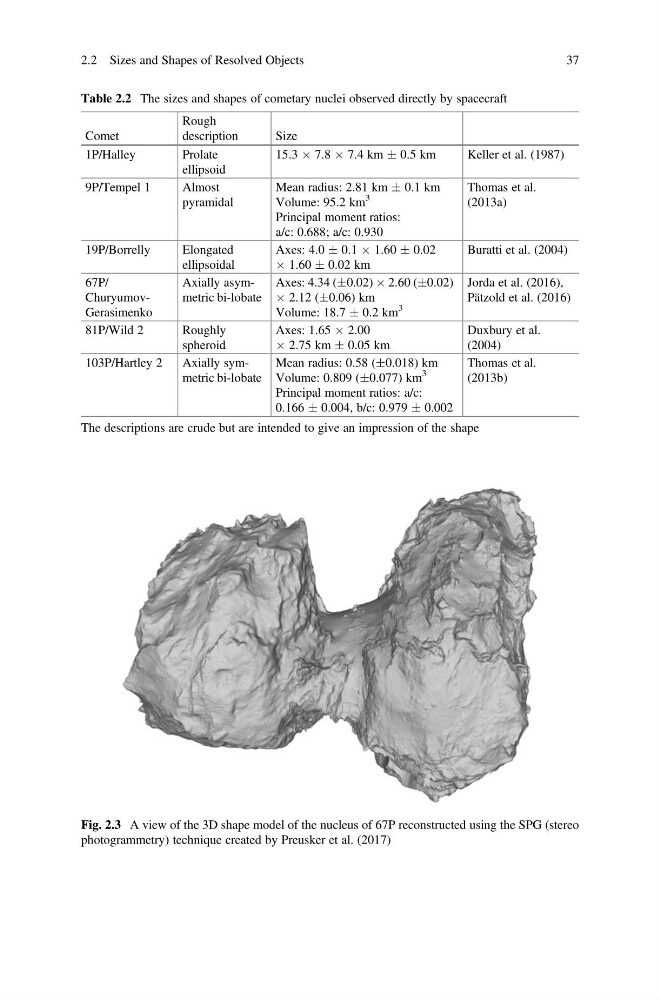
Fig. 2.3 A view of the 3D shape model of the nucleus of 67P reconstructed using the SPG (stereo
photogrammetry) technique created by Preusker et al. (2017)
2.2 Sizes and Shapes of Resolved Objects
37
Comet
Rough
description
Size
1P/Halley
Prolate
ellipsoid
15.3 Â 7.8 Â 7.4 km Æ 0.5 km
Keller et al. (1987)
9P/Tempel 1
Almost
pyramidal
Mean radius: 2.81 km Æ 0.1 km
Volume: 95.2 km
3
Principal moment ratios:
a/c: 0.688; a/c: 0.930
Thomas et al.
(2013a)
19P/Borrelly
Elongated
ellipsoidal
Axes: 4.0 Æ 0.1 Â 1.60 Æ 0.02
 1.60 Æ 0.02 km
Buratti et al. (2004)
67P/
ChuryumovGerasimenko
Axially asymmetric bi-lobate
Axes: 4.34 (Æ0.02) Â 2.60 (Æ0.02)
 2.12 (Æ0.06) km
Volume: 18.7 Æ 0.2 km
3
Jorda et al. (2016),
Pätzold et al. (2016)
81P/Wild 2
Roughly
spheroid
Axes: 1.65 Â 2.00
 2.75 km Æ 0.05 km
Duxbury et al.
(2004)
103P/Hartley 2
Axially symmetric bi-lobate
Mean radius: 0.58 (Æ0.018) km
Volume: 0.809 (Æ0.077) km
3
Principal moment ratios: a/c:
0.166 Æ 0.004, b/c: 0.979 Æ 0.002
Thomas et al.
(2013b)
The descriptions are crude but are intended to give an impression of the shape
Fig. 2.3 A view of the 3D shape model of the nucleus of 67P reconstructed using the SPG (stereo
photogrammetry) technique created by Preusker et al. (2017)
2.2 Sizes and Shapes of Resolved Objects
37