

While the dynamical relationship between JFCs and Centaurs seems to have been
established, there may still be some issues with the physical relationship. As we shall
see, comets have low albedos. Thermal infrared studies of Centaurs (Stansberry et al.
2008) in general point to comet-like albedos (Table 1.3). However, there are objects
with appreciable higher albedos (e.g. (5145) Pholus) and all objects are much larger
than any known JFC (cf. Lamy et al. 2011, for example). The higher albedos may be
an observational issue associated with activity (Duffard et al. 2014). There may also
be a relationship between colour and albedo (Peixinho et al. 2020). But if these types
of objects really are from a family of pre-cursors of JFCs, then either there are many
more, much smaller, Centaurs that we simply have not detected yet or else the mass
loss from these objects must be enormous at some stage during the transition.
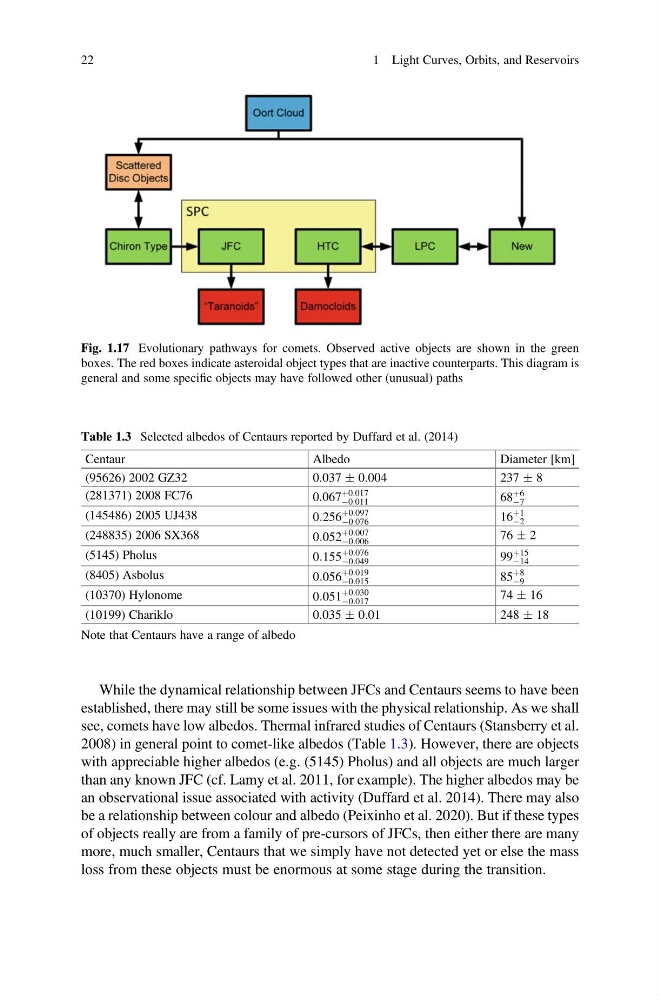
Fig. 1.17 Evolutionary pathways for comets. Observed active objects are shown in the green
boxes. The red boxes indicate asteroidal object types that are inactive counterparts. This diagram is
general and some specific objects may have followed other (unusual) paths
Table 1.3 Selected albedos of Centaurs reported by Duffard et al. (2014)
Centaur
Albedo
Diameter [km]
(95626) 2002 GZ32
0.037 Æ 0.004
237 Æ 8
(281371) 2008 FC76
0.067
þ0:017
À0:011
68
þ6
À7
(145486) 2005 UJ438
0:256
þ0:097
À0:076
16
þ1
À2
(248835) 2006 SX368
0:052
þ0:007
À0:006
76 Æ 2
(5145) Pholus
0:155
þ0:076
À0:049
99
þ15
À14
(8405) Asbolus
0:056
þ0:019
À0:015
85
þ8
À9
(10370) Hylonome
0:051
þ0:030
À0:017
74 Æ 16
(10199) Chariklo
0.035 Æ 0.01
248 Æ 18
Note that Centaurs have a range of albedo
22
1 Light Curves, Orbits, and Reservoirs
established, there may still be some issues with the physical relationship. As we shall
see, comets have low albedos. Thermal infrared studies of Centaurs (Stansberry et al.
2008) in general point to comet-like albedos (Table 1.3). However, there are objects
with appreciable higher albedos (e.g. (5145) Pholus) and all objects are much larger
than any known JFC (cf. Lamy et al. 2011, for example). The higher albedos may be
an observational issue associated with activity (Duffard et al. 2014). There may also
be a relationship between colour and albedo (Peixinho et al. 2020). But if these types
of objects really are from a family of pre-cursors of JFCs, then either there are many
more, much smaller, Centaurs that we simply have not detected yet or else the mass
loss from these objects must be enormous at some stage during the transition.
Fig. 1.17 Evolutionary pathways for comets. Observed active objects are shown in the green
boxes. The red boxes indicate asteroidal object types that are inactive counterparts. This diagram is
general and some specific objects may have followed other (unusual) paths
Table 1.3 Selected albedos of Centaurs reported by Duffard et al. (2014)
Centaur
Albedo
Diameter [km]
(95626) 2002 GZ32
0.037 Æ 0.004
237 Æ 8
(281371) 2008 FC76
0.067
þ0:017
À0:011
68
þ6
À7
(145486) 2005 UJ438
0:256
þ0:097
À0:076
16
þ1
À2
(248835) 2006 SX368
0:052
þ0:007
À0:006
76 Æ 2
(5145) Pholus
0:155
þ0:076
À0:049
99
þ15
À14
(8405) Asbolus
0:056
þ0:019
À0:015
85
þ8
À9
(10370) Hylonome
0:051
þ0:030
À0:017
74 Æ 16
(10199) Chariklo
0.035 Æ 0.01
248 Æ 18
Note that Centaurs have a range of albedo
22
1 Light Curves, Orbits, and Reservoirs