

In the late twentieth century, numerical simulation of disconnection events was
challenging because of the computer power necessary. Various specific cases were
addressed. Wegmann et al. (1996), for example, compared their model with observations of C/1989 X1 (Austin) which produced multiple tail rays but failed to follow
this with a disconnection event. They concluded that a 90
rotation of the
interplanetary magnetic field (IMF) could reproduce this scenario although sector
boundary crossings with field reversals were not investigated.
Jia et al. (2007) studied disconnection events specifically using a global 3D MHD
model with considerably higher spatial resolution. They showed that indeed sector
boundary crossings initiated disconnection events supporting the idea as originally
promoted in a series of papers by Niedner and Brandt (e.g. Niedner Jr. and Brandt
1978). However, the observational evidence seems to suggest that other large
discontinuities in the solar wind can also initiate the process with changes in the
magnetic field orientation >90
being necessary. Tail rays are also a natural consequence of tangential discontinuities in the solar wind flow. Jia et al. (2007) showed
that if multiple discontinuities occur at intervals of the order of 2 h or greater, strong
tail rays result followed by disconnection.
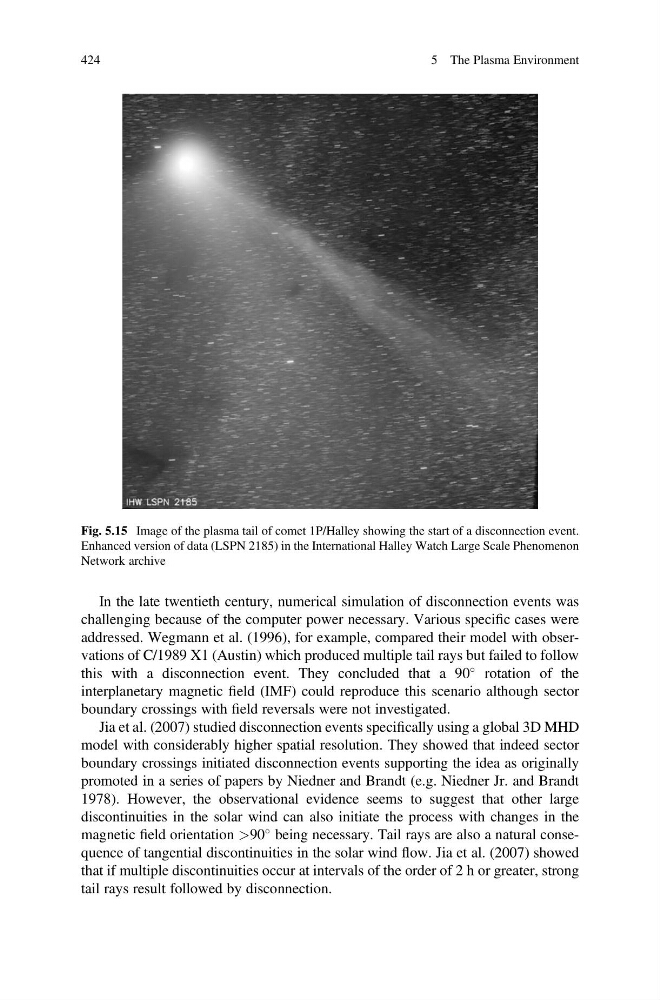
Fig. 5.15 Image of the plasma tail of comet 1P/Halley showing the start of a disconnection event.
Enhanced version of data (LSPN 2185) in the International Halley Watch Large Scale Phenomenon
Network archive
424
5 The Plasma Environment
challenging because of the computer power necessary. Various specific cases were
addressed. Wegmann et al. (1996), for example, compared their model with observations of C/1989 X1 (Austin) which produced multiple tail rays but failed to follow
this with a disconnection event. They concluded that a 90
rotation of the
interplanetary magnetic field (IMF) could reproduce this scenario although sector
boundary crossings with field reversals were not investigated.
Jia et al. (2007) studied disconnection events specifically using a global 3D MHD
model with considerably higher spatial resolution. They showed that indeed sector
boundary crossings initiated disconnection events supporting the idea as originally
promoted in a series of papers by Niedner and Brandt (e.g. Niedner Jr. and Brandt
1978). However, the observational evidence seems to suggest that other large
discontinuities in the solar wind can also initiate the process with changes in the
magnetic field orientation >90
being necessary. Tail rays are also a natural consequence of tangential discontinuities in the solar wind flow. Jia et al. (2007) showed
that if multiple discontinuities occur at intervals of the order of 2 h or greater, strong
tail rays result followed by disconnection.
Fig. 5.15 Image of the plasma tail of comet 1P/Halley showing the start of a disconnection event.
Enhanced version of data (LSPN 2185) in the International Halley Watch Large Scale Phenomenon
Network archive
424
5 The Plasma Environment