

resulting phenomena were remarkably different. The intra-mixture sample produced
a cohesive foam-like mantle. Foamy large (cm-sized) chunks were then ejected from
the surface against the retarding force of Earth’s gravity. The inter-mixture produced
a less cohesive and more compact mantle on the surface. The water ice sintered (Fig.
2.37) in the sub-surface generating a harder layer. This shows that the physical
properties of layers produced by heating water ice and organic materials can be very
different even if the bulk composition is held constant and depends upon the way the
substances are arranged at microscopic scales.
These tests have also shown how large amounts of material, including larger
particle sizes, might leave a nucleus surface. In Fig. 4.28 (bottom), we can see two
images of a test where the later image (to the right) shows that a chunk of a tholinwater ice mixture has been ejected from the surface. The upper panels of Fig. 4.28
show images taken just a few seconds apart. This mixture was more dynamic in its
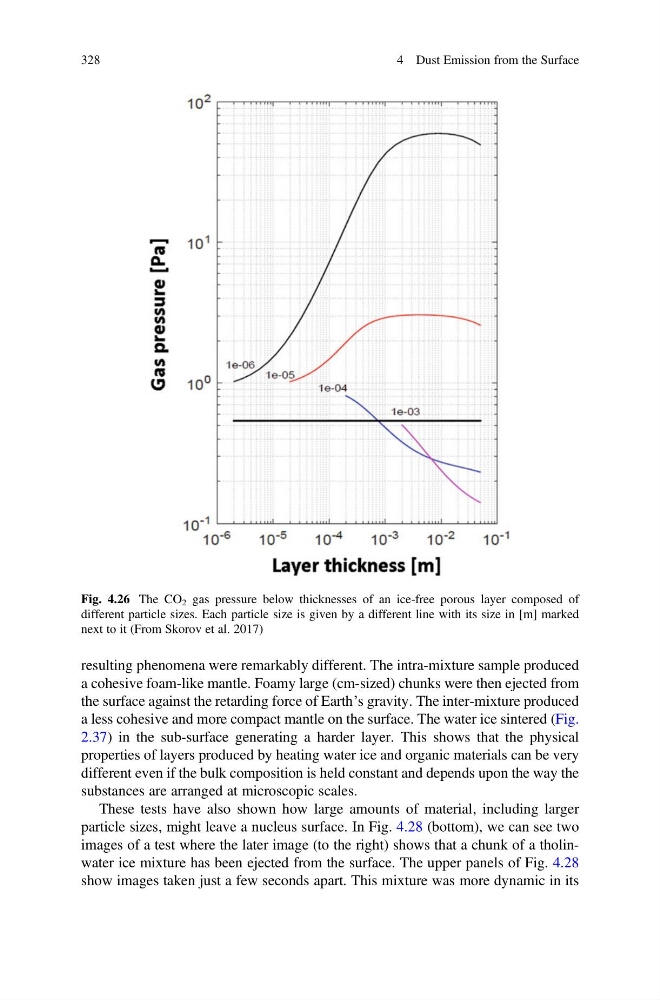
Fig. 4.26 The CO 2 gas pressure below thicknesses of an ice-free porous layer composed of
different particle sizes. Each particle size is given by a different line with its size in [m] marked
next to it (From Skorov et al. 2017)
328
4 Dust Emission from the Surface
a cohesive foam-like mantle. Foamy large (cm-sized) chunks were then ejected from
the surface against the retarding force of Earth’s gravity. The inter-mixture produced
a less cohesive and more compact mantle on the surface. The water ice sintered (Fig.
2.37) in the sub-surface generating a harder layer. This shows that the physical
properties of layers produced by heating water ice and organic materials can be very
different even if the bulk composition is held constant and depends upon the way the
substances are arranged at microscopic scales.
These tests have also shown how large amounts of material, including larger
particle sizes, might leave a nucleus surface. In Fig. 4.28 (bottom), we can see two
images of a test where the later image (to the right) shows that a chunk of a tholinwater ice mixture has been ejected from the surface. The upper panels of Fig. 4.28
show images taken just a few seconds apart. This mixture was more dynamic in its
Fig. 4.26 The CO 2 gas pressure below thicknesses of an ice-free porous layer composed of
different particle sizes. Each particle size is given by a different line with its size in [m] marked
next to it (From Skorov et al. 2017)
328
4 Dust Emission from the Surface