

shape model of 67P was used to estimate a maximum depth of 35 m from the
depression rim to the floor. On Eros, the ponded terrain was relatively blue in colour,
although on 67P, Thomas et al. (2015b) found no significant differences between the
ponded deposits and the surroundings.
Smaller flat, smooth deposits are seen in-between rougher, possibly eroded,
materials elsewhere on the nucleus. An example in Imhotep is shown in Fig. 2.86
and there are other examples in the Wosret region. In Fig. 2.86, note that adjacent
smoother terrain (top left) is not really smooth but dotted with boulders and with a
rougher texture. This seems to suggest that there is indeed a specific process at work
producing these flatter surfaces.
Four mechanisms for ponded deposit production have been proposed. These are
seismic shaking, erosion of a central peak or boulder, electrostatic levitation and
re-impact, and fluidization of the surface material. This is of some interest because
these types of surfaces may form potential landing sites because of their inherent
smoothness. Hence, we examine each possible mechanism briefly. In judging these
mechanisms, it should be noted that the particle size distribution of the material in
the ponds is unknown and each of the mechanisms discussed here will act on
different particle sizes with different effectiveness.
Cheng et al. (2002) proposed that ponded deposits are the result of seismic
shaking from impacts. Settlement of the surface material can arise from consolidation or failure of the material under the surface, densification of dust or sand layers
caused by the ground shaking and liquefaction of the surface material. On 67P, there
are undoubtedly some seismic effects associated with the stresses arising from the
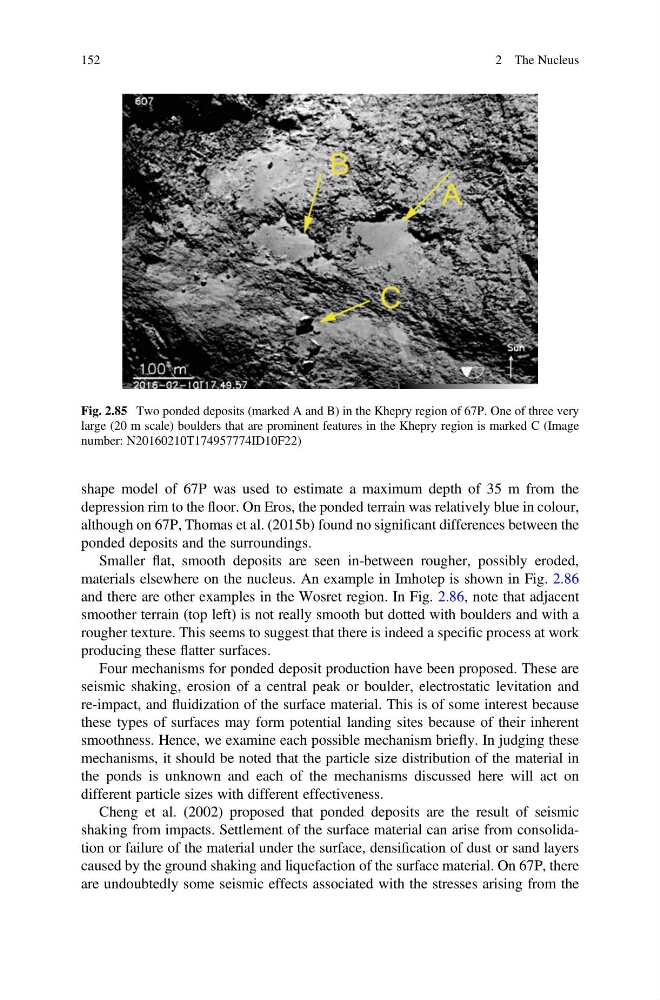
Fig. 2.85 Two ponded deposits (marked A and B) in the Khepry region of 67P. One of three very
large (20 m scale) boulders that are prominent features in the Khepry region is marked C (Image
number: N20160210T174957774ID10F22)
152
2 The Nucleus
depression rim to the floor. On Eros, the ponded terrain was relatively blue in colour,
although on 67P, Thomas et al. (2015b) found no significant differences between the
ponded deposits and the surroundings.
Smaller flat, smooth deposits are seen in-between rougher, possibly eroded,
materials elsewhere on the nucleus. An example in Imhotep is shown in Fig. 2.86
and there are other examples in the Wosret region. In Fig. 2.86, note that adjacent
smoother terrain (top left) is not really smooth but dotted with boulders and with a
rougher texture. This seems to suggest that there is indeed a specific process at work
producing these flatter surfaces.
Four mechanisms for ponded deposit production have been proposed. These are
seismic shaking, erosion of a central peak or boulder, electrostatic levitation and
re-impact, and fluidization of the surface material. This is of some interest because
these types of surfaces may form potential landing sites because of their inherent
smoothness. Hence, we examine each possible mechanism briefly. In judging these
mechanisms, it should be noted that the particle size distribution of the material in
the ponds is unknown and each of the mechanisms discussed here will act on
different particle sizes with different effectiveness.
Cheng et al. (2002) proposed that ponded deposits are the result of seismic
shaking from impacts. Settlement of the surface material can arise from consolidation or failure of the material under the surface, densification of dust or sand layers
caused by the ground shaking and liquefaction of the surface material. On 67P, there
are undoubtedly some seismic effects associated with the stresses arising from the
Fig. 2.85 Two ponded deposits (marked A and B) in the Khepry region of 67P. One of three very
large (20 m scale) boulders that are prominent features in the Khepry region is marked C (Image
number: N20160210T174957774ID10F22)
152
2 The Nucleus