

Consequently, detailed modelling would usually be required for such estimates. The
radial nature of other jet-like features indicates far higher velocities as had been
predicted through gas drag calculations for small (<100 μm) particles.
Deposition leading to burying of an impact crater and the creation of a new
impact crater can be seen in the montage of the Serqet region in Fig. 2.82. A 5 m
diameter crater would be typically 1–2 m deep suggesting that re-surfacing to that
depth is possible (although dust mobilization to smooth out the depression cannot be
ruled out as a mechanism). The recent impact shows that larger chunks of material
are probably impacting the surface after being launched by activity.
We have given several examples because the importance of this process cannot be
underestimated. There are numerous implications.
The deposition of material, in a process that can be referred to as sedimentary, can
act as an insulating layer throttling activity from below. This layer may be quite
porous and of low conductivity so that the sedimentary layer need only be quite thin
to choke activity entirely. When first deposited, however, it is not obvious that the
material is inert. When ejected from the surface, the particles will heat up but larger
particles may have sufficient size that the outgassing of volatiles is not completed
before the particles re-impact the surface. Hence, they could be initially a source of
outgassing while sitting on a relatively inert layer.
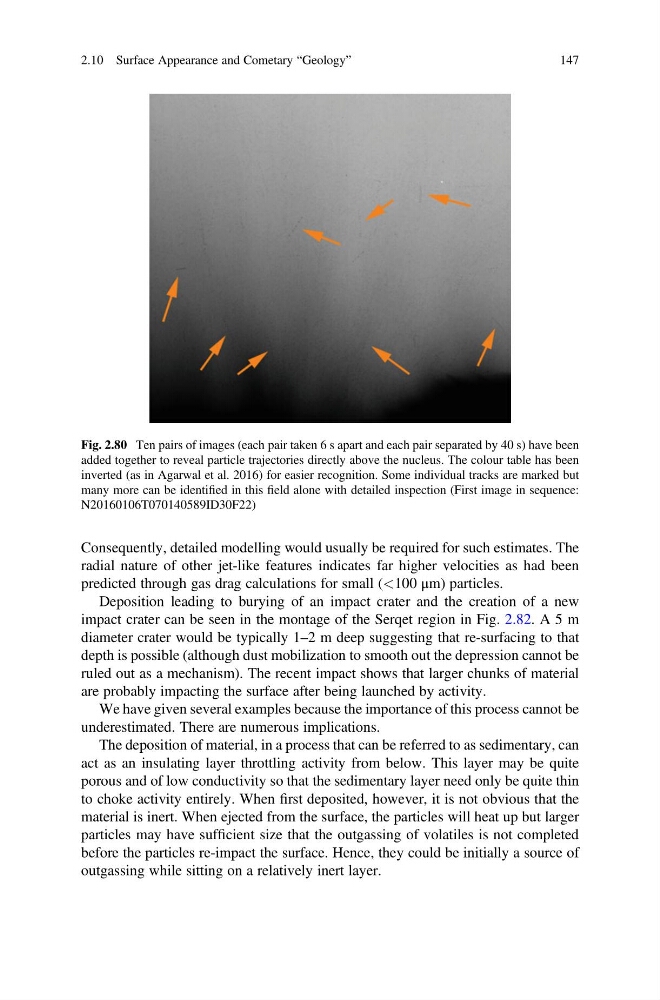
Fig. 2.80 Ten pairs of images (each pair taken 6 s apart and each pair separated by 40 s) have been
added together to reveal particle trajectories directly above the nucleus. The colour table has been
inverted (as in Agarwal et al. 2016) for easier recognition. Some individual tracks are marked but
many more can be identified in this field alone with detailed inspection (First image in sequence:
N20160106T070140589ID30F22)
2.10 Surface Appearance and Cometary “Geology”
147
radial nature of other jet-like features indicates far higher velocities as had been
predicted through gas drag calculations for small (<100 μm) particles.
Deposition leading to burying of an impact crater and the creation of a new
impact crater can be seen in the montage of the Serqet region in Fig. 2.82. A 5 m
diameter crater would be typically 1–2 m deep suggesting that re-surfacing to that
depth is possible (although dust mobilization to smooth out the depression cannot be
ruled out as a mechanism). The recent impact shows that larger chunks of material
are probably impacting the surface after being launched by activity.
We have given several examples because the importance of this process cannot be
underestimated. There are numerous implications.
The deposition of material, in a process that can be referred to as sedimentary, can
act as an insulating layer throttling activity from below. This layer may be quite
porous and of low conductivity so that the sedimentary layer need only be quite thin
to choke activity entirely. When first deposited, however, it is not obvious that the
material is inert. When ejected from the surface, the particles will heat up but larger
particles may have sufficient size that the outgassing of volatiles is not completed
before the particles re-impact the surface. Hence, they could be initially a source of
outgassing while sitting on a relatively inert layer.
Fig. 2.80 Ten pairs of images (each pair taken 6 s apart and each pair separated by 40 s) have been
added together to reveal particle trajectories directly above the nucleus. The colour table has been
inverted (as in Agarwal et al. 2016) for easier recognition. Some individual tracks are marked but
many more can be identified in this field alone with detailed inspection (First image in sequence:
N20160106T070140589ID30F22)
2.10 Surface Appearance and Cometary “Geology”
147