

further to the Hapi region in the neck. Prior to the outburst event, a fracture was
clearly visible in close-up images (Fig. 2.60 upper left). After the event, the fracture
was no longer present and what appeared to be newly exposed material on the cliff
face was markedly brighter and inferred to be more ice-rich. The brighter surface
gradually faded in brightness with time over the next months (Fig. 2.60 bottom). The
depth of the dust deposit on the pit floor was thus seen to be thin but structures in
deposited dust close to the cliff edge show that it was not negligible.
This observation is important in two ways. Firstly, it shows that the material
below the depression’s floor is probably ice-rich. Secondly, it is apparent that the
timescale for the surface to return to its original appearance is actually very long.
The eroded depth through sublimation can be calculated from
s d ¼
1
ρ
Z t¼t 2
t¼t 1
dm t
ð Þ
dt
dt
ð2:130Þ
where dm(t)/dt is the mass loss per unit area per unit time and varies with time as the
comet rotates and the heliocentric distance changes. For water ice, values
approaching of ~1 mm/h are conceivable. Hence, the low rate of change in the
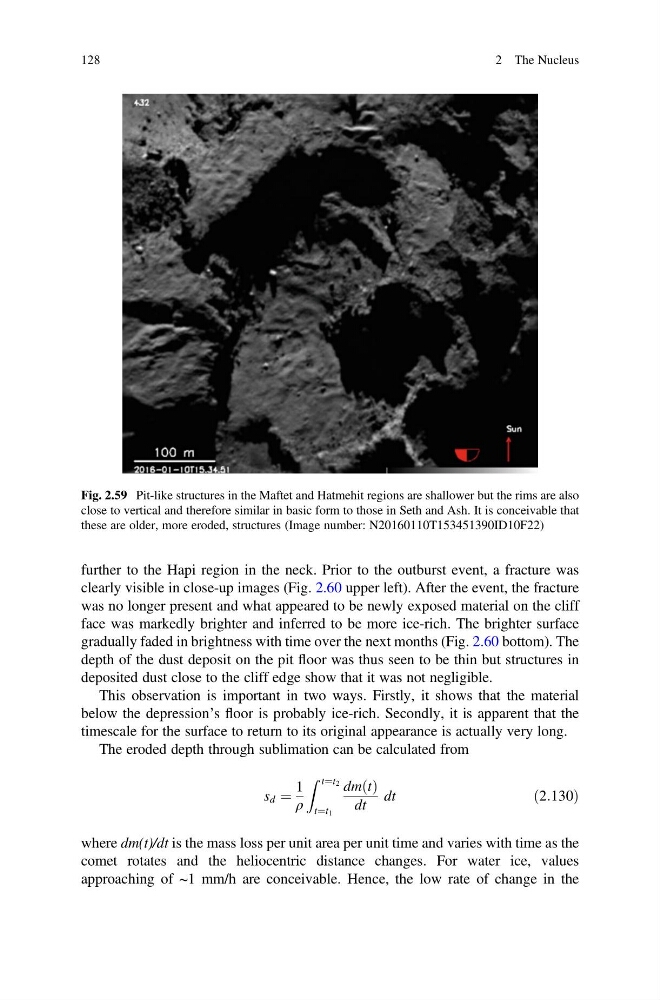
Fig. 2.59 Pit-like structures in the Maftet and Hatmehit regions are shallower but the rims are also
close to vertical and therefore similar in basic form to those in Seth and Ash. It is conceivable that
these are older, more eroded, structures (Image number: N20160110T153451390ID10F22)
128
2 The Nucleus
clearly visible in close-up images (Fig. 2.60 upper left). After the event, the fracture
was no longer present and what appeared to be newly exposed material on the cliff
face was markedly brighter and inferred to be more ice-rich. The brighter surface
gradually faded in brightness with time over the next months (Fig. 2.60 bottom). The
depth of the dust deposit on the pit floor was thus seen to be thin but structures in
deposited dust close to the cliff edge show that it was not negligible.
This observation is important in two ways. Firstly, it shows that the material
below the depression’s floor is probably ice-rich. Secondly, it is apparent that the
timescale for the surface to return to its original appearance is actually very long.
The eroded depth through sublimation can be calculated from
s d ¼
1
ρ
Z t¼t 2
t¼t 1
dm t
ð Þ
dt
dt
ð2:130Þ
where dm(t)/dt is the mass loss per unit area per unit time and varies with time as the
comet rotates and the heliocentric distance changes. For water ice, values
approaching of ~1 mm/h are conceivable. Hence, the low rate of change in the
Fig. 2.59 Pit-like structures in the Maftet and Hatmehit regions are shallower but the rims are also
close to vertical and therefore similar in basic form to those in Seth and Ash. It is conceivable that
these are older, more eroded, structures (Image number: N20160110T153451390ID10F22)
128
2 The Nucleus