

29.4.3 Fire and Hydrological Management Affecting
Peatland Ecosystems and Resources
Based on the government’s decree, the main task of the U Minh national parks is to
preserve peatland resources in the parks, including integrated activities on forest fire
prevention, conservation of ecosystems and biodiversity (Decision No. 11/2002/
QD-TTG 2002). Hydrological management of peat-swamp forests is, therefore, one
of the important activities to prevent forest fires, peatland loss, and degradation of
peat-swamp ecosystems and biodiversity in the park.
Inappropriate hydrological management at peatland resulted in low groundwater
levels in the peatland in the dry season, dried out the upper peat layer and facilitated
forest fires. Figure 29.10 showed that the water level in UMT National Park in the
dry season 2002 dropped down to 60–100 cm below the soil surface. This might be
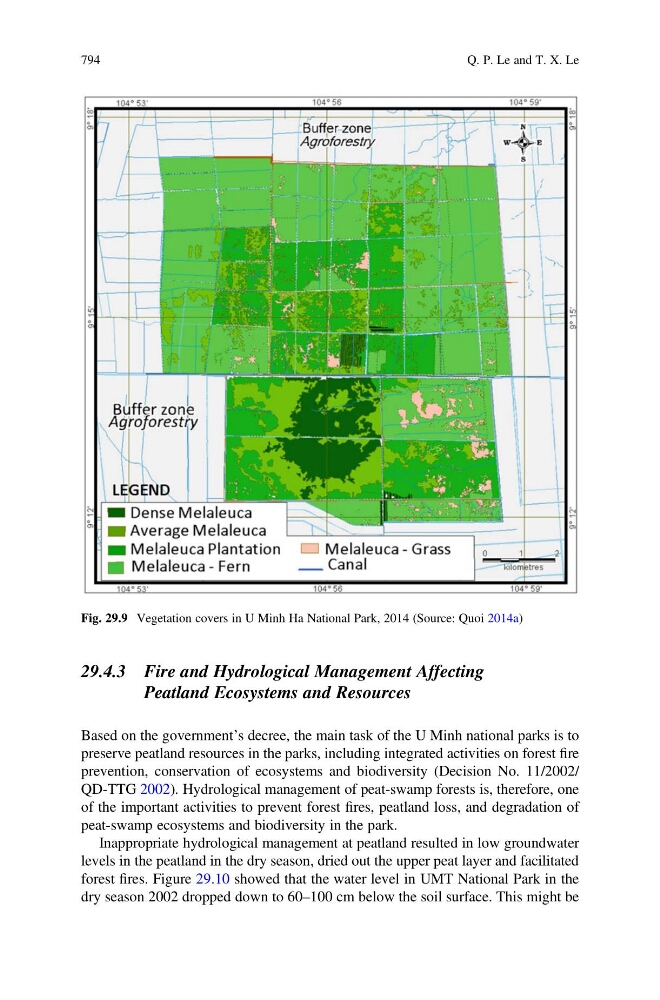
Fig. 29.9 Vegetation covers in U Minh Ha National Park, 2014 (Source: Quoi 2014a)
794
Q. P. Le and T. X. Le