

(1992), the content of Cu, Fe, Zn, and Mn on average were 12.8, 6.7, 13.9, and
23.3 mg/g of soil, respectively. Moreover, the chelation of those nutrients by humic
substances was pronounced for high soil pH and adsorption strength of humic
substances in peat for metal ions was in the order of Cu > Fe > Zn > Mn. Therefore,
this observation suggested that suitable application of Cu, Fe, Zn, and Mn can
increase their availability for optimum growth of certain crops.
The study commenced by Yonebayashi (1992) also analyzed the organic chemical characteristics of peat soil in Thailand. In surface soils, the readily decomposable organic constituents, namely polysaccharide, tannin, hemicelluloses, cellulose,
and protein were individually found to be <2–3% on average, whereas lignin, humic
acid, and wax-resin were indicated to be approximately 36.3, 15.5, and 8.5%,
respectively. However, such organic constituents tend to decrease by depth due to
leaching from deep layers below the water table. Moreover, the results also showed
that after reclamation, most readily decomposable organic materials such as polysaccharide, tannin, hemicelluloses, and cellulose were decomposed and converted to
humic acid through the humification process. Therefore, it can be postulated that the
longer the period of reclamation conducted, the greater the rate of peat decomposition that can be observed, which in turn can give rise to compaction and subsidence
of the peat layer.
Since the peat in Thailand exists in the swamp areas where the groundwater table
is relatively high and is commonly flooded during the rainy seasons (October to
January), the natural drainage system flowing into the swamp plays an important role
relevant to the hydrological characteristics of the areas. The water from the peat
swamps and the river such as the Bang Nara River flowing into the swamp of
Narathiwat Province have been analyzed. According to Okazaki (1992), the concentration of zinc and copper from the peat water was very low. Since the dissolved
organic substances showed a large portion of the fraction which would be expected
to have molecular weight of more than 1000, the low content of copper and zinc in
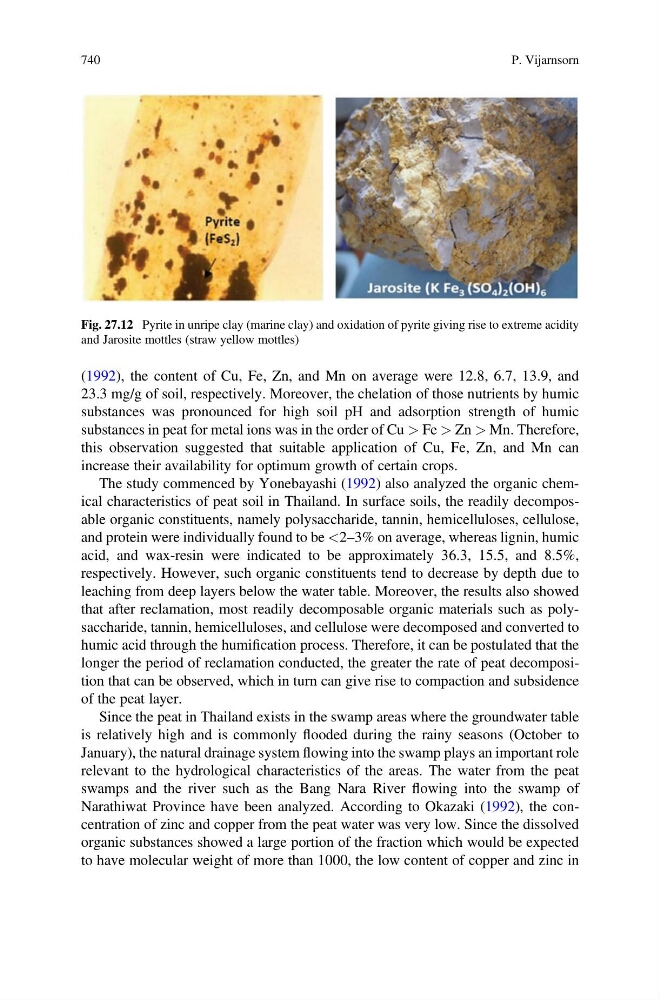
Fig. 27.12 Pyrite in unripe clay (marine clay) and oxidation of pyrite giving rise to extreme acidity
and Jarosite mottles (straw yellow mottles)
740
P. Vijarnsorn