

Among these, Ca and Mg generally appear to be the dominant ones but neither of
them contains more than 11 me/100 g soil. Therefore, it undoubtedly results in a very
low base saturation percentage.
The available phosphorus (Bray II-P) in the surface tier of these soils is much
higher than that of the lower tier. It ranges from 28 to 94 ppm in the surface and
becomes <25 ppm in the lower layer. It appears that these soils are rather high in
phosphorus, yet most of the crop trials show strong phosphorus deficiency. Therefore, the rating currently used for the mineral soils may not be appropriate. It should
be revised to acquire better interpretations for various crops.
The DTPA extractable copper, zinc, and iron of some peat samples were also
determinate. Copper is almost absent while zinc content is <2 ppm and iron ranges
from 260 to 386 ppm. Thus, it can be assumed that the low supply of copper and high
iron content of these soils may limit the crop growth to great extent.
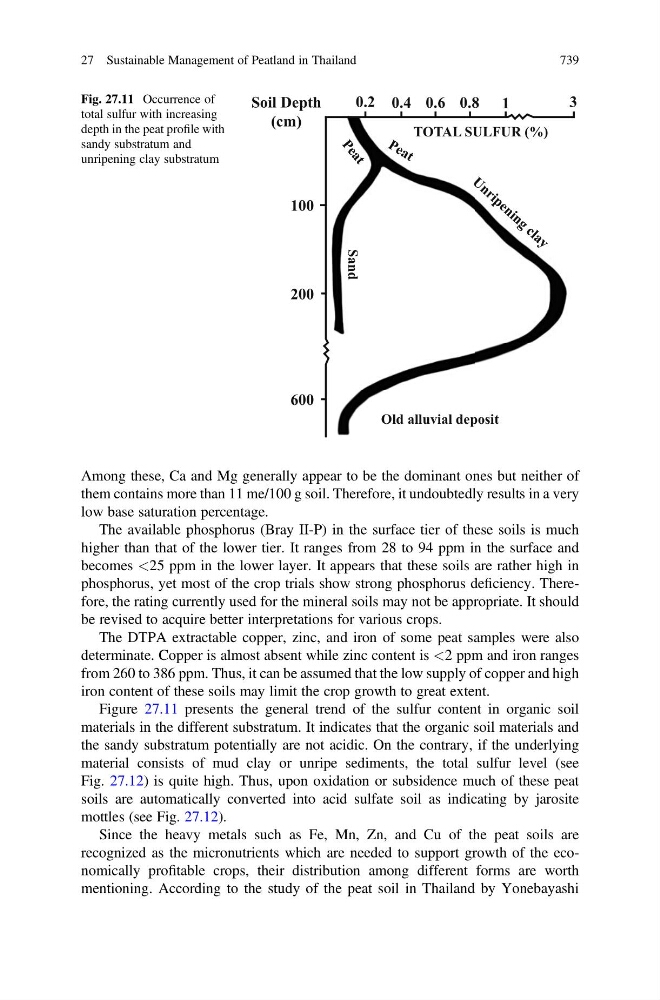
Figure 27.11 presents the general trend of the sulfur content in organic soil
materials in the different substratum. It indicates that the organic soil materials and
the sandy substratum potentially are not acidic. On the contrary, if the underlying
material consists of mud clay or unripe sediments, the total sulfur level (see
Fig. 27.12) is quite high. Thus, upon oxidation or subsidence much of these peat
soils are automatically converted into acid sulfate soil as indicating by jarosite
mottles (see Fig. 27.12).
Since the heavy metals such as Fe, Mn, Zn, and Cu of the peat soils are
recognized as the micronutrients which are needed to support growth of the economically profitable crops, their distribution among different forms are worth
mentioning. According to the study of the peat soil in Thailand by Yonebayashi
Soil Depth
(cm)
100
200
600
0.2 0.4 0.6 0.8 1
3
Sand
Old alluvial deposit
TOTAL SULFUR (%)
Sand
Old alluvial deposit
TOTA T T L SULFUR (%)
L
Fig. 27.11 Occurrence of
total sulfur with increasing
depth in the peat profile with
sandy substratum and
unripening clay substratum
27 Sustainable Management of Peatland in Thailand
739