

and rhizosphere soil samples, and 300 nifH clones were produced and then assembled into 29 operational taxonomic units (OTUs) based on percent identity values.
Our results suggested that nifH gene diversity is mainly dependent on soil properties
and did not differ remarkably between the rhizosphere and bulk soil of
M. malabathricum except in the acid sulfate soil. In acid sulfate soil, as the Shannon
diversity index was lower in the rhizosphere than in the bulk soil, certain bacterial
species may accumulate in the rhizosphere.
Hashidoko et al. (2002, 2006a, b) isolated Sphingomonas sp. and studied the
NH 4
+ release mechanisms after the inoculation of Melastoma sp. with
Sphingomonas sp. and its growth without added N, supplemented with 1/4
Hoagland’s No2 (N-free, pH 3.0) (Fig. 1.25).
1.9.1.4 Nitrogen Metabolism in Roots
The rhizosphere contains polysaccharides exuded from roots, and N 2 -fixing rhizobia
in the rhizosphere grow well using the organic acids exuded from roots (Fig. 1.26).
These carbohydrate exudates are related to K
+ nutrients in the process of K
+
circulation, namely, malate from leaves and K
+
NO 3
À from roots.
No endophytic
nitrogen-fixing bacteria
Mucilage:
Rhizo- and free-living
nitrogen-fixing bacteria
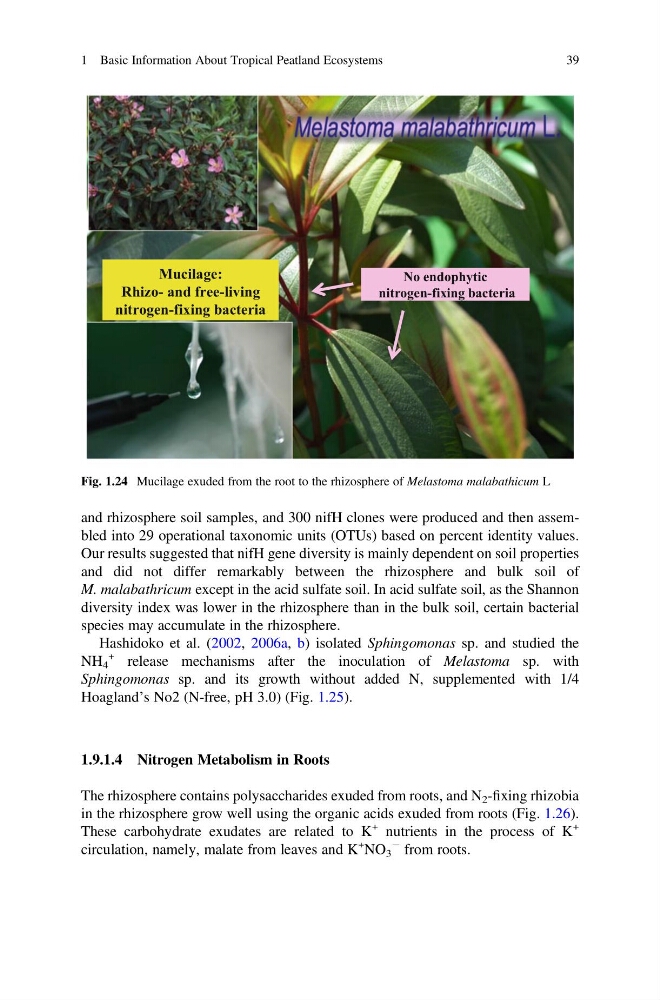
Fig. 1.24 Mucilage exuded from the root to the rhizosphere of Melastoma malabathicum L
1 Basic Information About Tropical Peatland Ecosystems
39
Our results suggested that nifH gene diversity is mainly dependent on soil properties
and did not differ remarkably between the rhizosphere and bulk soil of
M. malabathricum except in the acid sulfate soil. In acid sulfate soil, as the Shannon
diversity index was lower in the rhizosphere than in the bulk soil, certain bacterial
species may accumulate in the rhizosphere.
Hashidoko et al. (2002, 2006a, b) isolated Sphingomonas sp. and studied the
NH 4
+ release mechanisms after the inoculation of Melastoma sp. with
Sphingomonas sp. and its growth without added N, supplemented with 1/4
Hoagland’s No2 (N-free, pH 3.0) (Fig. 1.25).
1.9.1.4 Nitrogen Metabolism in Roots
The rhizosphere contains polysaccharides exuded from roots, and N 2 -fixing rhizobia
in the rhizosphere grow well using the organic acids exuded from roots (Fig. 1.26).
These carbohydrate exudates are related to K
+ nutrients in the process of K
+
circulation, namely, malate from leaves and K
+
NO 3
À from roots.
No endophytic
nitrogen-fixing bacteria
Mucilage:
Rhizo- and free-living
nitrogen-fixing bacteria
Fig. 1.24 Mucilage exuded from the root to the rhizosphere of Melastoma malabathicum L
1 Basic Information About Tropical Peatland Ecosystems
39