

The regulations aiming at improving peat governance have received various
responses from several actors. For example, there are still pros and cons in terms
of policy implementation which requires to establish a peatland protection function
of at least 30% of the total area of Peat Hydrological Unit (PHU). Response from
actors, especially environmentalists, claims that this regulation is very appropriate,
so the government should be firm and consistent to implement it. The implementation of the regulation will be able to protect forests and peatlands, as part of natural
climate solutions as well as long-term investment that will save hundreds of people
and biodiversity in the long term. Conversely, business sector, e.g. companies
working on timber industries and plantation estates, stated that the implementation
of this regulation would have a negative impact on their businesses. Furthermore, it
will have a negative impact on the regional economy, such as declining economic
growth, employment opportunities, and the payment balance (deficit between capital
and trade). Likewise, in determining criteria for degraded peatland, the determination based on peat water level as low as 0.4 m also raises the pros and cons. There is a
need for a combined approach considering ecological, environmental, economic,
and social aspects in a peatland management unit that can be accepted by all so each
actor has a strong commitment to implement it. In the development process, managing peatland area has been based on the PHU; in total all peatland areas in
Indonesia have been divided into approximately 865 PHU covering three main
islands with peatlands, i.e. Sumatra, Kalimantan, and Papua (Fig. 15.3). For better
landscape management, the PHU-based peatland management should be integrated
into the Forest Management Unit (FMU) or concession which has managed
peatlands at the site level.
Area and condition
of Peat Swamp
Forests
P E R I O D
20 million ha
13 million ha
1930s
2016 current
The decrease
of quality and
quantity of
peatland
forests
Threats
Forest concession - PSF
2000s
Logging,
Degradation
of peatlands,
source of
GHGs
emission
Management
Exploitation Protection
Rehabilitation
±60% secondary forest
Peatland Restoration
Agency
Peatland
restoration
Traditional utilization by
community
Fires 1997/1998
Moratorium
PLG 1 million ha
Oil palm
Drainage technology
Restoration
Transmigration
Ministry of Environment
and Forestry
Drainage,
Conversion,
Fires
Fires
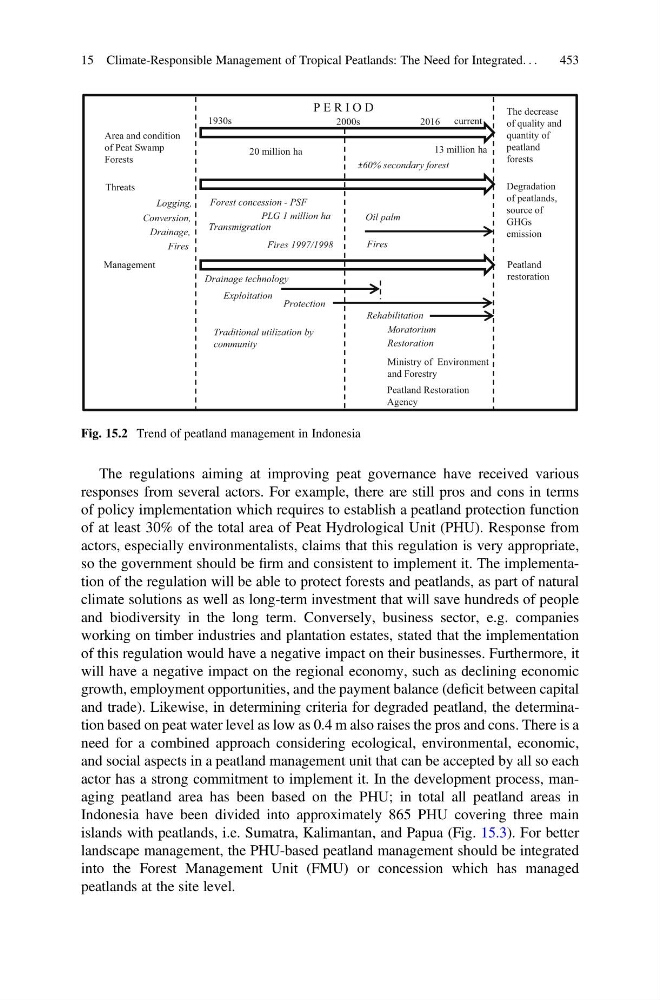
Fig. 15.2 Trend of peatland management in Indonesia
15 Climate-Responsible Management of Tropical Peatlands: The Need for Integrated. . .
453
responses from several actors. For example, there are still pros and cons in terms
of policy implementation which requires to establish a peatland protection function
of at least 30% of the total area of Peat Hydrological Unit (PHU). Response from
actors, especially environmentalists, claims that this regulation is very appropriate,
so the government should be firm and consistent to implement it. The implementation of the regulation will be able to protect forests and peatlands, as part of natural
climate solutions as well as long-term investment that will save hundreds of people
and biodiversity in the long term. Conversely, business sector, e.g. companies
working on timber industries and plantation estates, stated that the implementation
of this regulation would have a negative impact on their businesses. Furthermore, it
will have a negative impact on the regional economy, such as declining economic
growth, employment opportunities, and the payment balance (deficit between capital
and trade). Likewise, in determining criteria for degraded peatland, the determination based on peat water level as low as 0.4 m also raises the pros and cons. There is a
need for a combined approach considering ecological, environmental, economic,
and social aspects in a peatland management unit that can be accepted by all so each
actor has a strong commitment to implement it. In the development process, managing peatland area has been based on the PHU; in total all peatland areas in
Indonesia have been divided into approximately 865 PHU covering three main
islands with peatlands, i.e. Sumatra, Kalimantan, and Papua (Fig. 15.3). For better
landscape management, the PHU-based peatland management should be integrated
into the Forest Management Unit (FMU) or concession which has managed
peatlands at the site level.
Area and condition
of Peat Swamp
Forests
P E R I O D
20 million ha
13 million ha
1930s
2016 current
The decrease
of quality and
quantity of
peatland
forests
Threats
Forest concession - PSF
2000s
Logging,
Degradation
of peatlands,
source of
GHGs
emission
Management
Exploitation Protection
Rehabilitation
±60% secondary forest
Peatland Restoration
Agency
Peatland
restoration
Traditional utilization by
community
Fires 1997/1998
Moratorium
PLG 1 million ha
Oil palm
Drainage technology
Restoration
Transmigration
Ministry of Environment
and Forestry
Drainage,
Conversion,
Fires
Fires
Fig. 15.2 Trend of peatland management in Indonesia
15 Climate-Responsible Management of Tropical Peatlands: The Need for Integrated. . .
453