

10.3 Natural Zeolites for Sustainable Peatland
Management
As natural zeolite has porous structure, the water holding capacity should be high.
The natural zeolite ameliorates drought in arid and semi-arid regions (Ghanbari and
Ariafar 2013). The natural zeolite improves the soil functions by activating the
chemical and organic fertilizer and accelerating the composting processes (NajafiGhiri 2014; Mandrini et al. 2016; Aminiyan et al. 2016). The nano-zeolite and
zeolite can aggregate the particles of the mean weight diameter with water-stable
trait (MWDw), and the organic carbon derived from plant residues (Mirzaei et al.
2015), which contribute to improve the soil characteristics such as hydraulic conductivity, infiltration, ventilation (Cairo et al. 2017), carbon sequestration (Lal
2015), and keeping wetness (Ghazavi 2015; Szermet et al. 2014). When natural
zeolites (7.5 t/ha) and sugarcane filter cakes as organic matter (22.5 t/ha) were
applied to Cuban Vertisol soil, the soil humidity retains high in treatment (Cairo
et al. 2017). Thus, it is expecting that the natural zeolites contribute to maintain high
water content in peat soil.
Another potential benefit of natural zeolites to peat soils is the enhancement of
cation and anion adsorption, especially NH 4
+ and NO 3
À (Mumpton 1999), and CO 2
(Rahman et al. 2012; Mansouri et al. 2013). The application of natural zeolites on
peat soils reduces carbon emissions from peatland (Hernandez et al. 2015), because
the application decelerates the decomposition of soil organic matter (Truc and
Yoshida 2011).
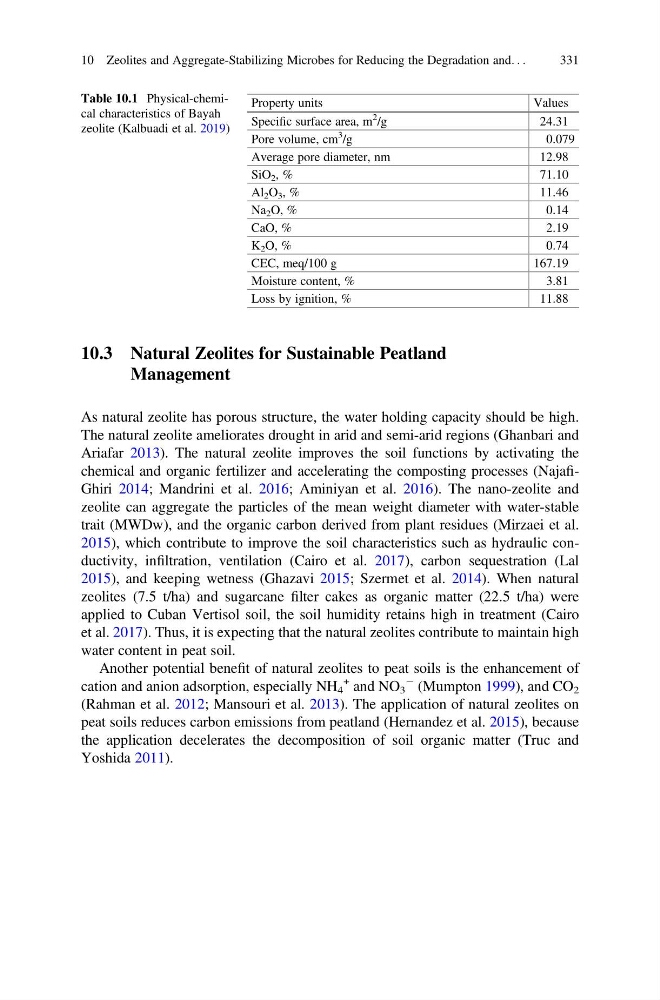
Table 10.1 Physical-chemical characteristics of Bayah
zeolite (Kalbuadi et al. 2019)
Property units
Values
Specific surface area, m
2
/g
24.31
Pore volume, cm
3
/g
0.079
Average pore diameter, nm
12.98
SiO 2 , %
71.10
Al 2 O 3 , %
11.46
Na 2 O, %
0.14
CaO, %
2.19
K 2 O, %
0.74
CEC, meq/100 g
167.19
Moisture content, %
3.81
Loss by ignition, %
11.88
10 Zeolites and Aggregate-Stabilizing Microbes for Reducing the Degradation and. . .
331
Management
As natural zeolite has porous structure, the water holding capacity should be high.
The natural zeolite ameliorates drought in arid and semi-arid regions (Ghanbari and
Ariafar 2013). The natural zeolite improves the soil functions by activating the
chemical and organic fertilizer and accelerating the composting processes (NajafiGhiri 2014; Mandrini et al. 2016; Aminiyan et al. 2016). The nano-zeolite and
zeolite can aggregate the particles of the mean weight diameter with water-stable
trait (MWDw), and the organic carbon derived from plant residues (Mirzaei et al.
2015), which contribute to improve the soil characteristics such as hydraulic conductivity, infiltration, ventilation (Cairo et al. 2017), carbon sequestration (Lal
2015), and keeping wetness (Ghazavi 2015; Szermet et al. 2014). When natural
zeolites (7.5 t/ha) and sugarcane filter cakes as organic matter (22.5 t/ha) were
applied to Cuban Vertisol soil, the soil humidity retains high in treatment (Cairo
et al. 2017). Thus, it is expecting that the natural zeolites contribute to maintain high
water content in peat soil.
Another potential benefit of natural zeolites to peat soils is the enhancement of
cation and anion adsorption, especially NH 4
+ and NO 3
À (Mumpton 1999), and CO 2
(Rahman et al. 2012; Mansouri et al. 2013). The application of natural zeolites on
peat soils reduces carbon emissions from peatland (Hernandez et al. 2015), because
the application decelerates the decomposition of soil organic matter (Truc and
Yoshida 2011).
Table 10.1 Physical-chemical characteristics of Bayah
zeolite (Kalbuadi et al. 2019)
Property units
Values
Specific surface area, m
2
/g
24.31
Pore volume, cm
3
/g
0.079
Average pore diameter, nm
12.98
SiO 2 , %
71.10
Al 2 O 3 , %
11.46
Na 2 O, %
0.14
CaO, %
2.19
K 2 O, %
0.74
CEC, meq/100 g
167.19
Moisture content, %
3.81
Loss by ignition, %
11.88
10 Zeolites and Aggregate-Stabilizing Microbes for Reducing the Degradation and. . .
331