

The combination of compost and LOB application is a good way to maintain the
availability of nutrients and the activity of microbes. These agricultural practices are
carried out under organic farming systems so that PGPR can grow and function
optimally. Land surface management is very important to solve some limiting factors
regarding environmental problems, such as flooding and dry season. Compost plays
a significant role in optimizing the function of rhizobacteria to support plant growth.
It is common that compost or other organic materials are enriched with biofertilizer,
and it will be more effective to increase the yield. The compost has double functions,
namely as a carrier of PGPR and soil conditioner or surface protectant. In general, we
found that the application of agricultural wastes enriched single or various PGPR
could improve soil enzyme activities (Antonius et al. 2007). Treatments of agricultural wastes enriched various microorganisms also successfully improved the chemical soil properties.
In addition, we also successfully developed technology to produce biofertilizer
powder starter, including bacterial fermentation in pilot-scale fermenters, cell
harvesting with continuous centrifuges, freeze-drying, mixing carrier, and packaging. We fermented the bacteria, which have the best potential for plant growth
promotion with the highest growth hormone production, phosphate solubilizer,
organic acid, and protein degradation activities. It has been added a combination
of skim milk and trehalose as cryoprotectant agents to maintain and enhance the
viability and stability of the cells during the freeze-drying process. The cryoprotectants are good for conserving the viability and stability of bacteria. Carrier materials
are used to make powder starter, including maltodextrin and maize starch (Laili et al.
2016).
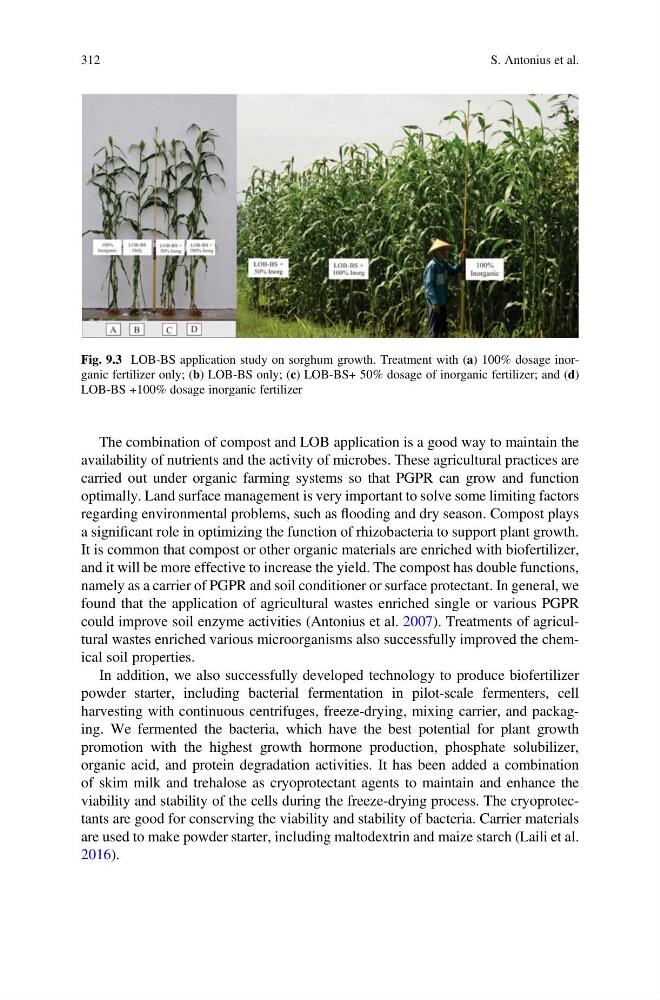
Fig. 9.3 LOB-BS application study on sorghum growth. Treatment with (a) 100% dosage inorganic fertilizer only; (b) LOB-BS only; (c) LOB-BS+ 50% dosage of inorganic fertilizer; and (d)
LOB-BS +100% dosage inorganic fertilizer
312
S. Antonius et al.
availability of nutrients and the activity of microbes. These agricultural practices are
carried out under organic farming systems so that PGPR can grow and function
optimally. Land surface management is very important to solve some limiting factors
regarding environmental problems, such as flooding and dry season. Compost plays
a significant role in optimizing the function of rhizobacteria to support plant growth.
It is common that compost or other organic materials are enriched with biofertilizer,
and it will be more effective to increase the yield. The compost has double functions,
namely as a carrier of PGPR and soil conditioner or surface protectant. In general, we
found that the application of agricultural wastes enriched single or various PGPR
could improve soil enzyme activities (Antonius et al. 2007). Treatments of agricultural wastes enriched various microorganisms also successfully improved the chemical soil properties.
In addition, we also successfully developed technology to produce biofertilizer
powder starter, including bacterial fermentation in pilot-scale fermenters, cell
harvesting with continuous centrifuges, freeze-drying, mixing carrier, and packaging. We fermented the bacteria, which have the best potential for plant growth
promotion with the highest growth hormone production, phosphate solubilizer,
organic acid, and protein degradation activities. It has been added a combination
of skim milk and trehalose as cryoprotectant agents to maintain and enhance the
viability and stability of the cells during the freeze-drying process. The cryoprotectants are good for conserving the viability and stability of bacteria. Carrier materials
are used to make powder starter, including maltodextrin and maize starch (Laili et al.
2016).
Fig. 9.3 LOB-BS application study on sorghum growth. Treatment with (a) 100% dosage inorganic fertilizer only; (b) LOB-BS only; (c) LOB-BS+ 50% dosage of inorganic fertilizer; and (d)
LOB-BS +100% dosage inorganic fertilizer
312
S. Antonius et al.