

nursery (Maulana et al. 2017a). The dose given is usually 5–10 g per seed. It is
different in cases with forest tree seedling species from peatland such as balangeran
(Shorea balangeran), jelutung (Dyera polyphylla), tumih (Combretocarpus
rotundatus), gerunggang (Cratoxylum arborescens), and gelam (Melaleuca
cajuputi) during the sixth–eighth month in a nursery. All of the above inoculation
processes do not use chemical fertilizers.
Mycorrhizal inoculation process in AeroHydro culture is carried out directly in
the field. The purpose of inoculation process is carried out specifically at the new
young roots that emerge in the field. The estimation of mycorrhizal dose can be
10–20 times compared to mycorrhizal doses in the nursery, and this dose may have
potential to increase mycorrhizal colonization in each tree. However, competition
between indigenous microbes and mycorrhizal inoculant may happen. Normally,
mycorrhizal fungi are growing slowly when compared to other microbes such as
decomposers or pathogen fungi. AeroHydro Culture is a consortium of organic and
in-organic nutrition packages, biochar, and zeolites, which is synergized with microbial biofertilizers consisting of PGPR, ECM, and AM fungi. This composition
a
b
c
d
e
f
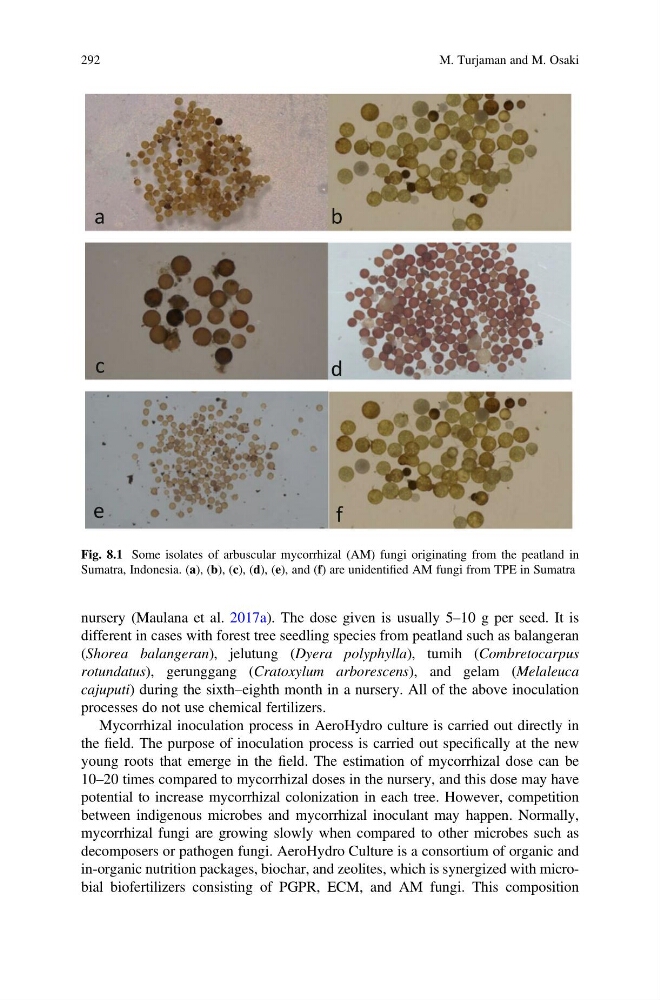
Fig. 8.1 Some isolates of arbuscular mycorrhizal (AM) fungi originating from the peatland in
Sumatra, Indonesia. (a), (b), (c), (d), (e), and (f) are unidentified AM fungi from TPE in Sumatra
292
M. Turjaman and M. Osaki
different in cases with forest tree seedling species from peatland such as balangeran
(Shorea balangeran), jelutung (Dyera polyphylla), tumih (Combretocarpus
rotundatus), gerunggang (Cratoxylum arborescens), and gelam (Melaleuca
cajuputi) during the sixth–eighth month in a nursery. All of the above inoculation
processes do not use chemical fertilizers.
Mycorrhizal inoculation process in AeroHydro culture is carried out directly in
the field. The purpose of inoculation process is carried out specifically at the new
young roots that emerge in the field. The estimation of mycorrhizal dose can be
10–20 times compared to mycorrhizal doses in the nursery, and this dose may have
potential to increase mycorrhizal colonization in each tree. However, competition
between indigenous microbes and mycorrhizal inoculant may happen. Normally,
mycorrhizal fungi are growing slowly when compared to other microbes such as
decomposers or pathogen fungi. AeroHydro Culture is a consortium of organic and
in-organic nutrition packages, biochar, and zeolites, which is synergized with microbial biofertilizers consisting of PGPR, ECM, and AM fungi. This composition
a
b
c
d
e
f
Fig. 8.1 Some isolates of arbuscular mycorrhizal (AM) fungi originating from the peatland in
Sumatra, Indonesia. (a), (b), (c), (d), (e), and (f) are unidentified AM fungi from TPE in Sumatra
292
M. Turjaman and M. Osaki