

1.4 Biomass Productivity in Tropical Peatlands
Trunk diameter monitoring was conducted in one-hectare survey areas established in
Central Kalimantan Province peat swamp forests (PSF1, PSF2) and heath forests
(shallow peat layer overlying sandy soil) (HF1, HF2) (Rahajoe and Kohyama 2003;
Miyamoto et al. 2003; Nishimura et al. 2007; Atikah et al. 2014) and in West
Kalimantan Province lowland (mineral soil) mixed-dipterocarp forests (MDF1,
MDF2) (Kohyama et al. 2001, 2003). Data were obtained from two survey areas
at each location and included trunk diameter/tree height relationships and harvesting
surveys for each forest type. From these data, analyses were performed using the
relative growth relationships of aboveground biomass (Yamakura et al. 1986;
Miyamoto et al. 2007, 2016). Recruitment and mortality rates based on tree
populations with trunk diameters of 5 cm or more were calculated. Additionally,
production and mortality rates based on individual trees were calculated for the
aboveground biomass. In both instances, vital rate estimation was conducted, and the
differences in observation periods were not a factor (Kohyama et al. 2018, 2019).
Peat swamp and heath forests were compared to mixed dipterocarp forests, and
our survey data confirmed previous reports that the number of tree species, maximum tree height, and aboveground biomass in these ecosystems are low (Fig. 1.9).
Islands around
Maritime
Continent in South
East Asia
Amazon
Basin
Congo Basin
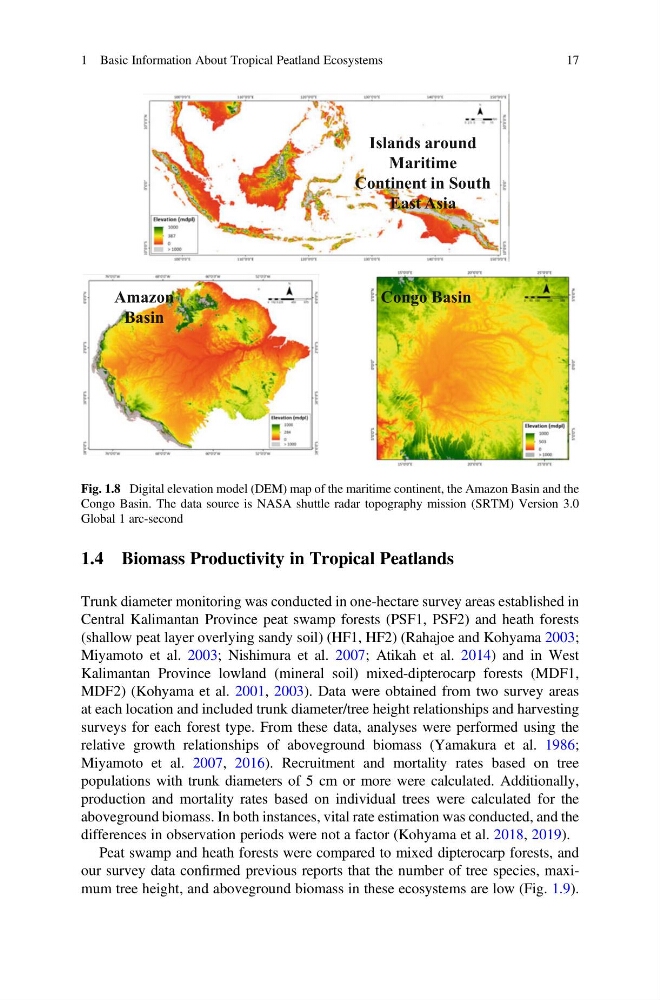
Fig. 1.8 Digital elevation model (DEM) map of the maritime continent, the Amazon Basin and the
Congo Basin. The data source is NASA shuttle radar topography mission (SRTM) Version 3.0
Global 1 arc-second
1 Basic Information About Tropical Peatland Ecosystems
17
Trunk diameter monitoring was conducted in one-hectare survey areas established in
Central Kalimantan Province peat swamp forests (PSF1, PSF2) and heath forests
(shallow peat layer overlying sandy soil) (HF1, HF2) (Rahajoe and Kohyama 2003;
Miyamoto et al. 2003; Nishimura et al. 2007; Atikah et al. 2014) and in West
Kalimantan Province lowland (mineral soil) mixed-dipterocarp forests (MDF1,
MDF2) (Kohyama et al. 2001, 2003). Data were obtained from two survey areas
at each location and included trunk diameter/tree height relationships and harvesting
surveys for each forest type. From these data, analyses were performed using the
relative growth relationships of aboveground biomass (Yamakura et al. 1986;
Miyamoto et al. 2007, 2016). Recruitment and mortality rates based on tree
populations with trunk diameters of 5 cm or more were calculated. Additionally,
production and mortality rates based on individual trees were calculated for the
aboveground biomass. In both instances, vital rate estimation was conducted, and the
differences in observation periods were not a factor (Kohyama et al. 2018, 2019).
Peat swamp and heath forests were compared to mixed dipterocarp forests, and
our survey data confirmed previous reports that the number of tree species, maximum tree height, and aboveground biomass in these ecosystems are low (Fig. 1.9).
Islands around
Maritime
Continent in South
East Asia
Amazon
Basin
Congo Basin
Fig. 1.8 Digital elevation model (DEM) map of the maritime continent, the Amazon Basin and the
Congo Basin. The data source is NASA shuttle radar topography mission (SRTM) Version 3.0
Global 1 arc-second
1 Basic Information About Tropical Peatland Ecosystems
17