

7 Relativistic Nucleus-Nucleus Collisions and the QCD Matter Phase Diagram
441
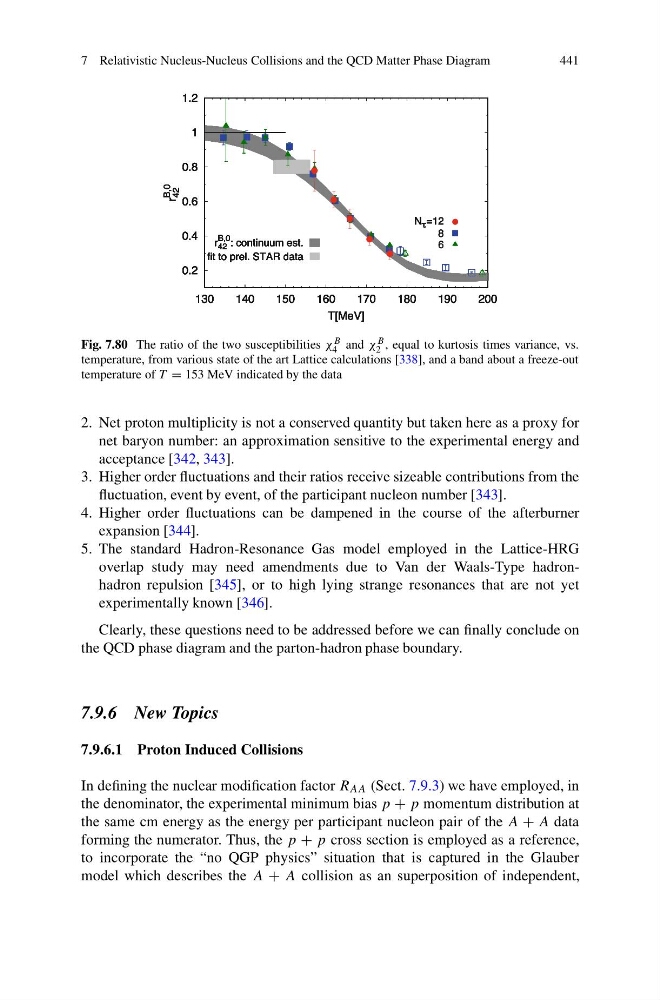
Fig. 7.80 The ratio of the two susceptibilities χ B
4 and χ B
2 , equal to kurtosis times variance, vs.
temperature, from various state of the art Lattice calculations [338], and a band about a freeze-out
temperature of T = 153 MeV indicated by the data
2. Net proton multiplicity is not a conserved quantity but taken here as a proxy for
net baryon number: an approximation sensitive to the experimental energy and
acceptance [342, 343].
3. Higher order fluctuations and their ratios receive sizeable contributions from the
fluctuation, event by event, of the participant nucleon number [343].
4. Higher order fluctuations can be dampened in the course of the afterburner
expansion [344].
5. The standard Hadron-Resonance Gas model employed in the Lattice-HRG
overlap study may need amendments due to Van der Waals-Type hadronhadron repulsion [345], or to high lying strange resonances that are not yet
experimentally known [346].
Clearly, these questions need to be addressed before we can finally conclude on
the QCD phase diagram and the parton-hadron phase boundary.
7.9.6 New Topics
7.9.6.1 Proton Induced Collisions
In defining the nuclear modification factor R AA (Sect. 7.9.3) we have employed, in
the denominator, the experimental minimum bias p + p momentum distribution at
the same cm energy as the energy per participant nucleon pair of the A + A data
forming the numerator. Thus, the p + p cross section is employed as a reference,
to incorporate the “no QGP physics” situation that is captured in the Glauber
model which describes the A + A collision as an superposition of independent,
441
Fig. 7.80 The ratio of the two susceptibilities χ B
4 and χ B
2 , equal to kurtosis times variance, vs.
temperature, from various state of the art Lattice calculations [338], and a band about a freeze-out
temperature of T = 153 MeV indicated by the data
2. Net proton multiplicity is not a conserved quantity but taken here as a proxy for
net baryon number: an approximation sensitive to the experimental energy and
acceptance [342, 343].
3. Higher order fluctuations and their ratios receive sizeable contributions from the
fluctuation, event by event, of the participant nucleon number [343].
4. Higher order fluctuations can be dampened in the course of the afterburner
expansion [344].
5. The standard Hadron-Resonance Gas model employed in the Lattice-HRG
overlap study may need amendments due to Van der Waals-Type hadronhadron repulsion [345], or to high lying strange resonances that are not yet
experimentally known [346].
Clearly, these questions need to be addressed before we can finally conclude on
the QCD phase diagram and the parton-hadron phase boundary.
7.9.6 New Topics
7.9.6.1 Proton Induced Collisions
In defining the nuclear modification factor R AA (Sect. 7.9.3) we have employed, in
the denominator, the experimental minimum bias p + p momentum distribution at
the same cm energy as the energy per participant nucleon pair of the A + A data
forming the numerator. Thus, the p + p cross section is employed as a reference,
to incorporate the “no QGP physics” situation that is captured in the Glauber
model which describes the A + A collision as an superposition of independent,