

32
2 Results and Discussion
O
H
N
H
(quant)
H
O
H
Cl
O
H
O
H
Cl
O
N
Dean-Stark App
(Charged with
MS (4 Å))
(iv) 2-picolylamine
(2.2 equiv),
p-TsOH · H 2 O
(10 mol-%),
then K 2 CO 3
27a
31a
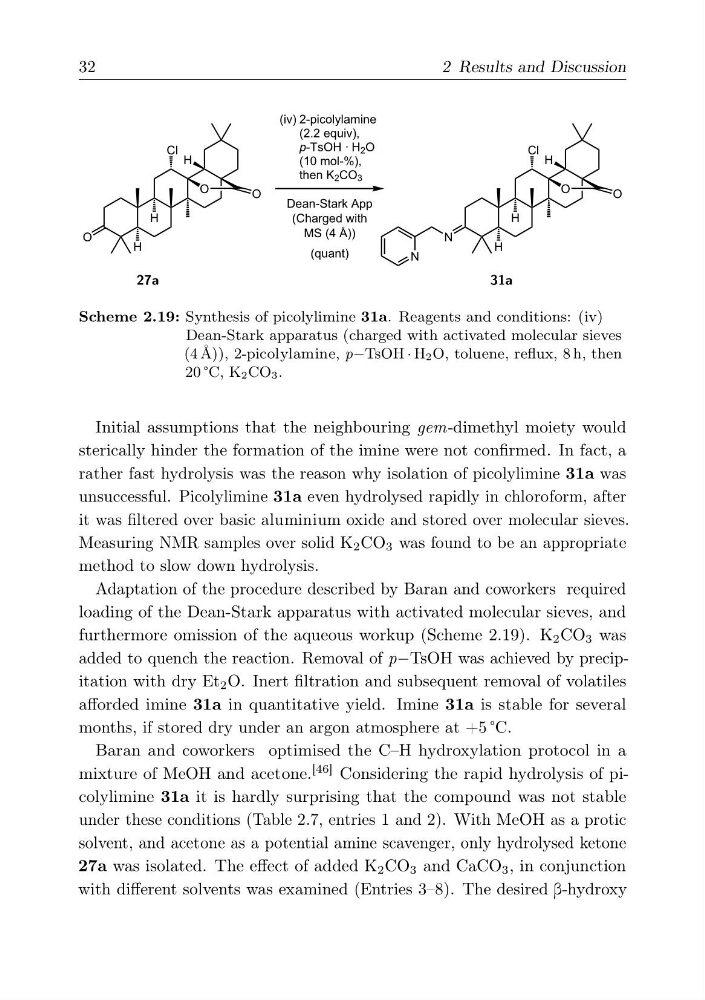
Scheme 2.19: Synthesis of picolylimine 31a. Reagents and conditions: (iv)
Dean-Stark apparatus (charged with activated molecular sieves
(4 Å)), 2-picolylamine, p−TsOH · H2O, toluene, reflux, 8 h, then
20 °C, K2CO3.
Initial assumptions that the neighbouring gem-dimethyl moiety would
sterically hinder the formation of the imine were not confirmed. In fact, a
rather fast hydrolysis was the reason why isolation of picolylimine 31a was
unsuccessful. Picolylimine 31a even hydrolysed rapidly in chloroform, after
it was filtered over basic aluminium oxide and stored over molecular sieves.
Measuring NMR samples over solid K 2 CO 3 was found to be an appropriate
method to slow down hydrolysis.
Adaptation of the procedure described by Baran and coworkers required
loading of the Dean-Stark apparatus with activated molecular sieves, and
furthermore omission of the aqueous workup (Scheme 2.19). K 2 CO 3 was
added to quench the reaction. Removal of p−TsOH was achieved by precipitation with dry Et 2 O. Inert filtration and subsequent removal of volatiles
afforded imine 31a in quantitative yield. Imine 31a is stable for several
months, if stored dry under an argon atmosphere at +5 °C.
Baran and coworkers optimised the C–H hydroxylation protocol in a
mixture of MeOH and acetone.
[46] Considering the rapid hydrolysis of picolylimine 31a it is hardly surprising that the compound was not stable
under these conditions (Table 2.7, entries 1 and 2). With MeOH as a protic
solvent, and acetone as a potential amine scavenger, only hydrolysed ketone
27a was isolated. The effect of added K 2 CO 3 and CaCO 3 , in conjunction
with different solvents was examined (Entries 3–8). The desired β-hydroxy
2 Results and Discussion
O
H
N
H
(quant)
H
O
H
Cl
O
H
O
H
Cl
O
N
Dean-Stark App
(Charged with
MS (4 Å))
(iv) 2-picolylamine
(2.2 equiv),
p-TsOH · H 2 O
(10 mol-%),
then K 2 CO 3
27a
31a
Scheme 2.19: Synthesis of picolylimine 31a. Reagents and conditions: (iv)
Dean-Stark apparatus (charged with activated molecular sieves
(4 Å)), 2-picolylamine, p−TsOH · H2O, toluene, reflux, 8 h, then
20 °C, K2CO3.
Initial assumptions that the neighbouring gem-dimethyl moiety would
sterically hinder the formation of the imine were not confirmed. In fact, a
rather fast hydrolysis was the reason why isolation of picolylimine 31a was
unsuccessful. Picolylimine 31a even hydrolysed rapidly in chloroform, after
it was filtered over basic aluminium oxide and stored over molecular sieves.
Measuring NMR samples over solid K 2 CO 3 was found to be an appropriate
method to slow down hydrolysis.
Adaptation of the procedure described by Baran and coworkers required
loading of the Dean-Stark apparatus with activated molecular sieves, and
furthermore omission of the aqueous workup (Scheme 2.19). K 2 CO 3 was
added to quench the reaction. Removal of p−TsOH was achieved by precipitation with dry Et 2 O. Inert filtration and subsequent removal of volatiles
afforded imine 31a in quantitative yield. Imine 31a is stable for several
months, if stored dry under an argon atmosphere at +5 °C.
Baran and coworkers optimised the C–H hydroxylation protocol in a
mixture of MeOH and acetone.
[46] Considering the rapid hydrolysis of picolylimine 31a it is hardly surprising that the compound was not stable
under these conditions (Table 2.7, entries 1 and 2). With MeOH as a protic
solvent, and acetone as a potential amine scavenger, only hydrolysed ketone
27a was isolated. The effect of added K 2 CO 3 and CaCO 3 , in conjunction
with different solvents was examined (Entries 3–8). The desired β-hydroxy