

82
P. Lecoq
and in the absence of an interaction between them the kinetics of the concentration
of damaged centres of type i is described by the following differential equation:
dN i
dt
= −ω i N i +
S
d i
N
∗
i − N i
(3.16)
where N i is the amount of damaged centres of type i at time t, ω i is their recovery
rate, S is the dose rate, N i∗ is the amount of pre-existing defects of type i and d i is
a damage constant, which depends on the capture cross-section of free carriers by
the centres of type i. The induced absorption coefficient μ produced by irradiation
is proportional to the concentration of absorbing centres N through μ = σ N, where
σ is the cross-section of the absorbing centre. The solution of this equation gives
the kinetics of the induced absorption build-up:
μ = μ sat
S
S + ωd
1 − exp
−
ω +
S
d
t
(3.17)
where μ sat = N ∗ σ corresponds to the maximum possible saturation when all centres
are damaged. The recovery of the transmission after the end of the irradiation at time
t 0 is described by:
μ = μ sat
S
S + ωd
1 − exp
−
ω +
S
d
t 0
exp (−ω (t − t 0 ))
(3.18)
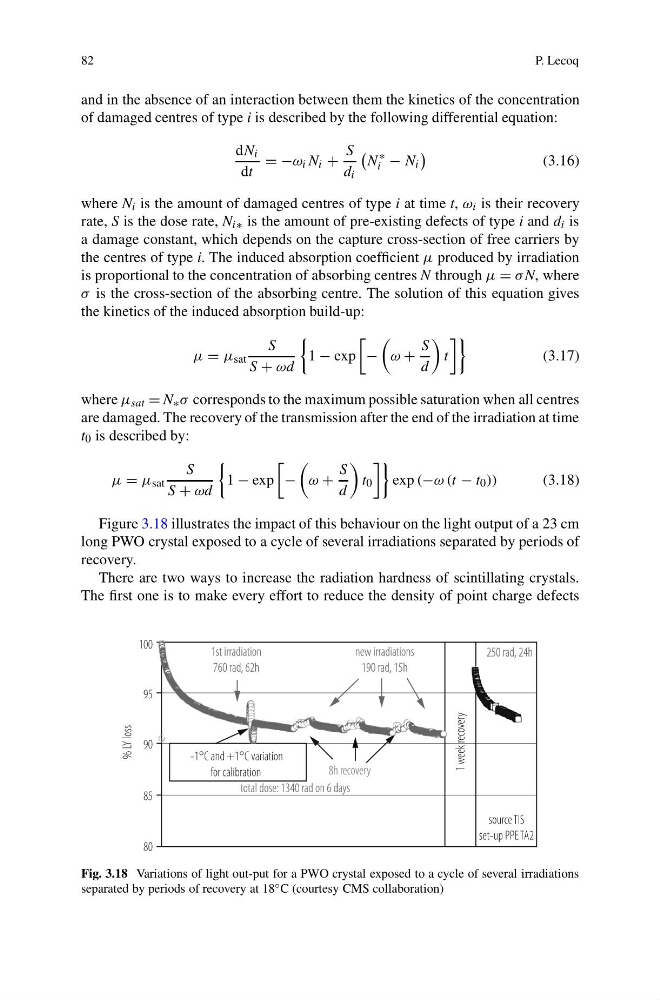
Figure 3.18 illustrates the impact of this behaviour on the light output of a 23 cm
long PWO crystal exposed to a cycle of several irradiations separated by periods of
recovery.
There are two ways to increase the radiation hardness of scintillating crystals.
The first one is to make every effort to reduce the density of point charge defects
Fig. 3.18 Variations of light out-put for a PWO crystal exposed to a cycle of several irradiations
separated by periods of recovery at 18 ◦ C (courtesy CMS collaboration)
P. Lecoq
and in the absence of an interaction between them the kinetics of the concentration
of damaged centres of type i is described by the following differential equation:
dN i
dt
= −ω i N i +
S
d i
N
∗
i − N i
(3.16)
where N i is the amount of damaged centres of type i at time t, ω i is their recovery
rate, S is the dose rate, N i∗ is the amount of pre-existing defects of type i and d i is
a damage constant, which depends on the capture cross-section of free carriers by
the centres of type i. The induced absorption coefficient μ produced by irradiation
is proportional to the concentration of absorbing centres N through μ = σ N, where
σ is the cross-section of the absorbing centre. The solution of this equation gives
the kinetics of the induced absorption build-up:
μ = μ sat
S
S + ωd
1 − exp
−
ω +
S
d
t
(3.17)
where μ sat = N ∗ σ corresponds to the maximum possible saturation when all centres
are damaged. The recovery of the transmission after the end of the irradiation at time
t 0 is described by:
μ = μ sat
S
S + ωd
1 − exp
−
ω +
S
d
t 0
exp (−ω (t − t 0 ))
(3.18)
Figure 3.18 illustrates the impact of this behaviour on the light output of a 23 cm
long PWO crystal exposed to a cycle of several irradiations separated by periods of
recovery.
There are two ways to increase the radiation hardness of scintillating crystals.
The first one is to make every effort to reduce the density of point charge defects
Fig. 3.18 Variations of light out-put for a PWO crystal exposed to a cycle of several irradiations
separated by periods of recovery at 18 ◦ C (courtesy CMS collaboration)