

540
W. H. Smith
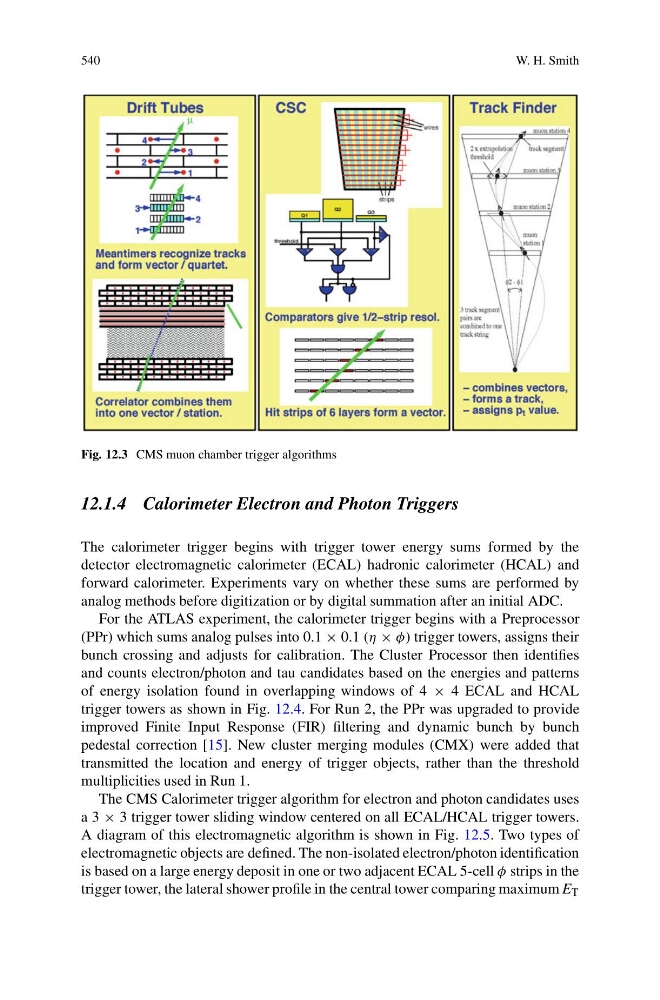
Fig. 12.3 CMS muon chamber trigger algorithms
12.1.4 Calorimeter Electron and Photon Triggers
The calorimeter trigger begins with trigger tower energy sums formed by the
detector electromagnetic calorimeter (ECAL) hadronic calorimeter (HCAL) and
forward calorimeter. Experiments vary on whether these sums are performed by
analog methods before digitization or by digital summation after an initial ADC.
For the ATLAS experiment, the calorimeter trigger begins with a Preprocessor
(PPr) which sums analog pulses into 0.1 × 0.1 (η × φ) trigger towers, assigns their
bunch crossing and adjusts for calibration. The Cluster Processor then identifies
and counts electron/photon and tau candidates based on the energies and patterns
of energy isolation found in overlapping windows of 4 × 4 ECAL and HCAL
trigger towers as shown in Fig. 12.4. For Run 2, the PPr was upgraded to provide
improved Finite Input Response (FIR) filtering and dynamic bunch by bunch
pedestal correction [15]. New cluster merging modules (CMX) were added that
transmitted the location and energy of trigger objects, rather than the threshold
multiplicities used in Run 1.
The CMS Calorimeter trigger algorithm for electron and photon candidates uses
a 3 × 3 trigger tower sliding window centered on all ECAL/HCAL trigger towers.
A diagram of this electromagnetic algorithm is shown in Fig. 12.5. Two types of
electromagnetic objects are defined. The non-isolated electron/photon identification
is based on a large energy deposit in one or two adjacent ECAL 5-cell φ strips in the
trigger tower, the lateral shower profile in the central tower comparing maximum E T
W. H. Smith
Fig. 12.3 CMS muon chamber trigger algorithms
12.1.4 Calorimeter Electron and Photon Triggers
The calorimeter trigger begins with trigger tower energy sums formed by the
detector electromagnetic calorimeter (ECAL) hadronic calorimeter (HCAL) and
forward calorimeter. Experiments vary on whether these sums are performed by
analog methods before digitization or by digital summation after an initial ADC.
For the ATLAS experiment, the calorimeter trigger begins with a Preprocessor
(PPr) which sums analog pulses into 0.1 × 0.1 (η × φ) trigger towers, assigns their
bunch crossing and adjusts for calibration. The Cluster Processor then identifies
and counts electron/photon and tau candidates based on the energies and patterns
of energy isolation found in overlapping windows of 4 × 4 ECAL and HCAL
trigger towers as shown in Fig. 12.4. For Run 2, the PPr was upgraded to provide
improved Finite Input Response (FIR) filtering and dynamic bunch by bunch
pedestal correction [15]. New cluster merging modules (CMX) were added that
transmitted the location and energy of trigger objects, rather than the threshold
multiplicities used in Run 1.
The CMS Calorimeter trigger algorithm for electron and photon candidates uses
a 3 × 3 trigger tower sliding window centered on all ECAL/HCAL trigger towers.
A diagram of this electromagnetic algorithm is shown in Fig. 12.5. Two types of
electromagnetic objects are defined. The non-isolated electron/photon identification
is based on a large energy deposit in one or two adjacent ECAL 5-cell φ strips in the
trigger tower, the lateral shower profile in the central tower comparing maximum E T