

418
A. Ariga et al.
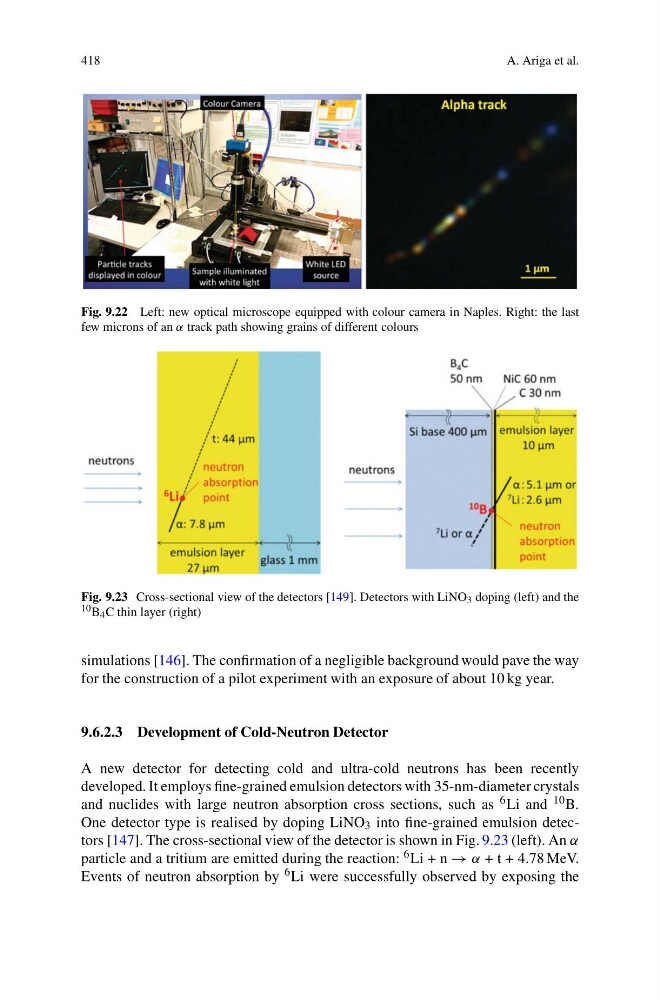
Fig. 9.22 Left: new optical microscope equipped with colour camera in Naples. Right: the last
few microns of an α track path showing grains of different colours
Fig. 9.23 Cross-sectional view of the detectors [149]. Detectors with LiNO 3 doping (left) and the
10 B 4 C thin layer (right)
simulations [146]. The confirmation of a negligible background would pave the way
for the construction of a pilot experiment with an exposure of about 10 kg year.
9.6.2.3 Development of Cold-Neutron Detector
A new detector for detecting cold and ultra-cold neutrons has been recently
developed. It employs fine-grained emulsion detectors with 35-nm-diameter crystals
and nuclides with large neutron absorption cross sections, such as 6 Li and 10 B.
One detector type is realised by doping LiNO 3 into fine-grained emulsion detectors [147]. The cross-sectional view of the detector is shown in Fig. 9.23 (left). An α
particle and a tritium are emitted during the reaction: 6 Li + n → α + t + 4.78 MeV.
Events of neutron absorption by 6 Li were successfully observed by exposing the
A. Ariga et al.
Fig. 9.22 Left: new optical microscope equipped with colour camera in Naples. Right: the last
few microns of an α track path showing grains of different colours
Fig. 9.23 Cross-sectional view of the detectors [149]. Detectors with LiNO 3 doping (left) and the
10 B 4 C thin layer (right)
simulations [146]. The confirmation of a negligible background would pave the way
for the construction of a pilot experiment with an exposure of about 10 kg year.
9.6.2.3 Development of Cold-Neutron Detector
A new detector for detecting cold and ultra-cold neutrons has been recently
developed. It employs fine-grained emulsion detectors with 35-nm-diameter crystals
and nuclides with large neutron absorption cross sections, such as 6 Li and 10 B.
One detector type is realised by doping LiNO 3 into fine-grained emulsion detectors [147]. The cross-sectional view of the detector is shown in Fig. 9.23 (left). An α
particle and a tritium are emitted during the reaction: 6 Li + n → α + t + 4.78 MeV.
Events of neutron absorption by 6 Li were successfully observed by exposing the