

412
A. Ariga et al.
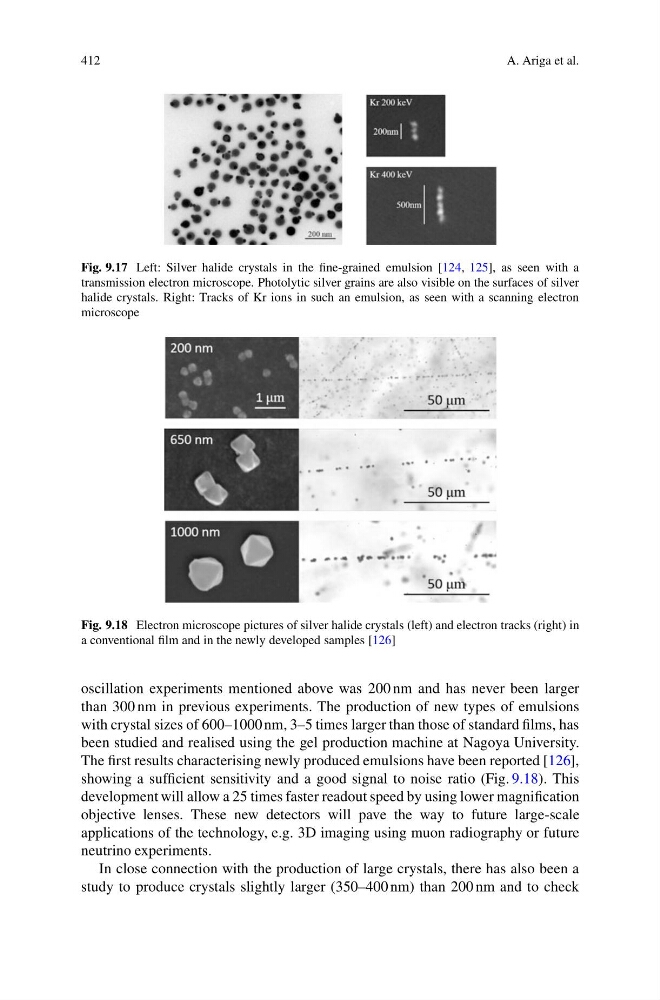
Fig. 9.17 Left: Silver halide crystals in the fine-grained emulsion [124, 125], as seen with a
transmission electron microscope. Photolytic silver grains are also visible on the surfaces of silver
halide crystals. Right: Tracks of Kr ions in such an emulsion, as seen with a scanning electron
microscope
Fig. 9.18 Electron microscope pictures of silver halide crystals (left) and electron tracks (right) in
a conventional film and in the newly developed samples [126]
oscillation experiments mentioned above was 200 nm and has never been larger
than 300 nm in previous experiments. The production of new types of emulsions
with crystal sizes of 600–1000 nm, 3–5 times larger than those of standard films, has
been studied and realised using the gel production machine at Nagoya University.
The first results characterising newly produced emulsions have been reported [126],
showing a sufficient sensitivity and a good signal to noise ratio (Fig. 9.18). This
development will allow a 25 times faster readout speed by using lower magnification
objective lenses. These new detectors will pave the way to future large-scale
applications of the technology, e.g. 3D imaging using muon radiography or future
neutrino experiments.
In close connection with the production of large crystals, there has also been a
study to produce crystals slightly larger (350–400 nm) than 200 nm and to check
A. Ariga et al.
Fig. 9.17 Left: Silver halide crystals in the fine-grained emulsion [124, 125], as seen with a
transmission electron microscope. Photolytic silver grains are also visible on the surfaces of silver
halide crystals. Right: Tracks of Kr ions in such an emulsion, as seen with a scanning electron
microscope
Fig. 9.18 Electron microscope pictures of silver halide crystals (left) and electron tracks (right) in
a conventional film and in the newly developed samples [126]
oscillation experiments mentioned above was 200 nm and has never been larger
than 300 nm in previous experiments. The production of new types of emulsions
with crystal sizes of 600–1000 nm, 3–5 times larger than those of standard films, has
been studied and realised using the gel production machine at Nagoya University.
The first results characterising newly produced emulsions have been reported [126],
showing a sufficient sensitivity and a good signal to noise ratio (Fig. 9.18). This
development will allow a 25 times faster readout speed by using lower magnification
objective lenses. These new detectors will pave the way to future large-scale
applications of the technology, e.g. 3D imaging using muon radiography or future
neutrino experiments.
In close connection with the production of large crystals, there has also been a
study to produce crystals slightly larger (350–400 nm) than 200 nm and to check