

Mobility and COVID-19 …
33
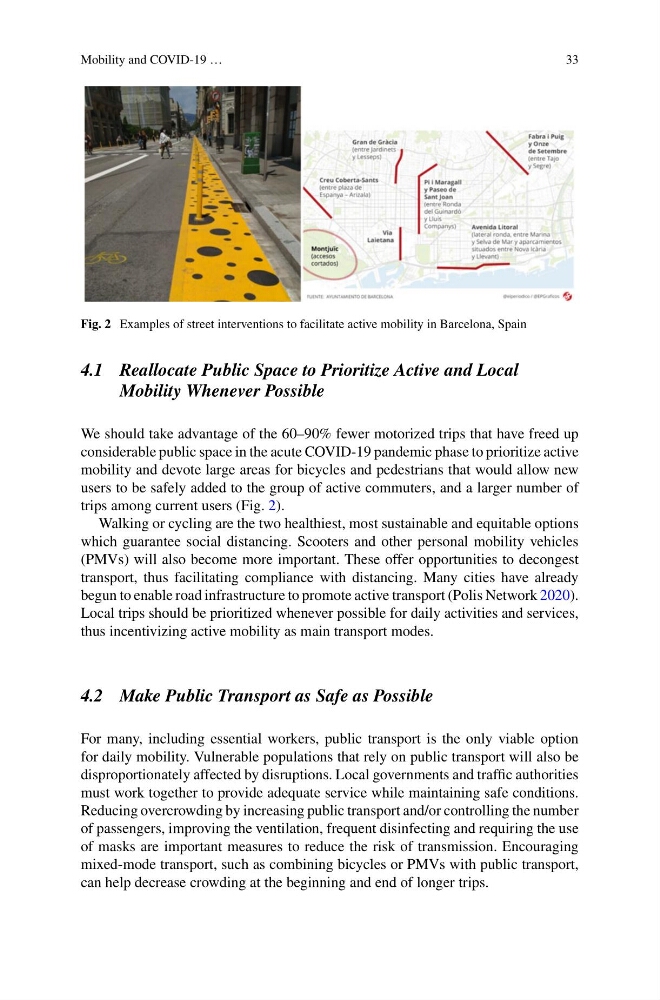
Fig. 2 Examples of street interventions to facilitate active mobility in Barcelona, Spain
4.1 Reallocate Public Space to Prioritize Active and Local
Mobility Whenever Possible
We should take advantage of the 60–90% fewer motorized trips that have freed up
considerable public space in the acute COVID-19 pandemic phase to prioritize active
mobility and devote large areas for bicycles and pedestrians that would allow new
users to be safely added to the group of active commuters, and a larger number of
trips among current users (Fig. 2).
Walking or cycling are the two healthiest, most sustainable and equitable options
which guarantee social distancing. Scooters and other personal mobility vehicles
(PMVs) will also become more important. These offer opportunities to decongest
transport, thus facilitating compliance with distancing. Many cities have already
begun to enable road infrastructure to promote active transport (Polis Network 2020).
Local trips should be prioritized whenever possible for daily activities and services,
thus incentivizing active mobility as main transport modes.
4.2 Make Public Transport as Safe as Possible
For many, including essential workers, public transport is the only viable option
for daily mobility. Vulnerable populations that rely on public transport will also be
disproportionately affected by disruptions. Local governments and traffic authorities
must work together to provide adequate service while maintaining safe conditions.
Reducing overcrowding by increasing public transport and/or controlling the number
of passengers, improving the ventilation, frequent disinfecting and requiring the use
of masks are important measures to reduce the risk of transmission. Encouraging
mixed-mode transport, such as combining bicycles or PMVs with public transport,
can help decrease crowding at the beginning and end of longer trips.
33
Fig. 2 Examples of street interventions to facilitate active mobility in Barcelona, Spain
4.1 Reallocate Public Space to Prioritize Active and Local
Mobility Whenever Possible
We should take advantage of the 60–90% fewer motorized trips that have freed up
considerable public space in the acute COVID-19 pandemic phase to prioritize active
mobility and devote large areas for bicycles and pedestrians that would allow new
users to be safely added to the group of active commuters, and a larger number of
trips among current users (Fig. 2).
Walking or cycling are the two healthiest, most sustainable and equitable options
which guarantee social distancing. Scooters and other personal mobility vehicles
(PMVs) will also become more important. These offer opportunities to decongest
transport, thus facilitating compliance with distancing. Many cities have already
begun to enable road infrastructure to promote active transport (Polis Network 2020).
Local trips should be prioritized whenever possible for daily activities and services,
thus incentivizing active mobility as main transport modes.
4.2 Make Public Transport as Safe as Possible
For many, including essential workers, public transport is the only viable option
for daily mobility. Vulnerable populations that rely on public transport will also be
disproportionately affected by disruptions. Local governments and traffic authorities
must work together to provide adequate service while maintaining safe conditions.
Reducing overcrowding by increasing public transport and/or controlling the number
of passengers, improving the ventilation, frequent disinfecting and requiring the use
of masks are important measures to reduce the risk of transmission. Encouraging
mixed-mode transport, such as combining bicycles or PMVs with public transport,
can help decrease crowding at the beginning and end of longer trips.