

8
A. Oliveira et al.
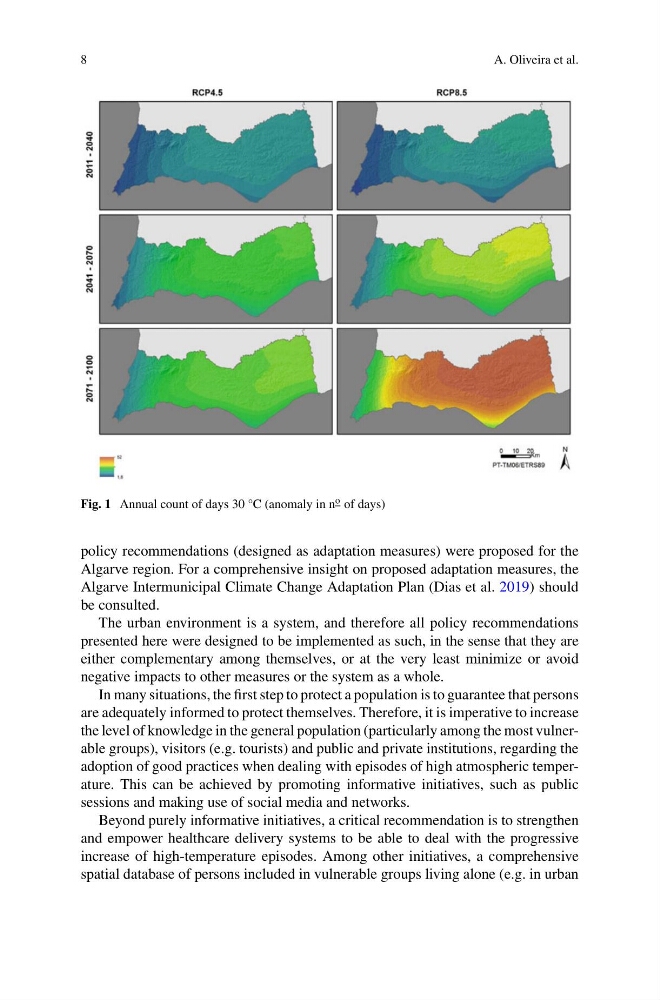
Fig. 1 Annual count of days 30 °C (anomaly in n o of days)
policy recommendations (designed as adaptation measures) were proposed for the
Algarve region. For a comprehensive insight on proposed adaptation measures, the
Algarve Intermunicipal Climate Change Adaptation Plan (Dias et al. 2019) should
be consulted.
The urban environment is a system, and therefore all policy recommendations
presented here were designed to be implemented as such, in the sense that they are
either complementary among themselves, or at the very least minimize or avoid
negative impacts to other measures or the system as a whole.
In many situations, the first step to protect a population is to guarantee that persons
are adequately informed to protect themselves. Therefore, it is imperative to increase
the level of knowledge in the general population (particularly among the most vulnerable groups), visitors (e.g. tourists) and public and private institutions, regarding the
adoption of good practices when dealing with episodes of high atmospheric temperature. This can be achieved by promoting informative initiatives, such as public
sessions and making use of social media and networks.
Beyond purely informative initiatives, a critical recommendation is to strengthen
and empower healthcare delivery systems to be able to deal with the progressive
increase of high-temperature episodes. Among other initiatives, a comprehensive
spatial database of persons included in vulnerable groups living alone (e.g. in urban
A. Oliveira et al.
Fig. 1 Annual count of days 30 °C (anomaly in n o of days)
policy recommendations (designed as adaptation measures) were proposed for the
Algarve region. For a comprehensive insight on proposed adaptation measures, the
Algarve Intermunicipal Climate Change Adaptation Plan (Dias et al. 2019) should
be consulted.
The urban environment is a system, and therefore all policy recommendations
presented here were designed to be implemented as such, in the sense that they are
either complementary among themselves, or at the very least minimize or avoid
negative impacts to other measures or the system as a whole.
In many situations, the first step to protect a population is to guarantee that persons
are adequately informed to protect themselves. Therefore, it is imperative to increase
the level of knowledge in the general population (particularly among the most vulnerable groups), visitors (e.g. tourists) and public and private institutions, regarding the
adoption of good practices when dealing with episodes of high atmospheric temperature. This can be achieved by promoting informative initiatives, such as public
sessions and making use of social media and networks.
Beyond purely informative initiatives, a critical recommendation is to strengthen
and empower healthcare delivery systems to be able to deal with the progressive
increase of high-temperature episodes. Among other initiatives, a comprehensive
spatial database of persons included in vulnerable groups living alone (e.g. in urban