

418
F. Bordry et al.
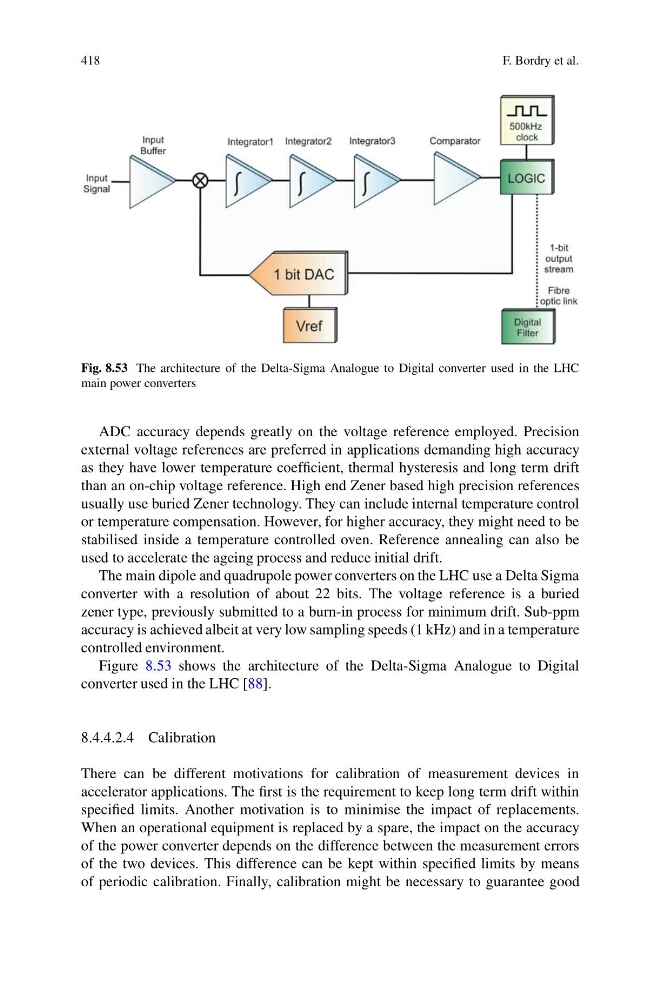
Fig. 8.53 The architecture of the Delta-Sigma Analogue to Digital converter used in the LHC
main power converters
ADC accuracy depends greatly on the voltage reference employed. Precision
external voltage references are preferred in applications demanding high accuracy
as they have lower temperature coefficient, thermal hysteresis and long term drift
than an on-chip voltage reference. High end Zener based high precision references
usually use buried Zener technology. They can include internal temperature control
or temperature compensation. However, for higher accuracy, they might need to be
stabilised inside a temperature controlled oven. Reference annealing can also be
used to accelerate the ageing process and reduce initial drift.
The main dipole and quadrupole power converters on the LHC use a Delta Sigma
converter with a resolution of about 22 bits. The voltage reference is a buried
zener type, previously submitted to a burn-in process for minimum drift. Sub-ppm
accuracy is achieved albeit at very low sampling speeds (1 kHz) and in a temperature
controlled environment.
Figure 8.53 shows the architecture of the Delta-Sigma Analogue to Digital
converter used in the LHC [88].
8.4.4.2.4 Calibration
There can be different motivations for calibration of measurement devices in
accelerator applications. The first is the requirement to keep long term drift within
specified limits. Another motivation is to minimise the impact of replacements.
When an operational equipment is replaced by a spare, the impact on the accuracy
of the power converter depends on the difference between the measurement errors
of the two devices. This difference can be kept within specified limits by means
of periodic calibration. Finally, calibration might be necessary to guarantee good
F. Bordry et al.
Fig. 8.53 The architecture of the Delta-Sigma Analogue to Digital converter used in the LHC
main power converters
ADC accuracy depends greatly on the voltage reference employed. Precision
external voltage references are preferred in applications demanding high accuracy
as they have lower temperature coefficient, thermal hysteresis and long term drift
than an on-chip voltage reference. High end Zener based high precision references
usually use buried Zener technology. They can include internal temperature control
or temperature compensation. However, for higher accuracy, they might need to be
stabilised inside a temperature controlled oven. Reference annealing can also be
used to accelerate the ageing process and reduce initial drift.
The main dipole and quadrupole power converters on the LHC use a Delta Sigma
converter with a resolution of about 22 bits. The voltage reference is a buried
zener type, previously submitted to a burn-in process for minimum drift. Sub-ppm
accuracy is achieved albeit at very low sampling speeds (1 kHz) and in a temperature
controlled environment.
Figure 8.53 shows the architecture of the Delta-Sigma Analogue to Digital
converter used in the LHC [88].
8.4.4.2.4 Calibration
There can be different motivations for calibration of measurement devices in
accelerator applications. The first is the requirement to keep long term drift within
specified limits. Another motivation is to minimise the impact of replacements.
When an operational equipment is replaced by a spare, the impact on the accuracy
of the power converter depends on the difference between the measurement errors
of the two devices. This difference can be kept within specified limits by means
of periodic calibration. Finally, calibration might be necessary to guarantee good