

8 Accelerator Engineering and Technology: Accelerator Technology
411
DC
DC
DC
DC
DC
CB1
CB2
DC2
DC1
CB3
CB4
DC4
DC3
CB5
CB6
DC6
DC5
DC
DC
DC
DC
DC
DC
DC
DC
DC
AC
TR1
TR2
18 kV AC
CC1
CC2
AC
TW1
TW2
Magnets
Magnets
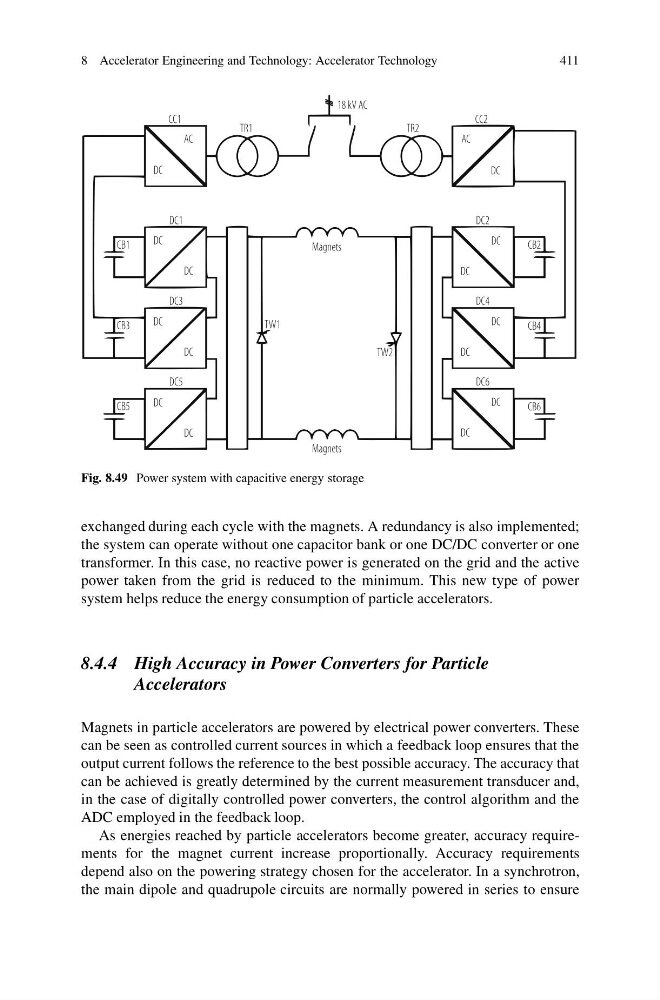
Fig. 8.49 Power system with capacitive energy storage
exchanged during each cycle with the magnets. A redundancy is also implemented;
the system can operate without one capacitor bank or one DC/DC converter or one
transformer. In this case, no reactive power is generated on the grid and the active
power taken from the grid is reduced to the minimum. This new type of power
system helps reduce the energy consumption of particle accelerators.
8.4.4 High Accuracy in Power Converters for Particle
Accelerators
Magnets in particle accelerators are powered by electrical power converters. These
can be seen as controlled current sources in which a feedback loop ensures that the
output current follows the reference to the best possible accuracy. The accuracy that
can be achieved is greatly determined by the current measurement transducer and,
in the case of digitally controlled power converters, the control algorithm and the
ADC employed in the feedback loop.
As energies reached by particle accelerators become greater, accuracy requirements for the magnet current increase proportionally. Accuracy requirements
depend also on the powering strategy chosen for the accelerator. In a synchrotron,
the main dipole and quadrupole circuits are normally powered in series to ensure
411
DC
DC
DC
DC
DC
CB1
CB2
DC2
DC1
CB3
CB4
DC4
DC3
CB5
CB6
DC6
DC5
DC
DC
DC
DC
DC
DC
DC
DC
DC
AC
TR1
TR2
18 kV AC
CC1
CC2
AC
TW1
TW2
Magnets
Magnets
Fig. 8.49 Power system with capacitive energy storage
exchanged during each cycle with the magnets. A redundancy is also implemented;
the system can operate without one capacitor bank or one DC/DC converter or one
transformer. In this case, no reactive power is generated on the grid and the active
power taken from the grid is reduced to the minimum. This new type of power
system helps reduce the energy consumption of particle accelerators.
8.4.4 High Accuracy in Power Converters for Particle
Accelerators
Magnets in particle accelerators are powered by electrical power converters. These
can be seen as controlled current sources in which a feedback loop ensures that the
output current follows the reference to the best possible accuracy. The accuracy that
can be achieved is greatly determined by the current measurement transducer and,
in the case of digitally controlled power converters, the control algorithm and the
ADC employed in the feedback loop.
As energies reached by particle accelerators become greater, accuracy requirements for the magnet current increase proportionally. Accuracy requirements
depend also on the powering strategy chosen for the accelerator. In a synchrotron,
the main dipole and quadrupole circuits are normally powered in series to ensure