

6 Design and Principles of Synchrotrons and Circular Colliders
259
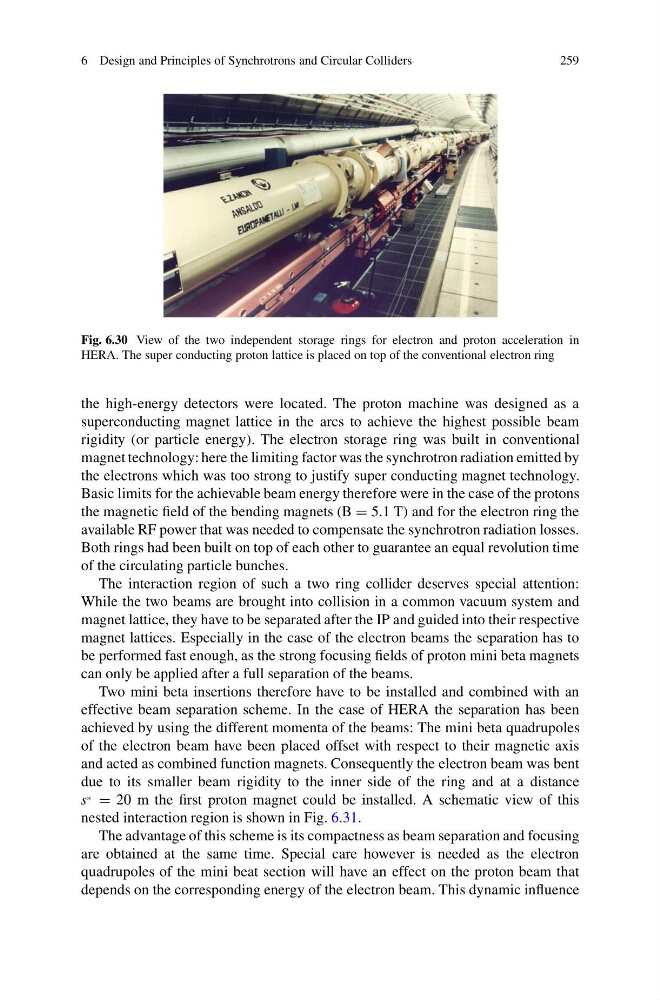
Fig. 6.30 View of the two independent storage rings for electron and proton acceleration in
HERA. The super conducting proton lattice is placed on top of the conventional electron ring
the high-energy detectors were located. The proton machine was designed as a
superconducting magnet lattice in the arcs to achieve the highest possible beam
rigidity (or particle energy). The electron storage ring was built in conventional
magnet technology: here the limiting factor was the synchrotron radiation emitted by
the electrons which was too strong to justify super conducting magnet technology.
Basic limits for the achievable beam energy therefore were in the case of the protons
the magnetic field of the bending magnets (B = 5.1 T) and for the electron ring the
available RF power that was needed to compensate the synchrotron radiation losses.
Both rings had been built on top of each other to guarantee an equal revolution time
of the circulating particle bunches.
The interaction region of such a two ring collider deserves special attention:
While the two beams are brought into collision in a common vacuum system and
magnet lattice, they have to be separated after the IP and guided into their respective
magnet lattices. Especially in the case of the electron beams the separation has to
be performed fast enough, as the strong focusing fields of proton mini beta magnets
can only be applied after a full separation of the beams.
Two mini beta insertions therefore have to be installed and combined with an
effective beam separation scheme. In the case of HERA the separation has been
achieved by using the different momenta of the beams: The mini beta quadrupoles
of the electron beam have been placed offset with respect to their magnetic axis
and acted as combined function magnets. Consequently the electron beam was bent
due to its smaller beam rigidity to the inner side of the ring and at a distance
s ∗ = 20 m the first proton magnet could be installed. A schematic view of this
nested interaction region is shown in Fig. 6.31.
The advantage of this scheme is its compactness as beam separation and focusing
are obtained at the same time. Special care however is needed as the electron
quadrupoles of the mini beat section will have an effect on the proton beam that
depends on the corresponding energy of the electron beam. This dynamic influence
259
Fig. 6.30 View of the two independent storage rings for electron and proton acceleration in
HERA. The super conducting proton lattice is placed on top of the conventional electron ring
the high-energy detectors were located. The proton machine was designed as a
superconducting magnet lattice in the arcs to achieve the highest possible beam
rigidity (or particle energy). The electron storage ring was built in conventional
magnet technology: here the limiting factor was the synchrotron radiation emitted by
the electrons which was too strong to justify super conducting magnet technology.
Basic limits for the achievable beam energy therefore were in the case of the protons
the magnetic field of the bending magnets (B = 5.1 T) and for the electron ring the
available RF power that was needed to compensate the synchrotron radiation losses.
Both rings had been built on top of each other to guarantee an equal revolution time
of the circulating particle bunches.
The interaction region of such a two ring collider deserves special attention:
While the two beams are brought into collision in a common vacuum system and
magnet lattice, they have to be separated after the IP and guided into their respective
magnet lattices. Especially in the case of the electron beams the separation has to
be performed fast enough, as the strong focusing fields of proton mini beta magnets
can only be applied after a full separation of the beams.
Two mini beta insertions therefore have to be installed and combined with an
effective beam separation scheme. In the case of HERA the separation has been
achieved by using the different momenta of the beams: The mini beta quadrupoles
of the electron beam have been placed offset with respect to their magnetic axis
and acted as combined function magnets. Consequently the electron beam was bent
due to its smaller beam rigidity to the inner side of the ring and at a distance
s ∗ = 20 m the first proton magnet could be installed. A schematic view of this
nested interaction region is shown in Fig. 6.31.
The advantage of this scheme is its compactness as beam separation and focusing
are obtained at the same time. Special care however is needed as the electron
quadrupoles of the mini beat section will have an effect on the proton beam that
depends on the corresponding energy of the electron beam. This dynamic influence