

16
E. Wilson and B. J. Holzer
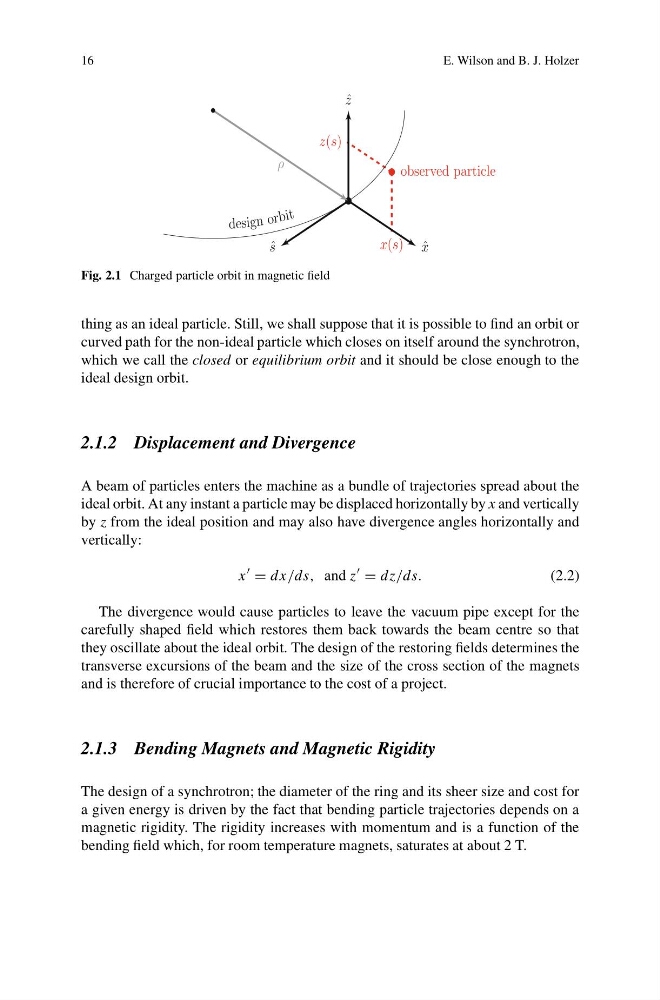
Fig. 2.1 Charged particle orbit in magnetic field
thing as an ideal particle. Still, we shall suppose that it is possible to find an orbit or
curved path for the non-ideal particle which closes on itself around the synchrotron,
which we call the closed or equilibrium orbit and it should be close enough to the
ideal design orbit.
2.1.2 Displacement and Divergence
A beam of particles enters the machine as a bundle of trajectories spread about the
ideal orbit. At any instant a particle may be displaced horizontally by x and vertically
by z from the ideal position and may also have divergence angles horizontally and
vertically:
x
= dx/ds, and z
= dz/ds.
(2.2)
The divergence would cause particles to leave the vacuum pipe except for the
carefully shaped field which restores them back towards the beam centre so that
they oscillate about the ideal orbit. The design of the restoring fields determines the
transverse excursions of the beam and the size of the cross section of the magnets
and is therefore of crucial importance to the cost of a project.
2.1.3 Bending Magnets and Magnetic Rigidity
The design of a synchrotron; the diameter of the ring and its sheer size and cost for
a given energy is driven by the fact that bending particle trajectories depends on a
magnetic rigidity. The rigidity increases with momentum and is a function of the
bending field which, for room temperature magnets, saturates at about 2 T.
E. Wilson and B. J. Holzer
Fig. 2.1 Charged particle orbit in magnetic field
thing as an ideal particle. Still, we shall suppose that it is possible to find an orbit or
curved path for the non-ideal particle which closes on itself around the synchrotron,
which we call the closed or equilibrium orbit and it should be close enough to the
ideal design orbit.
2.1.2 Displacement and Divergence
A beam of particles enters the machine as a bundle of trajectories spread about the
ideal orbit. At any instant a particle may be displaced horizontally by x and vertically
by z from the ideal position and may also have divergence angles horizontally and
vertically:
x
= dx/ds, and z
= dz/ds.
(2.2)
The divergence would cause particles to leave the vacuum pipe except for the
carefully shaped field which restores them back towards the beam centre so that
they oscillate about the ideal orbit. The design of the restoring fields determines the
transverse excursions of the beam and the size of the cross section of the magnets
and is therefore of crucial importance to the cost of a project.
2.1.3 Bending Magnets and Magnetic Rigidity
The design of a synchrotron; the diameter of the ring and its sheer size and cost for
a given energy is driven by the fact that bending particle trajectories depends on a
magnetic rigidity. The rigidity increases with momentum and is a function of the
bending field which, for room temperature magnets, saturates at about 2 T.