

6 Design and Principles of Synchrotrons and Circular Colliders
221
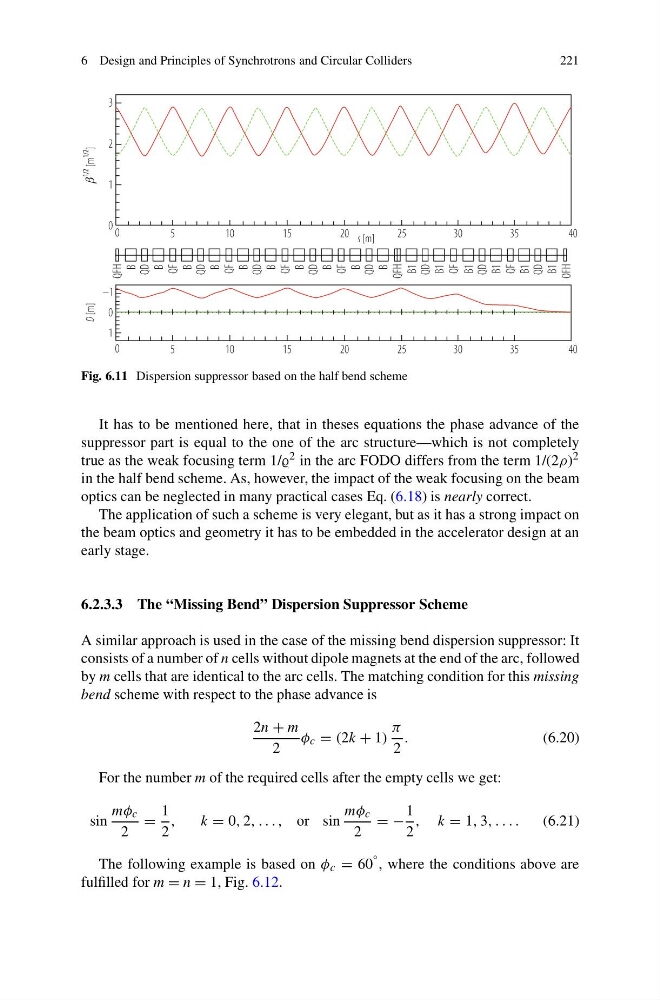
Fig. 6.11 Dispersion suppressor based on the half bend scheme
It has to be mentioned here, that in theses equations the phase advance of the
suppressor part is equal to the one of the arc structure—which is not completely
true as the weak focusing term 1/ 2 in the arc FODO differs from the term 1/(2ρ) 2
in the half bend scheme. As, however, the impact of the weak focusing on the beam
optics can be neglected in many practical cases Eq. (6.18) is nearly correct.
The application of such a scheme is very elegant, but as it has a strong impact on
the beam optics and geometry it has to be embedded in the accelerator design at an
early stage.
6.2.3.3 The “Missing Bend” Dispersion Suppressor Scheme
A similar approach is used in the case of the missing bend dispersion suppressor: It
consists of a number of n cells without dipole magnets at the end of the arc, followed
by m cells that are identical to the arc cells. The matching condition for this missing
bend scheme with respect to the phase advance is
2n + m
2
φ c = (2k + 1)
π
2
.
(6.20)
For the number m of the required cells after the empty cells we get:
sin
mφ c
2
=
1
2
,
k = 0, 2, . . . , or sin
mφ c
2
= −
1
2
, k = 1, 3, . . . .
(6.21)
The following example is based on φ c = 60
◦ , where the conditions above are
fulfilled for m = n = 1, Fig. 6.12.
221
Fig. 6.11 Dispersion suppressor based on the half bend scheme
It has to be mentioned here, that in theses equations the phase advance of the
suppressor part is equal to the one of the arc structure—which is not completely
true as the weak focusing term 1/ 2 in the arc FODO differs from the term 1/(2ρ) 2
in the half bend scheme. As, however, the impact of the weak focusing on the beam
optics can be neglected in many practical cases Eq. (6.18) is nearly correct.
The application of such a scheme is very elegant, but as it has a strong impact on
the beam optics and geometry it has to be embedded in the accelerator design at an
early stage.
6.2.3.3 The “Missing Bend” Dispersion Suppressor Scheme
A similar approach is used in the case of the missing bend dispersion suppressor: It
consists of a number of n cells without dipole magnets at the end of the arc, followed
by m cells that are identical to the arc cells. The matching condition for this missing
bend scheme with respect to the phase advance is
2n + m
2
φ c = (2k + 1)
π
2
.
(6.20)
For the number m of the required cells after the empty cells we get:
sin
mφ c
2
=
1
2
,
k = 0, 2, . . . , or sin
mφ c
2
= −
1
2
, k = 1, 3, . . . .
(6.21)
The following example is based on φ c = 60
◦ , where the conditions above are
fulfilled for m = n = 1, Fig. 6.12.