

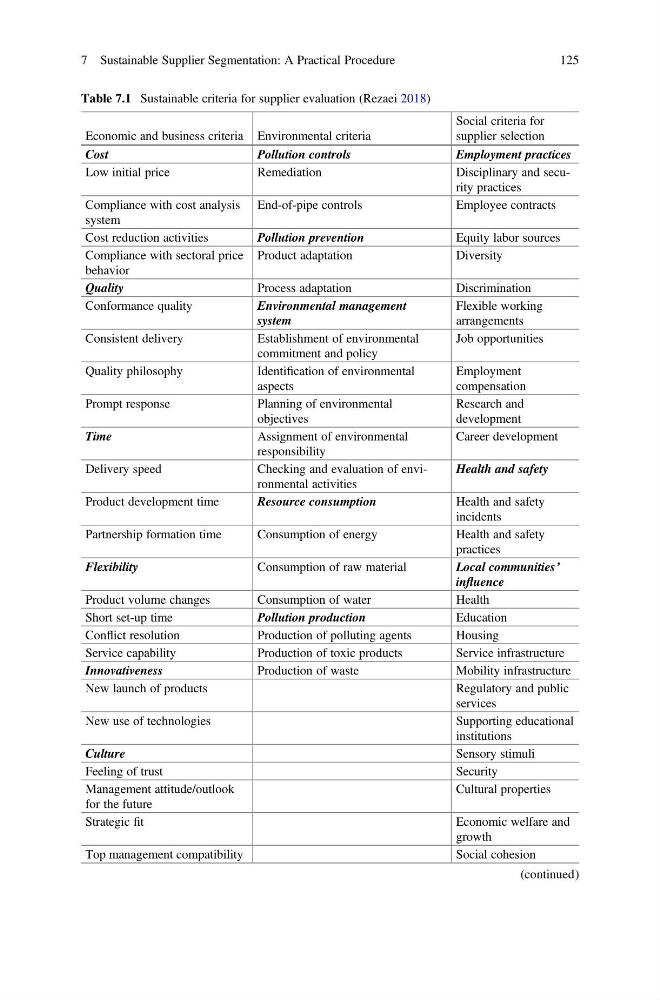
Table 7.1 Sustainable criteria for supplier evaluation (Rezaei 2018)
Economic and business criteria Environmental criteria
Social criteria for
supplier selection
Cost
Pollution controls
Employment practices
Low initial price
Remediation
Disciplinary and security practices
Compliance with cost analysis
system
End-of-pipe controls
Employee contracts
Cost reduction activities
Pollution prevention
Equity labor sources
Compliance with sectoral price
behavior
Product adaptation
Diversity
Quality
Process adaptation
Discrimination
Conformance quality
Environmental management
system
Flexible working
arrangements
Consistent delivery
Establishment of environmental
commitment and policy
Job opportunities
Quality philosophy
Identification of environmental
aspects
Employment
compensation
Prompt response
Planning of environmental
objectives
Research and
development
Time
Assignment of environmental
responsibility
Career development
Delivery speed
Checking and evaluation of environmental activities
Health and safety
Product development time
Resource consumption
Health and safety
incidents
Partnership formation time
Consumption of energy
Health and safety
practices
Flexibility
Consumption of raw material
Local communities’
influence
Product volume changes
Consumption of water
Health
Short set-up time
Pollution production
Education
Conflict resolution
Production of polluting agents
Housing
Service capability
Production of toxic products
Service infrastructure
Innovativeness
Production of waste
Mobility infrastructure
New launch of products
Regulatory and public
services
New use of technologies
Supporting educational
institutions
Culture
Sensory stimuli
Feeling of trust
Security
Management attitude/outlook
for the future
Cultural properties
Strategic fit
Economic welfare and
growth
Top management compatibility
Social cohesion
(continued)
7 Sustainable Supplier Segmentation: A Practical Procedure
125
Economic and business criteria Environmental criteria
Social criteria for
supplier selection
Cost
Pollution controls
Employment practices
Low initial price
Remediation
Disciplinary and security practices
Compliance with cost analysis
system
End-of-pipe controls
Employee contracts
Cost reduction activities
Pollution prevention
Equity labor sources
Compliance with sectoral price
behavior
Product adaptation
Diversity
Quality
Process adaptation
Discrimination
Conformance quality
Environmental management
system
Flexible working
arrangements
Consistent delivery
Establishment of environmental
commitment and policy
Job opportunities
Quality philosophy
Identification of environmental
aspects
Employment
compensation
Prompt response
Planning of environmental
objectives
Research and
development
Time
Assignment of environmental
responsibility
Career development
Delivery speed
Checking and evaluation of environmental activities
Health and safety
Product development time
Resource consumption
Health and safety
incidents
Partnership formation time
Consumption of energy
Health and safety
practices
Flexibility
Consumption of raw material
Local communities’
influence
Product volume changes
Consumption of water
Health
Short set-up time
Pollution production
Education
Conflict resolution
Production of polluting agents
Housing
Service capability
Production of toxic products
Service infrastructure
Innovativeness
Production of waste
Mobility infrastructure
New launch of products
Regulatory and public
services
New use of technologies
Supporting educational
institutions
Culture
Sensory stimuli
Feeling of trust
Security
Management attitude/outlook
for the future
Cultural properties
Strategic fit
Economic welfare and
growth
Top management compatibility
Social cohesion
(continued)
7 Sustainable Supplier Segmentation: A Practical Procedure
125