

DM for selecting the asset 2 for the starting of operation are solid enough for
justifying the choice.
The application of the NAROR to the case shows that the method has numerous
advantages in the context of complex territorial decision problems. Firstly, the
method allows to manage a quite high number of alternatives by means of a limited
number of preference information required, providing very clear and readable
elements, even if the mathematical procedure is rich and articulated. Secondly, the
method is suitable for developing an integrated assessment able to consider the
interaction between criteria, which is a more and more an interesting research issue
in sustainability assessments.
4.7 Environmental Systems: An Extension of the ELECTRE
III Method with Interactions for the Evaluation
of Requalification Scenarios
4.7.1 Decision Problem
The decision problem under analysis concerns the requalification of an abandoned
quarry located in the Province of Novara (Northern Italy) (Bottero et al. 2015). The
quarry has been abandoned since 1975 and covers a total surface of 65,000 m2. Due
to its abandoned state, the area is now suffering from uncontrolled vegetation growth
and water-filled pits. Despite these critical conditions, the area has a high potential as
it is part of the provincial ecological system of environmentally valuable sites. For
the reclamation of the area, five alternative projects are considered by the Municipal
Authority that can be described as follows: (1) basic reclamation, (2) realization of a
forest, (3) development of a wetland, (4) implementation of the ecological network
and (5) construction of a recreational structure.
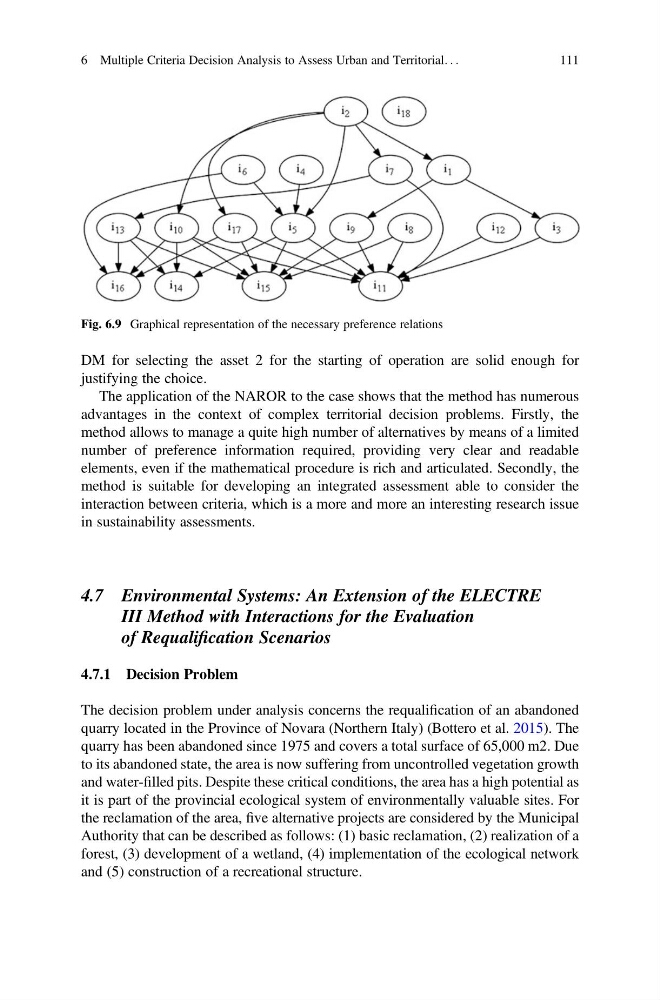
Fig. 6.9 Graphical representation of the necessary preference relations
6 Multiple Criteria Decision Analysis to Assess Urban and Territorial. . .
111
justifying the choice.
The application of the NAROR to the case shows that the method has numerous
advantages in the context of complex territorial decision problems. Firstly, the
method allows to manage a quite high number of alternatives by means of a limited
number of preference information required, providing very clear and readable
elements, even if the mathematical procedure is rich and articulated. Secondly, the
method is suitable for developing an integrated assessment able to consider the
interaction between criteria, which is a more and more an interesting research issue
in sustainability assessments.
4.7 Environmental Systems: An Extension of the ELECTRE
III Method with Interactions for the Evaluation
of Requalification Scenarios
4.7.1 Decision Problem
The decision problem under analysis concerns the requalification of an abandoned
quarry located in the Province of Novara (Northern Italy) (Bottero et al. 2015). The
quarry has been abandoned since 1975 and covers a total surface of 65,000 m2. Due
to its abandoned state, the area is now suffering from uncontrolled vegetation growth
and water-filled pits. Despite these critical conditions, the area has a high potential as
it is part of the provincial ecological system of environmentally valuable sites. For
the reclamation of the area, five alternative projects are considered by the Municipal
Authority that can be described as follows: (1) basic reclamation, (2) realization of a
forest, (3) development of a wetland, (4) implementation of the ecological network
and (5) construction of a recreational structure.
Fig. 6.9 Graphical representation of the necessary preference relations
6 Multiple Criteria Decision Analysis to Assess Urban and Territorial. . .
111